Confrontation in the Senate: Cory Booker’s Clash With Kash Patel Raises New Questions About the FBI’s Future
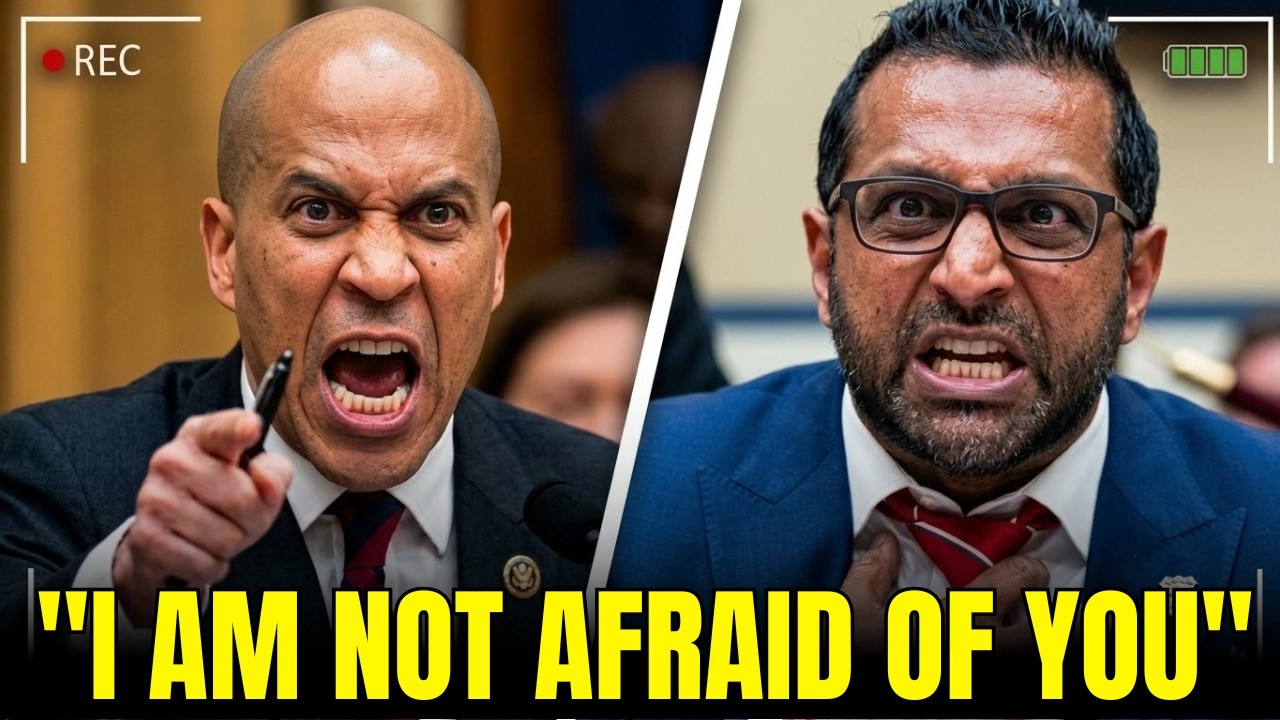
The Senate hearing room had the familiar rhythm of Washington oversight—prepared remarks, careful answers, procedural interruptions—until it didn’t. What unfolded during Senator Cory Booker’s questioning of FBI Director Kash Patel was less a routine exchange and more a moment that captured the deep political tensions now surrounding the nation’s premier law-enforcement agency.
Booker, the Democratic senator from New Jersey, began with a series of questions that at first seemed straightforward. Had Patel discussed plans with the White House to remove FBI personnel before his confirmation? Had he testified before a grand jury that former President Donald Trump had declassified documents connected to the Mar-a-Lago classified-documents investigation?
Patel resisted the questions, repeatedly challenging their premises or pointing to the absence of publicly available transcripts. Booker grew visibly frustrated.
“Why are you refusing to answer that simple yes-or-no question right now?” he asked, leaning forward in his seat.
The exchange quickly escalated into one of the most pointed confrontations of the hearing. Booker accused Patel of evading accountability and undermining the independence of the FBI. Patel countered that the senator’s claims were built on inaccurate assumptions.
The moment reflected a broader struggle unfolding in Washington: the clash between lawmakers who argue the FBI is being reshaped by political pressure and officials who insist the bureau is simply carrying out its mission in a changing national security landscape.
Questions About Independence
At the heart of Booker’s criticism was the question of whether the FBI’s leadership has become too closely aligned with political priorities emerging from the White House.
Booker cited lawsuits filed by current and former FBI officials alleging that agents were removed or reassigned because they had worked on investigations involving Trump. One of those cases involves Brian Driscoll, a veteran FBI official with more than two decades of service who previously led the Newark field office.
According to the lawsuit, Driscoll’s dismissal was part of a broader campaign of retaliation against agents perceived as insufficiently loyal. Patel declined to discuss the matter during the hearing, noting that the case is currently in litigation.
The senator also pressed Patel about his communications with Stephen Miller, a senior White House adviser known for his influence on immigration policy.
“How often do you speak to Stephen Miller?” Booker asked.
“Frequently on our homeland security task forces,” Patel replied.
The admission prompted another line of criticism from Booker, who suggested that frequent communication between the FBI director and a political adviser raised concerns about the bureau’s independence.
Patel defended the collaboration as routine interagency coordination on national security matters.
Disputes Over FBI Priorities

Another flashpoint during the hearing involved the FBI’s operational focus. Booker argued that a significant portion of FBI agents had been reassigned from traditional investigative roles—such as counterintelligence and public corruption—to support immigration enforcement operations.
Citing research from the conservative Cato Institute and immigration enforcement data, Booker claimed that roughly 20 percent of FBI agents were assisting Immigration and Customs Enforcement in operations aimed at locating undocumented migrants.
“That means agents who were investigating human trafficking, public corruption, and foreign interference are now doing low-level immigration enforcement,” Booker said.
Patel rejected the characterization, arguing that the FBI remains focused on its core mission and that its work has made the country safer.
“America is safer because of the work of the FBI,” he said.
Still, the dispute reflects a deeper argument about how federal law enforcement resources should be deployed. Supporters of the administration’s approach argue that immigration enforcement is a critical national security issue that requires cooperation across agencies. Critics warn that shifting FBI personnel away from specialized investigations could weaken the government’s ability to confront complex threats, from cybercrime to foreign intelligence operations.
A Broader Political Fight
As Booker’s time expired, his closing remarks turned from policy to leadership.
“I believe you have made our country weaker and less safe,” he told Patel, accusing him of dismantling institutional expertise within the bureau by removing experienced agents and reshaping priorities.
The senator went further, predicting that Patel’s tenure might not last long.
“I don’t think you’re going to be around long,” Booker said. “Donald Trump has shown he is not loyal to people like you.”
Patel responded by dismissing Booker’s criticism as a “rant of false information,” prompting another brief exchange before the committee chair attempted to restore order.
What the Moment Revealed
Congressional hearings often produce heated exchanges, but the clash between Booker and Patel underscored the depth of distrust now shaping the debate over federal law enforcement.
For supporters of the current leadership, the confrontation was another example of partisan attacks on an agency attempting to adapt to new priorities. For critics, it was evidence of a troubling erosion of institutional independence.
What is clear is that the argument over the FBI’s direction—its staffing, its mission, and its relationship to political power—is far from settled.
And as the hearing made clear, it is likely to remain one of the most contentious issues in Washington for months to come.






