A Global Backlash Takes Shape: How Calls to Boycott the United States Are Gaining Momentum Under Donald Trump
In recent weeks, an idea that once lived largely on the political fringes has entered mainstream global conversation: a coordinated boycott of the United States in response to the conduct of Donald Trump and the policies of his administration. What began as scattered online protests and consumer choices has evolved into a broader debate—spanning Canada, Europe, and parts of the Global South—about whether economic pressure is the most effective response to what critics describe as an increasingly confrontational and unilateral American posture.
The calls are not uniform, nor are they centrally organized. But their spread across social media platforms, business circles, and even sporting institutions reflects a shared unease about the direction of U.S. foreign and domestic policy—and the tone set by its leadership.
Canada’s Early Signal
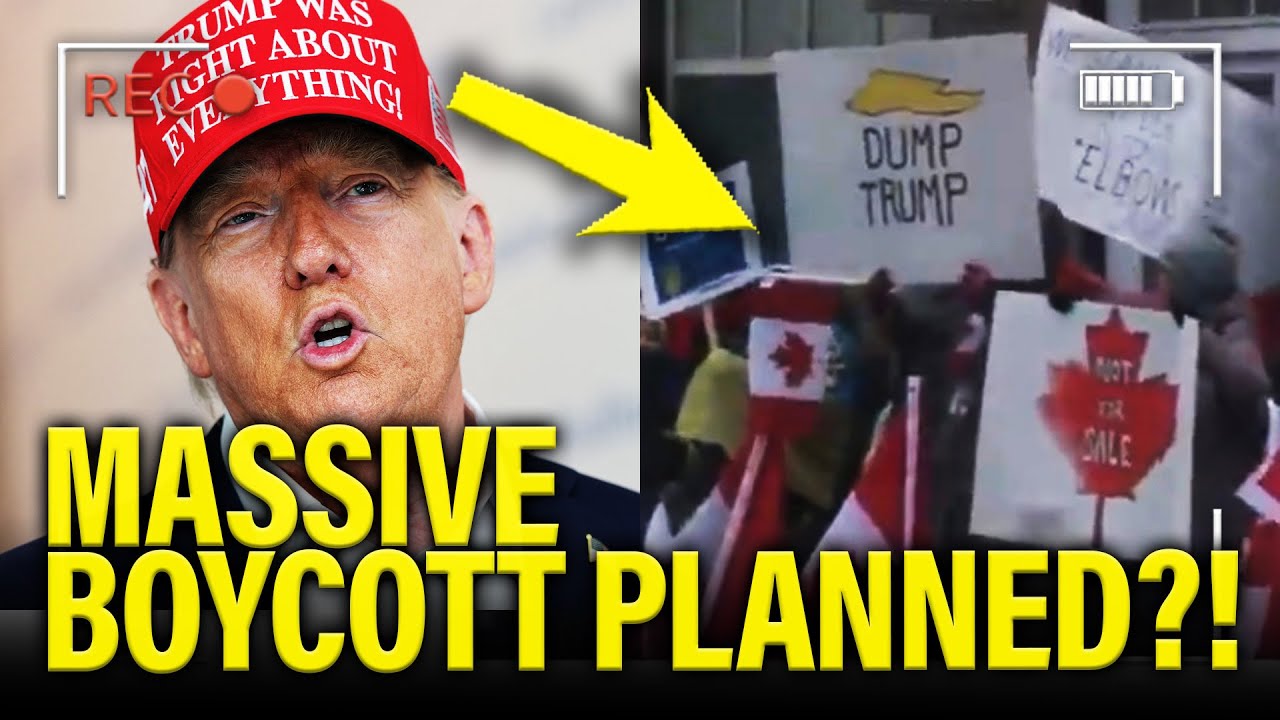
Canada was among the first U.S. allies where boycott rhetoric gained tangible form. Tensions escalated after Trump repeatedly suggested that Canada could or should become the “51st state,” language that officials in Ottawa dismissed as provocative and unserious. As rhetoric hardened, some Canadian consumers began deliberately avoiding American goods and travel to the United States, a trend widely discussed on Canadian social media and covered by domestic outlets.
While the economic impact of such consumer decisions is difficult to quantify precisely, tourism data and retail reporting suggested a noticeable decline in certain U.S.-linked sectors, including alcohol and leisure travel. The symbolic effect, however, was clearer: Canada demonstrated that public sentiment could translate into economic signaling.
That example did not immediately spread elsewhere. But it lingered.
Denmark, Greenland, and a Viral App
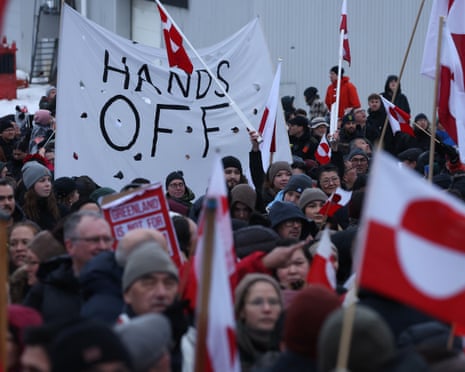
The temperature rose sharply in Europe following Trump’s renewed comments about Greenland, an autonomous territory within the Kingdom of Denmark. His remarks—alternating between threats, jokes, and assertions of U.S. entitlement—were met with near-universal condemnation across the Danish political spectrum.
In Denmark, the backlash took an unexpected digital form. An app that allows consumers to scan products and identify links to U.S.-based companies surged to the top of local app-store rankings, according to Danish media. The app’s popularity became a talking point across European social platforms, symbolizing a broader desire to distance daily consumer choices from American supply chains.
Officials in Copenhagen reiterated their support for Greenland’s right to self-determination, a stance echoed by leaders across the European Union. The episode reinforced a growing perception among Europeans that U.S. rhetoric had crossed from unpredictability into open disrespect for allied sovereignty.
Davos: Two Visions Collide
The contrast became stark at the World Economic Forum in Davos, where Trump’s appearance was widely compared to speeches by other leaders. In particular, remarks by Canada’s prime minister—emphasizing multilateralism, respect for sovereignty, and cooperation—were greeted with sustained applause.
Trump’s own address struck a markedly different tone. He criticized allies, threatened tariffs, and suggested that economic pressure could be used to force compliance on issues ranging from trade to territorial disputes. Clips of the speech circulated widely online, often juxtaposed with responses from European and Asian leaders who framed global challenges as collective rather than zero-sum.
The split-screen effect—multilateralism versus coercion—proved potent on social media, fueling calls to “boycott USA” that trended across platforms including X, Instagram, and TikTok.
Trade Threats and Contradictions
The boycott discourse intensified after Trump threatened steep tariffs on Canada over its expanding trade relationship with China, despite having praised such engagement only days earlier. Screenshots comparing his statements went viral, reinforcing accusations of inconsistency and transactional diplomacy.
For many observers abroad, the episode illustrated why diversifying trade away from the United States had become a strategic priority. Leaders in Europe and Asia openly discussed reducing reliance on American markets, not out of hostility but out of risk management.
Sports Enter the Conversation
Perhaps the most consequential development came from the world of sports. A senior official within the German Football Association publicly questioned whether the time had come to consider boycotting the 2026 FIFA World Cup, which the United States is set to co-host with Canada and Mexico.
The comment reverberated quickly. Fans across Europe asked a blunt question online: why travel to a country perceived as increasingly hostile to foreigners, particularly amid reports—contested and otherwise—about aggressive border enforcement? While no formal boycott has been announced, the fact that such ideas are being discussed within major sporting institutions marks a shift from rhetorical protest to potential material consequence.
FIFA has not indicated any plans to alter the tournament, but analysts note that even sustained public debate could affect ticket sales, sponsorships, and host-nation reputation.
A Social Media Feedback Loop
Much of the boycott movement’s energy flows through social media. Videos, memes, and translated clips of Trump’s speeches circulate alongside commentary framing the United States as an unreliable or dangerous partner. In China, state-affiliated outlets shared satirical content portraying American power as exploitative—content that quickly spread beyond official channels.
Hashtags calling for boycotts surged not because of a single incident, but because of accumulation: military threats, tariff announcements, inflammatory language toward allies, and a perception that dissent within the United States is being met with repression rather than debate.
The Limits of a Boycott
Economists caution against overstating the immediate impact of consumer boycotts on an economy as large and diversified as that of the United States. But they also emphasize that reputational damage operates on a different timeline. Tourism decisions, foreign investment strategies, and cultural exchange can all shift gradually, influenced by perception as much as policy.
For U.S. allies, the boycott conversation reflects a deeper anxiety: that the rules-based international order—long championed by Washington—is being replaced by ad hoc power politics. As one European diplomat wrote on X, “When the strongest player treats partnerships as favors, others start looking for different tables.”
An Open Question
Whether the boycott calls crystallize into sustained action remains uncertain. What is clear is that the conversation has escaped the margins. From Canada to Denmark, from Davos to the football pitch, criticism of Trump’s approach is no longer confined to editorials or protests—it is shaping consumer behavior and strategic thinking.
For now, the United States remains indispensable to the global economy. But the growing willingness of allies and citizens abroad to imagine life with less America marks a notable shift. It suggests that power, once taken for granted, must now contend with perception—and that perception, in the age of social media, can move faster than any tariff.
As 2026 unfolds, the question is no longer whether calls to boycott the United States exist. It is whether they will become one of the defining pressures on American leadership in the years ahead.






