Canada Faces Its Most Serious Unity Debate Since Quebec
The warnings came not in the language of ideology, but in the language of experience.
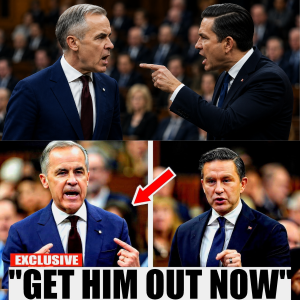
Standing before reporters near Calgary on Thursday, Prime Minister Mark Carney invoked a political trauma that still shadows Europe nearly a decade later: Brexit. He spoke not as a partisan campaigner, but as the former governor of the Bank of England, the central banker who watched markets convulse after Britain voted to leave the European Union in 2016.
“That is a very dangerous bluff,” Carney said, referring to Alberta Premier Danielle Smith’s decision to place a separation question before voters this October.
The phrase landed instantly and heavily across Canada’s political landscape. Within minutes, it became the defining line of a national unity debate that many Canadians once assumed belonged to history books rather than the country’s political future.
For years, conversations about Canadian separation were associated primarily with Quebec. Alberta’s frustrations with Ottawa — rooted in energy policy, federal regulation and perceptions of economic alienation — were often treated as regional grievances rather than an existential challenge to Confederation itself.
Now, that assumption is being tested.

The referendum proposed by Smith is not formally an independence vote. Instead, it asks Albertans whether the province should remain part of Canada or begin a formal process that could eventually lead to a later referendum on separation. Supporters describe the approach as cautious and democratic. Critics argue it is politically ambiguous by design.
Carney’s intervention was carefully calibrated around that ambiguity.
In his remarks, the prime minister warned that voters can sometimes treat constitutional referendums as symbolic protest vehicles rather than irreversible political turning points. He drew a direct comparison to the Brexit campaign, when many British voters believed they were sending a message to Brussels without fully anticipating the long-term political and economic consequences that would follow.
“They’re still 10 years later trying to undo what people didn’t think they were voting for,” Carney said.
The comparison was not merely rhetorical.
As governor of the Bank of England during the Brexit referendum, Carney oversaw emergency responses to one of the most volatile financial episodes in modern British history. The pound collapsed sharply after the result. Markets plunged into uncertainty. Central banks coordinated stabilizing measures. Political paralysis followed for years.
For Carney, the dangers of constitutional rupture are not theoretical abstractions. They are institutional memories.
The Alberta referendum debate arrives at a moment of unusual political tension inside Canada.
Economic frustrations across Western Canada have deepened over the past decade, particularly around federal environmental policy and pipeline development. Many Albertans believe Ottawa has benefited from the province’s energy wealth while simultaneously constraining the industry that powers much of its economy.
Those frustrations intensified during the government of former Prime Minister Justin Trudeau. Carbon pricing policies, environmental assessments and pipeline disputes became symbols of a broader cultural and political divide between Alberta and the federal government.

Smith has positioned herself as both a defender of Alberta’s interests and a political pressure point against Ottawa.
Yet her balancing act has become increasingly delicate.
While she authorized the referendum process, Smith has also publicly stated that she supports Alberta remaining within Canada. She pledged this week to campaign for the “Remain” side and said that if voters reject the separation initiative in October, she would not pursue another referendum later.
That dual position reflects the political complexity now defining Alberta politics.
A significant segment of the electorate is deeply frustrated with federal institutions. But frustration does not automatically translate into support for independence.
Current polling suggests roughly three in five Albertans would vote to remain in Canada if the referendum were held today. On paper, that represents a comfortable majority for national unity.
But supporters of the referendum believe campaigns change political realities.
Brexit itself serves as a cautionary example. In the early stages of Britain’s referendum debate, many analysts underestimated the emotional and populist forces capable of reshaping public opinion. What initially appeared politically improbable eventually became national policy.
That historical parallel explains why Carney’s warning resonated so strongly.
The legal framework surrounding Alberta’s referendum also raises constitutional questions that remain unresolved.
Under Canada’s Clarity Act, passed in 2000 after Quebec’s near-separation crisis, the federal government retains authority to determine whether a referendum question is sufficiently clear to justify constitutional negotiations.
The law emerged from the Supreme Court of Canada’s landmark 1998 ruling on Quebec secession, which concluded that a “clear majority” on a “clear question” would create an obligation for negotiation between governments.
What constitutes “clear,” however, remains politically contested.

Alberta’s proposed two-stage referendum mechanism — asking voters whether to begin a future process rather than immediately separate — exists precisely within that gray area.
Federal officials are now conducting a due diligence review to determine whether the question satisfies the Clarity Act’s standards.
If Ottawa concludes the question lacks sufficient clarity, Parliament would not necessarily recognize a “yes” vote as constitutionally binding.
That possibility introduces another layer of uncertainty into an already volatile political debate.
The economic stakes are enormous.
Alberta is not simply another province inside the Canadian federation. It is the center of Canada’s oil and gas industry and one of the country’s largest economic engines. Questions about Alberta’s constitutional future immediately trigger broader questions about energy markets, investor confidence, trade flows and fiscal stability.
Carney has repeatedly emphasized that dimension of the debate.
Unlike purely symbolic nationalist movements, Alberta’s separation discussion intersects directly with North American energy infrastructure, continental trade systems and financial markets. Even the perception of prolonged constitutional instability could influence investment decisions.
Business leaders have begun quietly discussing the implications.
Energy companies depend heavily on regulatory predictability. Pipeline infrastructure crosses provincial and international boundaries. Financial institutions require constitutional certainty to assess long-term risk exposure.
A sustained independence campaign could introduce years of uncertainty into sectors that already face global market pressures and energy transition challenges.
The political responses from across Canada reveal how seriously national leaders are treating the issue.
Saskatchewan Premier Scott Moe, while careful not to lecture Albertans on how to vote, described himself unequivocally as “100% federalist.” He acknowledged legitimate frustrations with past federal policy while arguing that relations between Ottawa and Western Canada have improved under Carney’s leadership.
Conservative leader Pierre Poilievre adopted a similarly direct position.
“I’m a proud Albertan and a proud Canadian,” he said, pledging that Conservatives would actively campaign for national unity in Alberta.
That stance matters politically.
Poilievre’s support base overlaps significantly with many voters most frustrated by Ottawa. His decision to openly reject separation suggests that even conservative federalists view the referendum as a potentially dangerous escalation rather than a tactical protest mechanism.
Not everyone agrees with Carney’s rhetoric.
Conservative MP Michelle Rempel Garner criticized the prime minister for invoking Brexit, arguing that fear-based comparisons risk inflaming tensions rather than resolving them. She insisted that Alberta’s grievances deserve serious engagement instead of dismissal.
Her argument reflects a broader concern among some Western politicians: that federal elites often minimize regional frustration until it evolves into a constitutional crisis.
The Bloc Québécois took a different position altogether.
Bloc MP Christine Normandin argued that Ottawa has no legitimate standing to interfere in Alberta’s democratic process. From Quebec’s perspective, federal scrutiny of referendum wording revives long-standing debates over provincial self-determination and constitutional autonomy.
Those divisions reveal a deeper truth about modern Canada.
The country’s unity challenges no longer fit neatly into the traditional English-French framework that defined Canadian constitutional politics for generations. Today’s tensions involve energy, regional identity, economic inequality and competing visions of federal power.
For many Canadians, the referendum debate feels unsettling precisely because it exposes vulnerabilities that were assumed to be dormant.
Canada has long cultivated an international image of institutional calm and political moderation. Compared with the polarization consuming many Western democracies, Canadian politics often appeared stable by contrast.
Yet beneath that stability, regional fractures persisted.
Alberta’s grievances did not emerge suddenly. They accumulated over years of political disputes, economic downturns and cultural alienation. The separation debate is less the cause of those tensions than the manifestation of them.
Carney appears determined to confront the issue early rather than treat it as rhetorical theater.

His political strategy seems rooted in the belief that constitutional movements become most dangerous when mainstream institutions underestimate them. Brexit taught many global leaders that protest votes can become transformational events before political systems fully recognize the scale of the shift underway.
Whether Alberta’s referendum ultimately produces a constitutional crisis remains uncertain.
Polling still strongly favors remaining within Canada. Major federal parties oppose separation. Business leaders remain cautious. Even Smith herself insists she supports Canadian unity.
But constitutional politics rarely unfold according to initial expectations.
Referendums change national conversations. Campaigns reshape public identities. Emotional narratives can overpower institutional assumptions. Once questions of sovereignty enter mainstream political discourse, they often evolve beyond the control of the leaders who first introduced them.
That may be the deeper meaning behind Carney’s warning.
His message was not simply about Alberta. It was about the unpredictable momentum of democratic rupture itself.
Ten years after Brexit transformed Britain, Canada now finds itself confronting a version of the same dilemma: whether frustration with the status quo can be safely weaponized without permanently destabilizing the political order underneath it.
On October 19, Albertans will cast ballots on a question whose consequences remain contested even before the wording is finalized.
For now, Canada remains united.
But the debate unfolding across Alberta suggests the country is entering one of the most consequential political chapters of its modern history.