GOP Exodus Deepens as Republican Lawmakers Step Aside, Raising Pressure on Trump and Party Leadership Ahead of 2026 Midterms

WASHINGTON — A growing number of Republican lawmakers are stepping away from Congress ahead of the 2026 midterm elections, a trend that is intensifying concerns within the party and raising questions about the political landscape facing President Donald Trump and Republican leadership in Washington.
The latest departure came from California Congressman Darrell Issa, who announced that he will not seek reelection after more than two decades in Congress. Issa described the decision as the beginning of “a new chapter,” following a long career in both business and public service.
Yet his exit is part of a broader pattern that has caught the attention of political analysts. More than 30 Republican lawmakers have already indicated they will not run again, a number that significantly outpaces Democratic retirements and signals growing uncertainty within GOP ranks.
Political observers say such departures are often an early indicator of electoral turbulence. When sitting lawmakers decide to leave rather than defend their seats, it can reflect concern about the political climate, voter sentiment, or internal party dynamics.
Recent election results have added to those concerns. In several special elections across the country, Democratic candidates have outperformed expectations, sometimes in districts that previously leaned strongly Republican.
One particularly striking example occurred in Texas, where a Democratic candidate won a district that Trump had carried by a wide margin in the previous presidential election. Despite a substantial fundraising advantage for the Republican candidate, the outcome suggested shifting voter attitudes that could shape the broader midterm environment.
Florida Governor Ron DeSantis acknowledged the significance of such results, noting that while special elections can sometimes produce unusual outcomes, large swings in voter support should not be ignored.
Some analysts have drawn comparisons to the political environment leading up to the 2018 midterm elections, when Democrats ultimately gained more than 40 seats in the House of Representatives. During that period, Democratic candidates consistently performed better than expected in early contests, signaling a wave that eventually reshaped Congress.
Today, early indicators appear to show a similar trend. On average, Democratic candidates in recent special elections have performed roughly a dozen points stronger than their party’s performance in the 2024 presidential race. If that pattern continues, it could threaten the Republican Party’s narrow majority in the House.
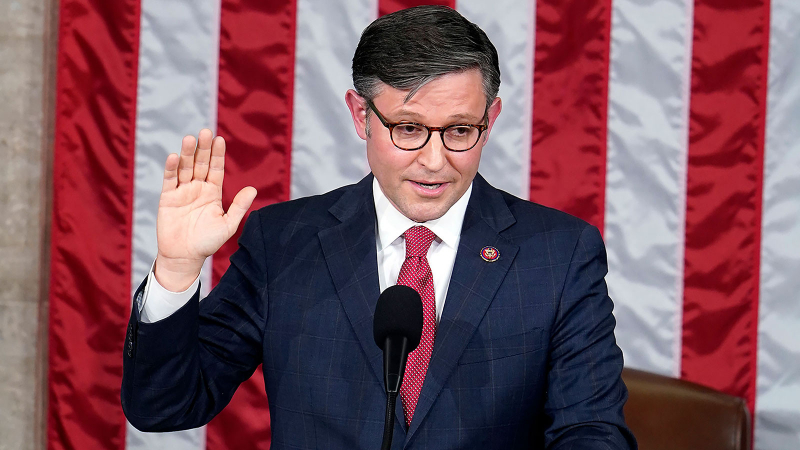
Those pressures are also being felt by congressional leadership. With only a slim margin separating the parties in the House, maintaining unity within the Republican conference has become increasingly challenging for Speaker Mike Johnson. Johnson must balance the demands of multiple factions within the GOP while attempting to keep legislation moving forward in a highly polarized political environment.
Further complicating matters, California Congressman Kevin Kiley recently announced that he would leave the Republican Party and register as an independent. Although he said the move would allow him to act as an independent voice, the decision has symbolic significance at a time when the Republican majority remains extremely tight.
Each departure or party switch can make it more difficult for leadership to secure votes on key legislation. In a narrowly divided chamber, even a small number of defections can shift the balance of power on critical issues.
Public opinion trends have also raised concerns among Republican strategists. Recent polling suggests that Trump’s approval rating among independent voters has declined significantly, placing him well below the level typically considered politically comfortable for an incumbent leader.
Independent voters often play a decisive role in national elections, and shifts in that group can influence congressional races across multiple states. Analysts warn that declining support among independents could create a more competitive environment for Republican candidates in swing districts.
Economic concerns are also shaping voter attitudes. Rising gasoline prices and global energy market uncertainty — partly linked to tensions involving Iran and disruptions near the strategic Strait of Hormuz — have contributed to anxiety among consumers.
Across the country, many drivers have reported noticeable increases in fuel costs, adding pressure to household budgets and fueling broader concerns about inflation and economic stability.
For voters, such everyday economic pressures can be more influential than political messaging. Historically, shifts in the economic outlook often play a decisive role in determining the outcome of midterm elections.
Despite the challenges, Trump has repeatedly demonstrated an ability to maintain strong support among his core political base. Throughout both of his presidential campaigns and his time in office, he has often defied predictions of major political setbacks.
Still, the growing number of congressional retirements, combined with shifting voter sentiment and internal party tensions, suggests the Republican Party faces a complex political road ahead.
With the 2026 midterm elections approaching, the coming months may determine whether Republicans can stabilize their coalition and maintain control of Congress — or whether the current wave of departures signals a broader political shift in Washington.






