The World Cup Arrives in America — and So Does the Chaos
In sixteen days, the 2026 FIFA World Cup will begin across the United States, Canada and Mexico. It is supposed to be the largest sporting celebration in modern history: 48 teams, 104 matches, three host nations and billions of viewers.
Instead, it is arriving under a cloud of confusion, political tension and logistical instability.
For years, FIFA promoted the tournament as a triumphant showcase of North American power and global unity. Yet as kickoff approaches, the operational reality looks increasingly fractured. Hotels remain half-empty. Security funding arrived months late. Fans from participating countries are still blocked by U.S. travel restrictions. Human-rights organizations warn that the tournament risks becoming “a stage for repression.” (Amnesty International)
And then came the moment that transformed unease into disbelief.
FIFA awarded its inaugural “Peace Prize” to President Donald Trump.

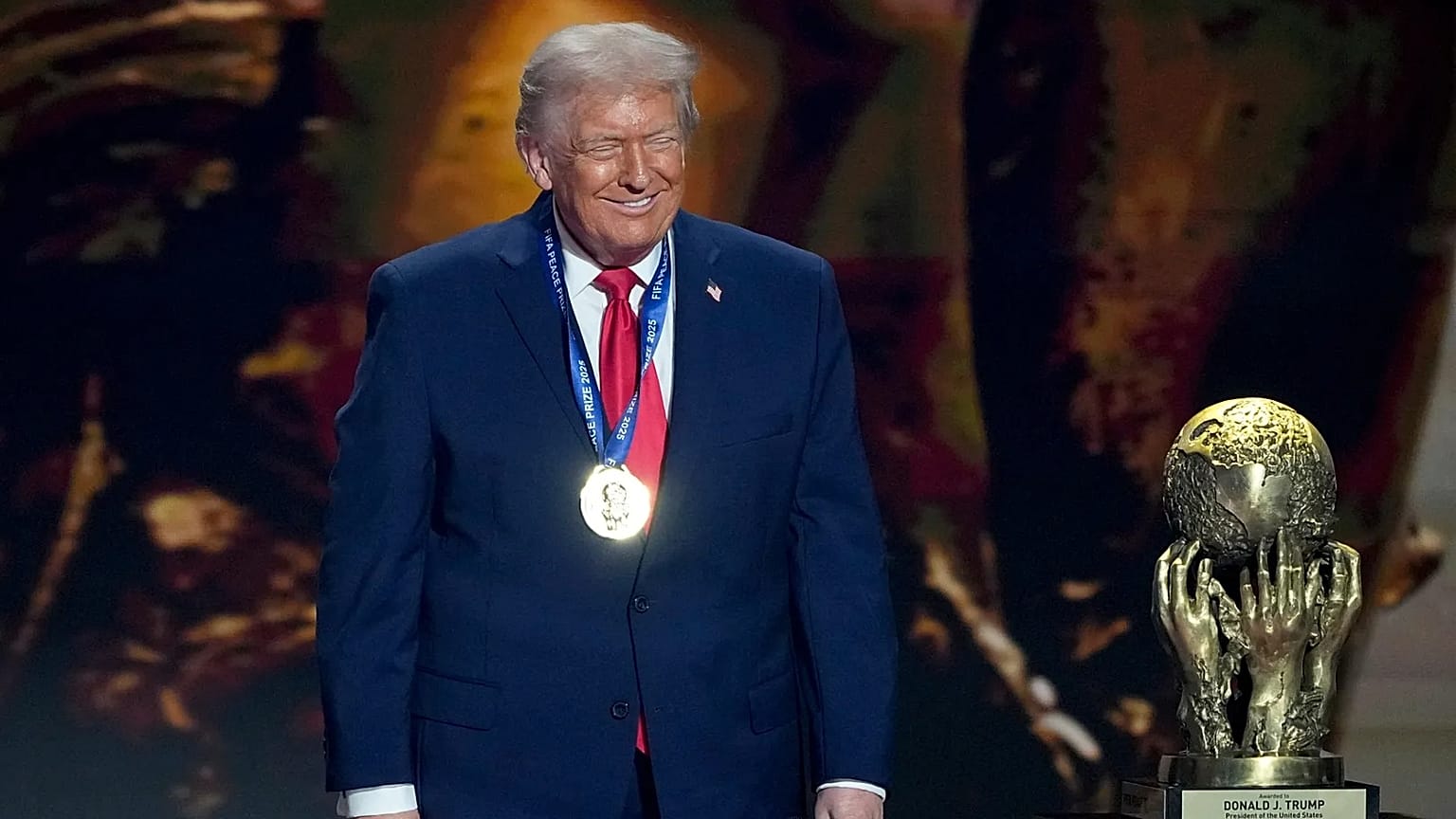

The decision stunned even longtime observers of FIFA’s political theater.
The governing body of world football presented a peace award to the leader of a country now deeply entangled in a widening Middle East conflict — a war that has disrupted energy markets, intensified geopolitical tensions and triggered fierce international criticism.
To supporters of the administration, the award symbolized American leadership.
To critics, it looked like satire masquerading as diplomacy.
The symbolism mattered because the World Cup itself has become inseparable from politics. FIFA has spent years insisting that football can rise above ideology. But the closer this tournament gets, the harder that argument becomes to sustain.
The contradictions are now embedded directly into the event.
Nowhere is that clearer than Seattle.
On June 26, Lumen Field is scheduled to host a group-stage match between Egypt and Iran. The game also coincides with Seattle’s official World Cup Pride celebration during Pride Weekend.
Both Iran and Egypt criminalize homosexuality.
In Iran, same-sex relations can carry the death penalty. Egypt has repeatedly prosecuted LGBTQ individuals under so-called “debauchery” laws.
When the matchup became public, officials from both football federations reportedly objected to the Pride branding surrounding the match. FIFA, meanwhile, appeared caught between competing political realities of its own making.


The controversy immediately spread online.
Some LGBTQ advocacy groups accused FIFA of performative inclusion. Others questioned how an organization with vast planning infrastructure could fail to anticipate the political implications of the draw.
It was not simply an awkward scheduling conflict.
It was a perfect illustration of the tournament’s broader dysfunction: a global spectacle attempting to satisfy incompatible audiences simultaneously.
And the problems extend far beyond symbolism.
The economic expectations surrounding the American portion of the World Cup have begun to unravel.
Months ago, hotels across host cities dramatically increased room prices in anticipation of massive international demand. Some properties reportedly raised rates by more than 300 percent.
The demand never fully arrived.
Instead, occupancy rates in several host cities lagged behind normal seasonal projections. In New York, hotel activity reportedly trailed the same period the year before. FIFA itself later reduced large blocks of reserved hotel rooms, destabilizing local accommodation markets even further.
For many businesses, the World Cup was supposed to create a tourism boom.
Instead, it produced uncertainty.
International tourism to the United States has already declined amid tighter immigration enforcement and growing global political tensions. Analysts increasingly fear that the tournament will not reverse that trend — it may instead magnify it.
Human-rights organizations have raised similar alarms.
In March, Amnesty International warned that the 2026 World Cup could become “a threat to fans and communities,” citing immigration crackdowns, protest restrictions and discriminatory enforcement practices in the United States. (Amnesty International)
The concerns are not theoretical.
Fans from several participating nations remain effectively barred from entering the United States under current travel restrictions. Iranian supporters face especially severe limitations despite their national team competing in matches hosted on American soil.
Every visa applicant must also disclose years of social-media activity, creating what critics describe as a chilling effect for international visitors.
For many supporters abroad, attending the tournament no longer feels simple.
It feels risky.
That anxiety has spilled into preparations on the ground.
In Los Angeles, stadium workers publicly threatened strike action over fears that federal immigration agents could be deployed near World Cup venues. Labor groups warned that any visible ICE presence would create “a climate of fear” for workers and fans alike. (Al Jazeera)
The image FIFA hoped to project was one of openness and celebration.
Instead, many preparations increasingly resemble a high-security geopolitical summit.
Meanwhile, basic infrastructure problems continue to emerge.
Congress approved hundreds of millions of dollars in federal security funding for World Cup operations nearly a year ago. Yet many host cities reportedly waited months before receiving any of the money.
Some local officials warned that the delays threatened emergency planning efforts.
Others openly questioned whether FIFA had underestimated the complexity of staging the largest sporting event on earth across an enormous and politically divided country.
Transportation funding arrived even later.
Host cities have scrambled to finish transit upgrades only weeks before kickoff.
The compressed timeline has intensified fears that operational failures could become visible to the world in real time.
And then there is the climate problem.


Scientific projections have repeatedly warned that many selected venues could expose players and spectators to dangerous summer temperatures.
During test events held in the United States, pitch temperatures reportedly approached 100 degrees Fahrenheit.
Sports medicine experts have urged FIFA to reconsider scheduling practices and match timing.
FIFA’s primary mitigation strategy so far has centered on hydration breaks.
Critics argue that the organization is underestimating the physical risks posed by extreme heat in open-air American stadiums during peak summer conditions.
Even on the field, optimism surrounding the host nation has faded.
The U.S. men’s national team enters the tournament under heavy scrutiny after a series of disappointing performances against European opposition. Recent friendlies exposed defensive weaknesses and an apparent gap in overall squad quality compared to elite international sides.
But perhaps more concerning is the atmosphere surrounding home matches.
During recent tournaments hosted in the United States, opposing supporters routinely outnumbered American fans in the stands. Players publicly described the experience as emotionally deflating — home games that did not feel like home.
That dynamic reflects a deeper truth about soccer in America.
The country can host enormous football events.
But hosting football culture is something else entirely.
For FIFA, however, the tournament remains too large to fail.
The organization projects tens of billions in economic activity and record-breaking global audiences. Sponsors continue investing heavily. Broadcasters continue promoting the spectacle relentlessly.
Officially, the message remains optimistic.
Unofficially, anxiety is growing.
Across social media, fan forums and local communities, skepticism has become increasingly visible.
Reddit discussions about the tournament now routinely feature complaints about pricing, transportation, policing and the overall atmosphere surrounding the event. Some fans compare the mounting dysfunction to previous controversial World Cups, while others argue the problems reflect broader instability within the United States itself. (Reddit)
Security experts are also preparing for large-scale demonstrations.
Analysts at S&P Global recently warned that protests linked to immigration policy, housing costs, labor issues and human rights concerns are likely across several host cities during the tournament. (S&P Global)
In many ways, the World Cup is becoming a mirror.
Every unresolved political conflict surrounding the United States appears destined to arrive alongside the tournament itself: immigration fights, cultural polarization, economic inequality, security fears and international distrust.
Football was supposed to unify all of it temporarily.
Instead, the event increasingly looks overwhelmed by the forces surrounding it.
Still, the tournament will almost certainly begin on schedule.
The stadium lights will switch on. Opening ceremonies will unfold. Television audiences will surge into the billions.
For a month, the spectacle may even succeed in creating moments of genuine joy.
That is the enduring power of football.
But beneath the choreography, music and fireworks, the underlying contradictions will remain impossible to ignore.
A World Cup marketed as a celebration of unity now arrives amid travel bans, political protests, labor disputes, human-rights warnings and fears of extreme heat.
A peace prize is handed to a wartime president.
A Pride celebration collides with governments that criminalize homosexuality.
A global festival of movement unfolds while thousands of supporters struggle simply to enter the host country.
And as the countdown clock falls toward zero, one uncomfortable reality becomes increasingly difficult to dismiss:
The 2026 World Cup may still become the biggest tournament FIFA has ever staged.
But it may also become the clearest demonstration yet that scale alone cannot hide dysfunction forever.






