On a quiet Friday morning in May, while most Canadians were heading into the weekend, Statistics Canada released a number that should have stopped the country cold.
112,000 jobs gone in just four months.
Not projected.
Not estimated.
Already gone.
And according to critics, Ottawa was hoping the public would scroll past it before realizing what it actually meant.
Because behind that number are real factories, real families, real paycheques — and entire communities now wondering whether Canada is slowly being hollowed out while politicians keep insisting everything is under control.
The first warning sign came from Oshawa.
Workers at General Motors received the notice they had feared for months: 750 jobs were on the chopping block. The same Chevrolet Silverado trucks those workers had spent years building would continue rolling off assembly lines in the United States — four separate American plants, some of them actively hiring.
For many workers, the message felt brutal.
The jobs were not disappearing.
They were moving south.
Unifor president Lana Payne did not hide her anger. She accused General Motors of acting before negotiations had even fully played out and warned that Canadian workers were paying the price of political weakness and trade uncertainty tied to Donald Trump’s tariffs.
But Oshawa was only the beginning.
In Windsor, Stellantis temporarily shut down operations, sending shockwaves through thousands of workers and suppliers connected to the auto sector. Roughly 3,600 employees were impacted by the pause, despite repeated promises from Ottawa that Canada’s manufacturing base would remain protected.
Then there was Brampton.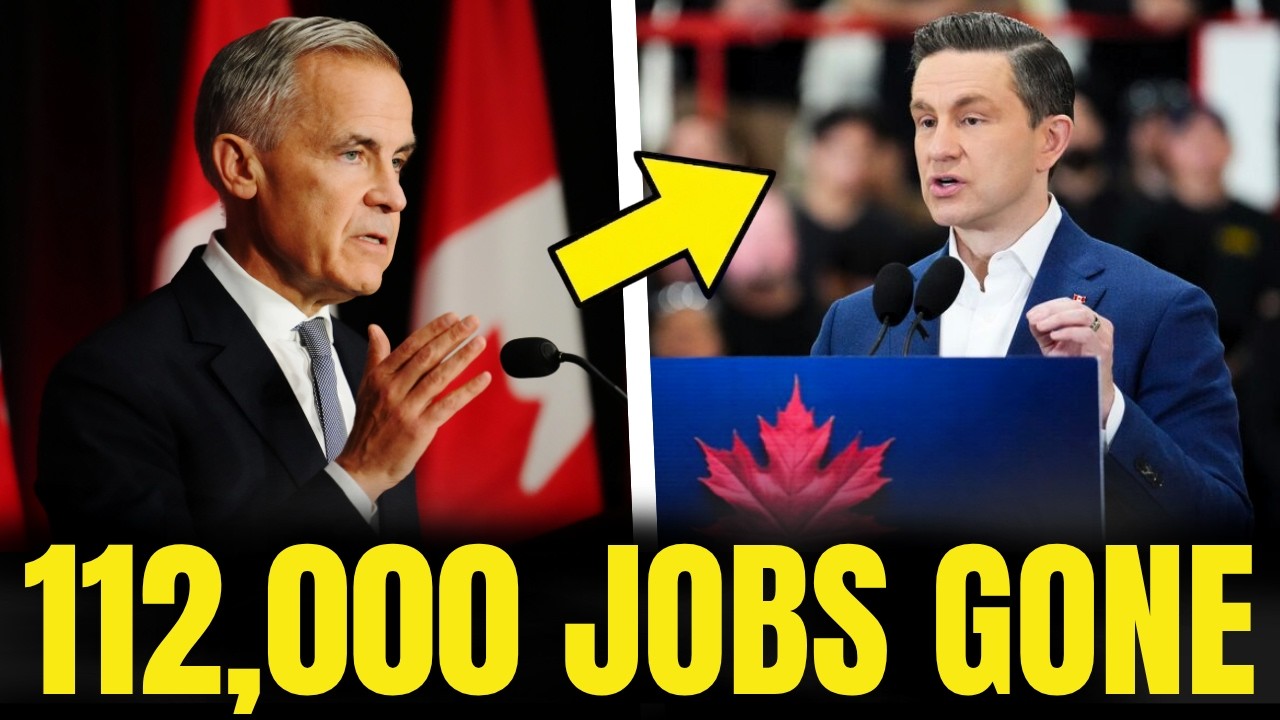
The massive Stellantis assembly plant that once produced more than 200,000 Dodge Chargers and Challengers annually has now sat largely silent for nearly two years. Retooling plans remain clouded in uncertainty, leaving workers trapped in limbo while rumors spread faster than official answers.
Further north in Sault Ste. Marie, Algoma Steel announced layoffs affecting around 1,000 workers.
For people outside industrial towns, those announcements may sound like isolated headlines.
But inside those communities, every factory slowdown spreads like an earthquake.
When a plant cuts shifts, nearby restaurants lose customers. Small suppliers lose contracts. Mortgage payments become harder to make. Local schools lose families. Entire neighborhoods begin shrinking in slow motion.
And critics say that is exactly what is now happening across parts of Canada.
The auto sector alone employs roughly 125,000 Canadians directly and supports nearly half a million more through supply chains, transportation, maintenance, logistics, and local businesses.
Which means every lost factory job creates a ripple effect far beyond the assembly line.
Then came the numbers that changed the conversation entirely.
At first glance, Statistics Canada’s April report sounded survivable: 18,000 jobs lost.
Painful, yes.
But manageable.
That was the headline.
But buried deeper inside the report was the real story.
Canada had now lost jobs in three out of the first four months of the year.
The cumulative damage had climbed to 112,000 lost positions nationwide since January.
The unemployment rate rose to 6.9 percent — the highest level in six months and one of the worst starts to a year since the 2009 financial crisis outside the pandemic era.
And the losses were concentrated overwhelmingly in full-time jobs.
Not temporary side work.
Not seasonal gigs.
Stable jobs with benefits.
The kind people build entire lives around.
Quebec suffered some of the heaviest damage, with approximately 91,000 jobs lost since the beginning of the year. Montreal alone reportedly shed around 56,000 positions.
Even economists who usually avoid alarmist language began sounding uneasy.
CIBC economist Andrew Grantham described the situation as a “rocky start,” a phrase many critics interpreted as an understatement for an economy beginning to show serious cracks.
Meanwhile, ordinary Canadians were already feeling the consequences long before economists started debating charts on television.
Ontario food bank usage climbed sharply.
Families that once considered themselves securely middle class suddenly found themselves comparing grocery prices line by line, delaying bills, and wondering how long savings would last if layoffs continued spreading.
At the same time, economic growth projections continued weakening.
Deloitte projected Canadian growth of just 1.5 percent this year — a pace many analysts say signals stagnation more than recovery.
And then came the political backlash.
Critics accused Prime Minister Mark Carney’s government of failing to secure the same trade advantages negotiated by other allied countries.
Japan reportedly secured reduced American auto tariffs while pledging massive investment into U.S. manufacturing.
The European Union reached preferential arrangements.
South Korea gained concessions.
Canada — America’s largest trading partner — was left facing continued pressure without a comparable breakthrough.
For many frustrated workers, that comparison became impossible to ignore.
Why were other countries getting deals while Canadian jobs continued disappearing?
Why were factories moving south while Ottawa insisted the fundamentals remained strong?
Those questions are now fueling growing anger not only in Ontario manufacturing towns, but across western Canada as well.
In Alberta, separatist frustration has surged again, with hundreds of thousands of signatures reportedly collected in support of a possible referendum movement demanding greater provincial independence from Ottawa.
For some Canadians, the issue is no longer simply about unemployment.
It is about trust.
Trust that the government can protect domestic industry.
Trust that trade deals benefit ordinary workers.
Trust that political leaders understand what is happening outside elite economic circles.
And critics argue that trust is evaporating fast.
What makes the situation even more explosive is the contrast between official messaging and daily reality.
Government officials continue emphasizing long-term resilience, investment strategies, and economic adaptation.
But many Canadians say they no longer judge the economy by press conferences.
They judge it by grocery bills.
By shrinking paycheques.
By factory parking lots sitting half empty.
That disconnect is becoming politically dangerous.
Because once working people begin believing that their decline is being managed rather than prevented, anger spreads quickly.
And according to critics, that is exactly where Canada may now be heading.
Not one bad month.
Not one struggling industry.
A pattern.
Factories slowing down.
Jobs shifting elsewhere.
Entire regions feeling abandoned while politicians insist the transition is temporary.
The most devastating part for many workers is the feeling that the losses were accepted as inevitable long before the public was told how serious they had become.
That is why the number “112,000” is now spreading across social media, political broadcasts, union speeches, and angry conversations at kitchen tables nationwide.
Because numbers that large stop feeling abstract very quickly.
Especially when they begin appearing in your own town.
Especially when someone on your street loses work.
Especially when the next layoff notice arrives.
And critics warn the next Statistics Canada report may determine whether this becomes a temporary downturn — or the beginning of something much larger.
For now, one thing is becoming impossible to ignore:
A growing number of Canadians believe their country is losing jobs, leverage, and economic control faster than Ottawa is willing to admit.
And the political fallout from that belief may only be starting.






