A dangerous political civil war has erupted within Canada, threatening to shatter the fragile economic resilience carefully constructed by Prime Minister Mark Carney. At the exact moment Ottawa is pushing major infrastructure projects into Western Canada, Alberta Premier Danielle Smith has injected volatile separatist rhetoric directly into the heart of the national conversation.
The sudden escalation has stunned international investors, who are closely watching Canada’s ability to withstand external trade pressures from the Trump administration. Critics argue that Smith’s high-stakes referendum strategy is a reckless political gamble designed entirely to protect her own vulnerable position within a fractured provincial conservative coalition.
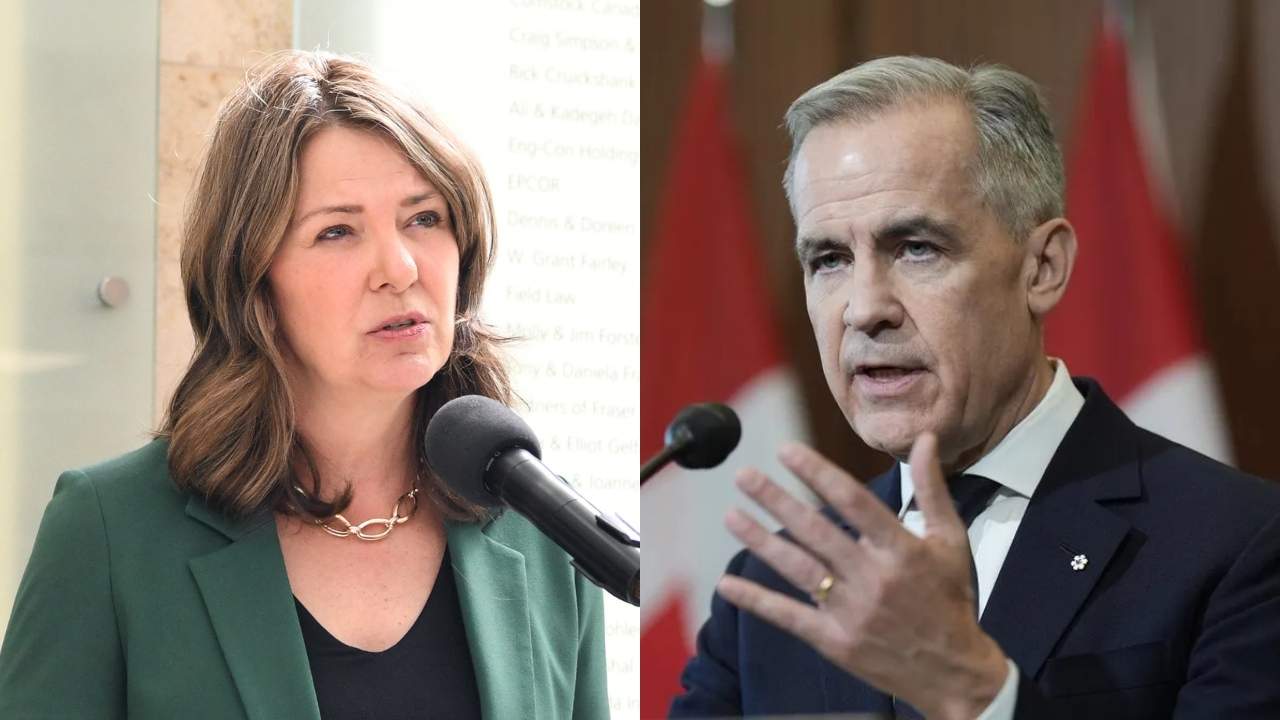
According to prominent political analysts, the Premier faced a definitive choice between guiding Alberta toward a collaborative economic future or feeding the grievances of her party’s separatist wing. By choosing the latter, she has introduced deep political instability into a delicate macroeconomic environment that desperately requires long-term certainty.
„We are looking at a dangerous contradiction where Alberta is finally being offered the pipelines and energy partnerships it long demanded, yet its leadership responds by threatening the unity of the federation.” — National Security and Trade Fellow, Toronto
The timing of this internal constitutional crisis could not be worse for the Canadian federation, which is currently managing severe trade hostilities along its southern border. As global markets fluctuate, multi-billion-dollar energy, logistics, and industrial infrastructure projects depend heavily on absolute jurisdictional stability before private capital commits.
Both the Alberta Chamber of Commerce and the Canadian Chamber of Commerce have taken the extraordinary step of publicly opposing the proposed referendum question. Business leaders warn that unleashing a projected two-and-a-half years of legal and political ambiguity will inevitably discourage vital foreign direct investment across the West.
The core contradiction at the center of the Premier’s strategy is becoming impossible for domestic corporate executives to ignore. For nearly a decade, Western alienation was fueled by the narrative that a hostile federal government in Ottawa was actively blocking pipeline construction and strangling the provincial resource economy.
Under Carney’s technocratic leadership, however, the federal apparatus has shown an unprecedented openness to resource extraction, major pipeline corridors, and robust export growth. The sudden pivot to separation politics, despite receiving these significant economic concessions, suggests a purely domestic motivation centered on raw political survival.
While broader public support for actual secession remains statistically weak throughout Alberta, the mere existence of a referendum debate injects systemic risk into long-term corporate planning. Major infrastructure initiatives cannot survive on political theater alone; they require absolute constitutional permanence to justify massive capital outlays.
For Prime Minister Carney, the domestic crisis represents an incredibly delicate balancing act that tests the limits of his strategic governance model. If the federal government responds too aggressively to the provincial challenge, it risks inadvertently inflaming Western alienation and giving further momentum to the separatist movement.
Conversely, if Ottawa appears too passive or indifferent to the threat of internal fragmentation, critics will quickly accuse the administration of constitutional weakness during a period of global crisis. Consequently, Carney’s messaging has been meticulously calibrated to project calm, firm authority while continuously emphasizing the benefits of partnership.
The Prime Minister’s double-barreled approach involves fiercely defending Canadian unity while simultaneously demonstrating that the federal government remains fully committed to Western prosperity. This intricate balancing act is made vastly more complicated by the parallel economic and tariff threats currently being directed at Canada by Washington.

The national consequences of the Alberta debate extend far beyond the borders of the energy-producing province, as other regional leaders observe the tactical standoff. If threatening separation becomes a recognized tool to extract outsized federal concessions, the foundational stability of the entire Canadian confederation could permanently erode.
This domestic political collision exposes two fundamentally incompatible visions for the future of the nation’s most resource-rich region. One vision focuses on regulatory stability, international trade diversification, and building massive energy projects within a unified, modern Canada capable of global competition.
The alternative vision relies on grievance-based pressure tactics, constant referendum brinkmanship, and the deliberate maintenance of internal political anger to consolidate a domestic voting base. This structural collision comes at a moment when Canada can least afford internal fractures due to shifting global alliances.
Historical precedents from past separation crises, particularly the constitutional battles with Quebec, show that ballot-box uncertainty can paralyze national policy for generations. The federal government must steer a course that avoids the traps of condescension while fiercely protecting the integrity of the national economic shield.
Carney’s strategic calculation hinges on proving to working-class Albertans that remaining within the Canadian federation delivers tangible, superior economic rewards. By fast-tracking approvals for clean energy infrastructure and traditional export routes, Ottawa hopes to isolate the separatist faction through sheer material performance.
However, the noise of separation politics frequently drowns out abstract macroeconomic data within highly polarized media ecosystems. Shifting the public conversation from emotional division back to rational, infrastructure-led growth represents the greatest domestic communication challenge currently facing the Prime Minister’s sophisticated press apparatus.
The corporate sector’s vocal anxiety highlights a growing rift between mainstream business conservatives and the populist wing of the provincial ruling party. For capital markets, the preservation of the constitutional status quo is infinitely more valuable than short-term partisan victories achieved through destabilizing referendums.
As the federal government maintains its measured tone, provincial opposition parties are leveraging the business community’s backlash to challenge Smith’s economic credibility. They argue that risking the province’s international reputation to appease a loud minority is an abdication of responsible economic stewardship.
The unfolding drama reveals how deeply domestic political survival can impact a nation’s broader geopolitical stance during times of international tension. Internal division north of the border provides external competitors with strategic leverage, weakening Canada’s collective bargaining position in crucial upcoming continental trade negotiations.
Despite the high-stakes constitutional maneuvering, ordinary citizens remain heavily preoccupied with immediate economic strains, including inflation and the rising cost of municipal services. The challenge for both levels of government will be preventing abstract constitutional warfare from completely paralyzing local administrative performance.
The administration’s ability to streamline approvals through the newly established Major Projects Office will be a critical test of this stabilizing strategy. Proving that federal institutions can deliver rapid economic results is the ultimate counter-argument to claims that Ottawa is inherently dysfunctional.
National unity in the modern era is increasingly maintained through shared economic security rather than mere historical sentiment or legal coercion. If the federal framework fails to protect the material interests of its constituent regions, the appeal of alternative, populist narratives will inevitably expand.
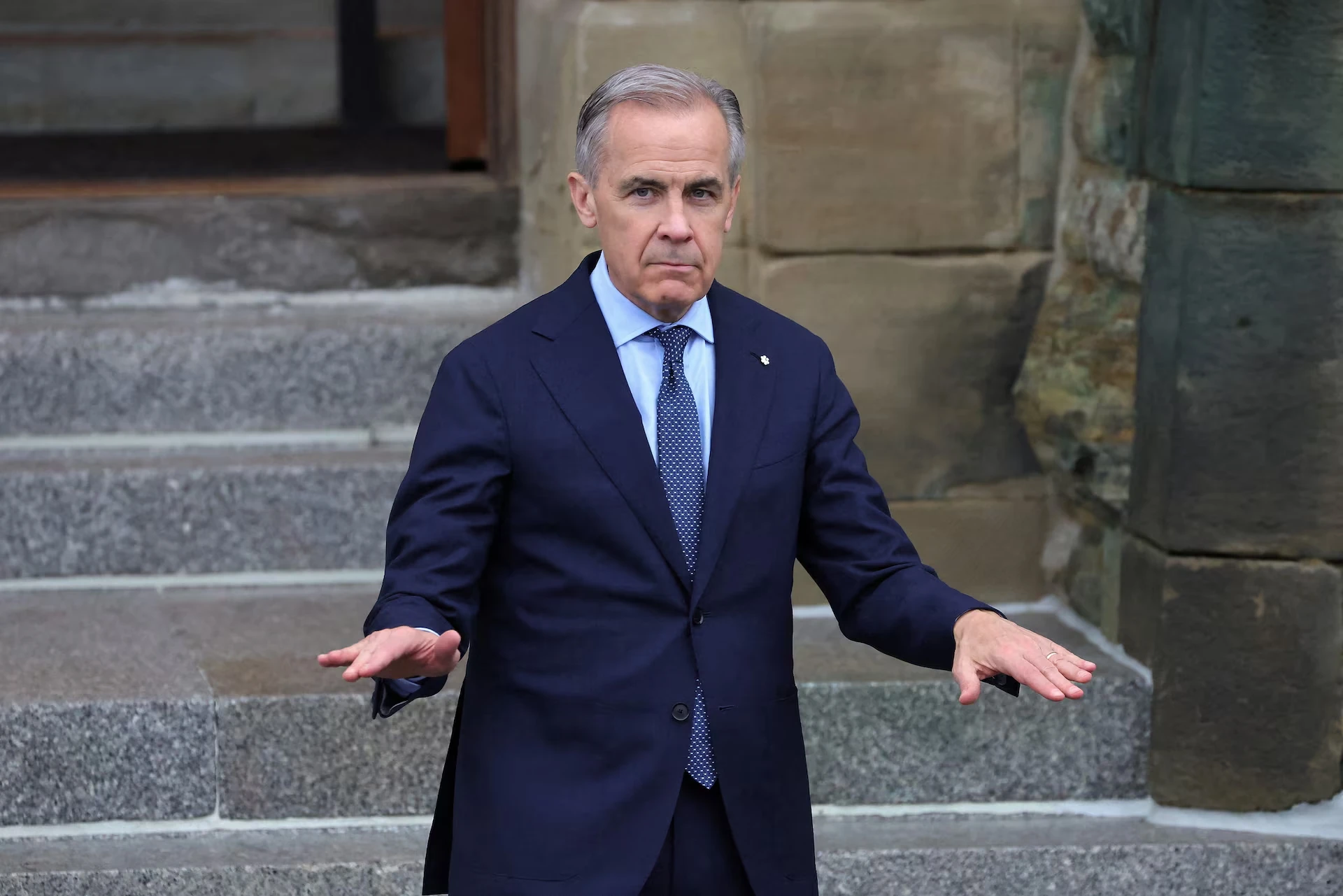
The ongoing standoff guarantees that the relationship between Ottawa and Edmonton will remain highly volatile throughout the upcoming legislative session. Trade diplomats are working tirelessly behind the scenes to minimize the impact of this internal friction on international shipping and supply agreements.
As Canada navigates an increasingly hostile global trading environment, its internal cohesion remains its most critical and yet most vulnerable asset. The resolution of the Alberta referendum debate will dictate whether the country faces the future as a fragmented federation or a unified economic powerhouse.
Ultimately, the political collision in Western Canada serves as an urgent reminder of the fragile nature of modern democratic governance systems. Faced with external pressure and internal division, the nation must decide whether to embrace collective investment or retreat into localized constitutional warfare.
The path forward requires an unyielding commitment to institutional stability, clear regulatory frameworks, and inclusive economic growth across all provinces. Success will depend on whether rational economic arguments can triumph over the powerful allure of divisive, grievance-driven political theater.
For a deeper understanding of how public institutions adapt to changing legal frameworks and localized economic challenges, a comprehensive analysis of international regulatory history offers vital clarity. Examining historical structural reforms reveals how modern public sector administration continues to evolve under pressure.
This framework provides important historical context on how legislative structures adapt during periods of governance transition, mirroring the structural institutional shifts currently facing modern commonwealth administrations worldwide.






