**A Technical Procurement Choice Is Becoming a Strategic Signal**
Ottawa / Washington / Stockholm – February 17, 2026
When Canada announced last week that it had selected Saab’s JAS 39 Gripen E/F as the backbone of its future fighter fleet, most observers treated the decision as a straightforward technical procurement choice: lower acquisition and operating costs, full technology transfer, domestic assembly, and superior cold-weather performance in the Arctic compared with the Lockheed Martin F-35. Yet within days the move has metastasized into something far larger — a strategic signal that is forcing Washington, Brussels and every NATO capital to ask the same uncomfortable question: is Canada quietly decoupling from U.S. defense dominance, and if so, what does that mean for the alliance, for North American security, and for the future of transatlantic industrial interdependence?
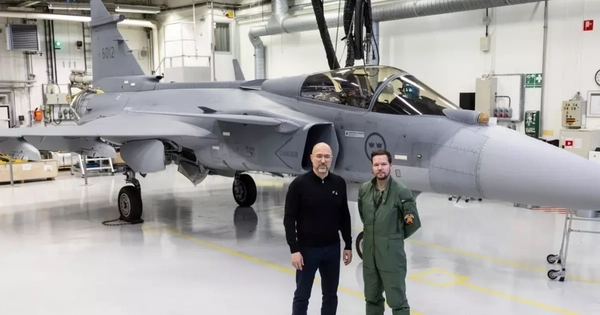
The numbers alone are striking. The CAD $19–22 billion contract for 88 Gripen E/F aircraft (with options for 44 more) includes complete source-code access, independent maintenance rights, final assembly at Bombardier’s Mirabel facility, and a 30-year industrial-participation package that guarantees thousands of high-skill jobs across Québec, Ontario and Manitoba. The Gripen’s lifecycle cost per flight hour is estimated at $4,700–$6,800 — roughly one-sixth that of the F-35’s $38,000+ figure. In the Arctic environment where Canada must patrol the longest coastline in the world, the Gripen has demonstrated superior cold-weather performance in classified high-altitude tests conducted last winter using a Rolls-Royce Trent 1000 testbed.
But the real story is not technical superiority; it is geopolitical symbolism. For the first time in the post-Cold War era, a core NATO member has chosen a European fighter platform over an American one for its principal combat fleet. The decision breaks the unwritten rule that North American air forces standardize on U.S. systems to ensure seamless NORAD integration. It also comes at the exact moment the United States is threatening Canada with 25% tariffs on almost every major export category — lumber, energy, critical minerals, autos, agriculture — unless Ottawa agrees to massive trade concessions.
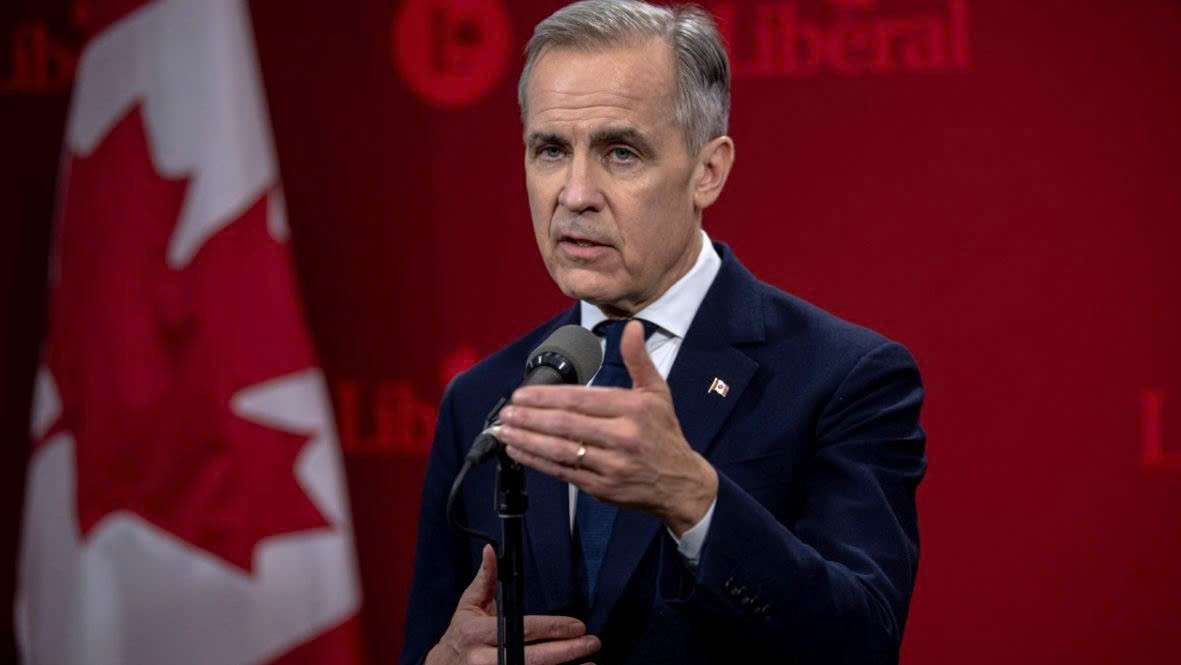
Prime Minister Mark Carney did not mince words in his announcement:
“This is not a rejection of the United States or NATO. It is an affirmation of Canadian sovereignty and strategic autonomy. When our largest trading partner threatens to weaponize trade policy against essential goods that heat American homes and build American houses, we cannot pretend that defense procurement exists in a vacuum. We choose the platform that gives us capability today, jobs today, and control today — not promises of interoperability tomorrow.”
The Pentagon’s response was swift and unusually sharp. A statement from the Office of the Secretary of Defense warned that “divergence in fighter platforms risks interoperability challenges that could weaken collective defense against shared threats.” Behind closed doors, U.S. officials are said to be “furious and panicked.” One senior defense official told reporters on background: “We always assumed Canada would stay in the F-35 family because of NORAD. This isn’t just about jets — it’s about whether Canada still trusts us as a reliable partner.”
The timing is no coincidence. Canada’s Gripen decision was accelerated after Trump’s repeated public threats to impose tariffs unless Canada “pays back billions in unfair subsidies” and opens its markets unconditionally. Ottawa has already retaliated with 25% duties on U.S. corn, soybeans, pork, whiskey, motorcycles, semiconductors and select consumer goods. The fighter-jet choice is widely seen as the next asymmetric counterpunch: if the U.S. weaponizes trade, Canada will weaponize defense procurement.
The economic fallout is already visible. Lockheed Martin shares fell 5.2% in pre-market trading; Saab AB jumped 14%. French defense stocks (Thales, Dassault) gained 4–8% on expectations that France, Germany and others may now reconsider their own F-35 commitments. The Canadian dollar strengthened 1.9% against the U.S. dollar as traders priced in a potential acceleration of European-style defense autonomy.
The strategic implications are profound. NORAD — the binational North American Aerospace Defense Command — relies on seamless interoperability between U.S. and Canadian fighter fleets. A mixed Gripen/F-35 force introduces complexity: different datalinks, different maintenance ecosystems, different software-upgrade cycles. Pentagon planners are now racing to model the impact on joint operations, Arctic patrols, and continental missile-defense integration.
Warren Buffett, who has rarely commented on defense policy, broke his silence this morning in a statement released through Berkshire Hathaway:
“When you threaten your closest ally with tariffs and then try to force them to buy your weapons, you don’t strengthen the alliance — you weaken it. Canada is choosing capability, jobs, and independence. The U.S. should be asking why our partners feel the need to diversify away from us, not punishing them for it.”
Buffett’s words carry extra weight because Berkshire holds significant stakes in consumer-goods companies, railroads, and utilities that would be directly harmed by prolonged U.S.-Canada friction.

Acting President JD Vance has not yet commented publicly, but White House sources say he is “reviewing all options” and facing intense internal debate. Several Republican senators from border and defense-contractor states have privately urged de-escalation, with one senior GOP aide telling reporters: “We can’t afford to lose Canada as a partner over a fighter-jet contract. The F-35 is great, but alienating Ottawa helps nobody.”
The episode has become a defining early test for Carney — the former central banker who became prime minister in late 2025 — and for Trump, who continues to wield enormous influence despite no longer holding executive authority. Many analysts now describe it as proof that Trump’s policy preferences can still move markets and headlines — but his ability to force compliance has been dramatically curtailed since losing executive power.
As Ottawa prepares to finalize the Gripen contract and Washington weighs its next move, the world is watching to see whether this is a temporary rupture or the beginning of a permanent fracture in the transatlantic security architecture.
The next 72 hours will show whether diplomacy can contain the damage — or whether the “NATO Detonation” becomes the spark for a much larger unraveling.