Europe’s Nuclear Awakening: Why France’s New Security Vision Is Reshaping the Continent
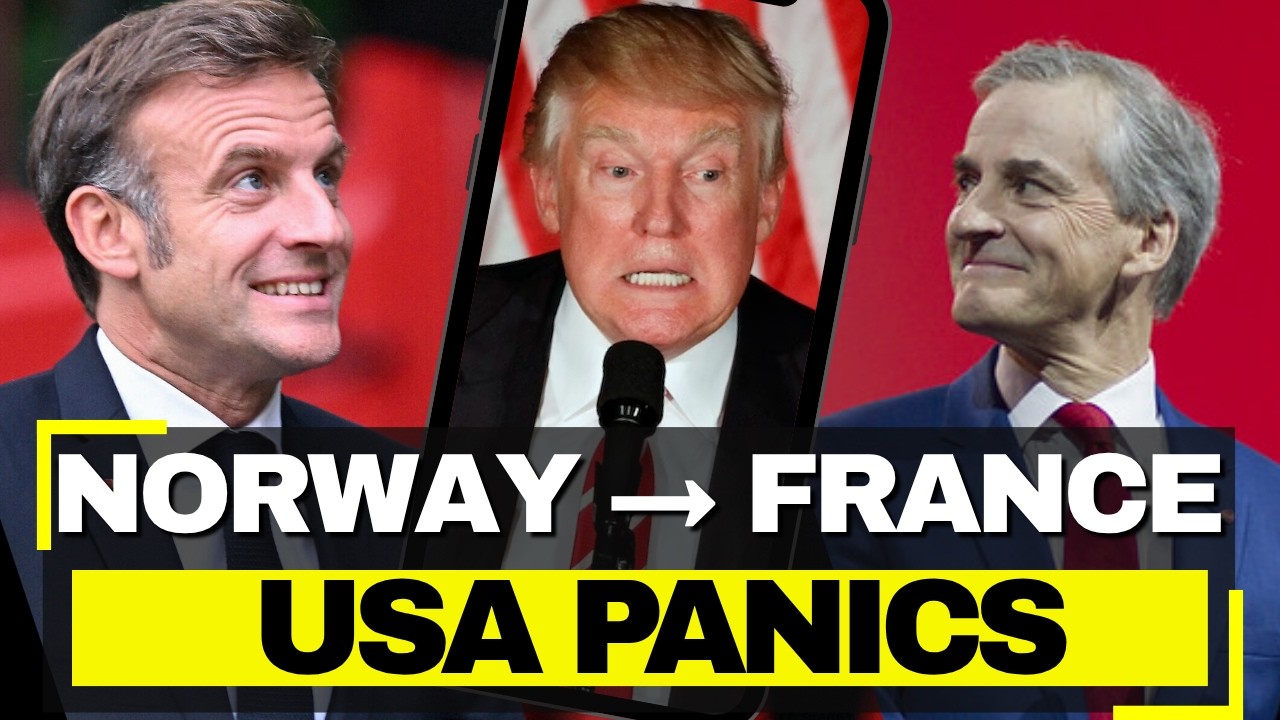
Something extraordinary is happening in Europe, and most people have not fully noticed it yet.
Just a few months ago, France unveiled what appeared to be another defense initiative. Today, it is beginning to look like the foundation of an entirely new European security architecture.
Back in March, French President Emmanuel Macron stood before a nuclear submarine and delivered a message that immediately caught the attention of defense planners across Europe.
France, he announced, would strengthen its nuclear deterrent, expand strategic deployments, and offer a new security framework to European partners willing to participate.
At the time, many observers treated the announcement as political symbolism. Three months later, that assumption looks increasingly outdated.
Nine European countries have already joined the initiative. Germany, the United Kingdom, Poland, the Netherlands, Belgium, Sweden, Denmark, Greece, and Norway have all signed on.
That number matters because this framework did not exist earlier this year. It was created from scratch and gained support at a pace rarely seen in European defense policy.
But this story is not really about nuclear weapons alone. It is about trust.
For more than seventy years, Europe relied on the American nuclear umbrella as the ultimate guarantee of security. That arrangement shaped NATO, military planning, and the strategic balance of the continent.
Today, however, European leaders appear increasingly concerned about uncertainty in global politics and the possibility that future American administrations may not always share the same priorities.
France’s proposal directly addresses those concerns.
Under the framework, participating nations can cooperate with French strategic forces, join nuclear exercises, and deepen military integration with one of Europe’s only independent nuclear powers.
Paris is also investing heavily in new capabilities. Additional nuclear-capable Rafale fighter squadrons are planned, along with major upgrades to military infrastructure near the heart of Europe.
French officials describe the concept as a distributed network of deterrence stretching across the continent.
Supporters argue that such a system creates resilience. If security guarantees are spread across multiple partners, Europe becomes less vulnerable to sudden political shifts elsewhere.
Germany has emerged as one of the most important participants.
Berlin has already established working groups with France and is expected to observe French nuclear exercises in the near future, a step that would have been almost unimaginable a decade ago.
Norway’s decision may be even more significant.
As one of NATO’s key Arctic nations, Norway’s participation signals that concern about long-term security is no longer limited to Central Europe. It now extends from the Baltic Sea to the High North.
The timing is difficult to ignore.
Recent geopolitical tensions have forced European governments to rethink assumptions that once seemed permanent. Security planners increasingly speak about resilience, autonomy, and strategic independence.
In that environment, France is presenting itself as more than a military partner. It is positioning itself as a guarantor of European stability.
The United States remains the dominant military power within NATO, but Washington has reportedly begun discussing additional nuclear deployments of its own in Europe.
Many analysts view that development as evidence that competition for influence within the alliance is becoming more visible.
What makes the French initiative different is that every major decision remains under European control.
No election outside Europe can cancel it. No foreign administration can suspend it. The command structure remains entirely within the continent.
That argument resonates strongly among policymakers who believe Europe must prepare for a future that is less predictable than the past.
Critics caution that creating overlapping deterrence systems could complicate alliance management and increase strategic confusion.
Supporters counter that redundancy is not weakness. In their view, multiple layers of deterrence make Europe stronger, not weaker.
The numbers remain relatively modest compared with the massive American arsenal.
Yet advocates argue that credibility matters as much as size. A smaller force that Europe fully controls may be viewed as more dependable than a larger force whose future commitments are uncertain.
Meanwhile, France continues investing in next-generation strategic assets, including new submarines and expanded air capabilities designed to serve well into the middle of the century.
That suggests this is not a temporary initiative created for headlines.
It is a long-term project backed by decades of planning, funding, and political commitment.
The larger question is what happens next.
If additional countries join, and if military integration deepens, Europe could gradually develop a security structure that complements NATO while reducing dependence on outside guarantees.
Such a transformation would represent one of the most significant geopolitical shifts since the end of the Cold War.
Because beneath the speeches, exercises, and defense agreements lies a much bigger reality.
Europe is beginning to ask whether true security means being protected by allies—or possessing the ability to protect itself.
And the answer to that question could shape the balance of power across the continent for decades to come.






