“BAN THEM ALL”: GINA RINEHART’S BLUNT WARNING SENDS SHOCKWAVES THROUGH AUSTRALIA
A single sentence. Fifteen words. One of the most powerful women in Australia.
And suddenly, an already explosive national debate has erupted into a political firestorm.
Mining billionaire Gina Rinehart has ignited fierce controversy after demanding a complete ban on the return of so-called ISIS brides to Australia, insisting that any Australians who willingly joined the terrorist group should never be allowed back into the country.
Her message was brief, direct and impossible to ignore.
“I can give you money, but please put your own safety first. Boycott and ban all of them.”
Within hours, the statement had spread across social media platforms, dominated talkback radio programs and become front-page news across the country.
For many Australians, the most shocking aspect was not merely what was said — but who said it.
As the executive chairman of Hancock Prospecting and Australia’s wealthiest individual, Rinehart commands enormous influence in business, politics and public life. Her fortune, estimated at more than $30 billion, gives significant weight to every public intervention she makes.

This time, she appears to have aimed directly at political leaders involved in the controversial repatriation of Australian women and children from Syrian detention camps.
According to sources familiar with the matter, Rinehart’s frustration centres on politicians she believes have prioritised humanitarian arguments and international expectations over national security concerns.
The timing could hardly be more sensitive.
Australia remains deeply scarred by the devastating Bondi attack of December 2025, when an ISIS-inspired extremist allegedly murdered 15 people attending a Jewish community gathering.
The tragedy reignited long-standing concerns about radicalisation, extremism and the effectiveness of Australia’s security framework.
Against that backdrop, the government’s decision to facilitate the return of several Australian women who travelled to Syria during the rise of Islamic State has become one of the nation’s most divisive political issues.
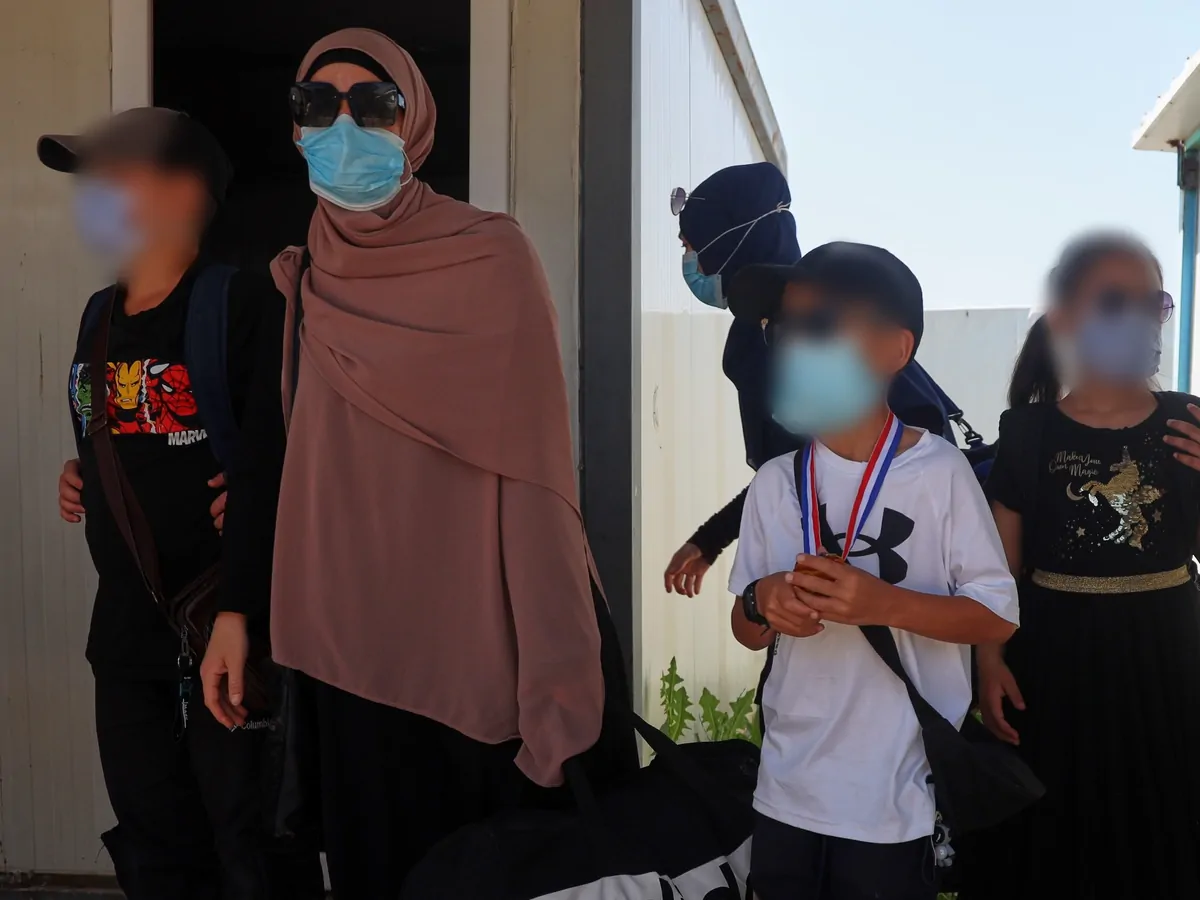
Among those repatriated is Nesrine Zahab, who left Australia in 2014 at the age of 21 and later married an ISIS fighter. Having returned to Australia, she reportedly hopes to rebuild her life and pursue studies in nursing.

While some returnees face criminal investigations or legal proceedings, others have been released into the community under varying levels of monitoring.
That reality has triggered widespread public concern.
Many Australians are asking whether individuals who voluntarily joined one of the world’s most notorious terrorist organisations should ever be given a second chance within Australian society.
Rinehart’s answer is unequivocal.
“If they are not banned, there will be many more tragedies like the Bondi incident,” she warned.
“I hope you won’t do it just for money.”
The statement has been interpreted by many observers as a direct challenge to senior government figures who supported or facilitated repatriation efforts despite growing public opposition.
For decades, Rinehart has been known as one of Australia’s most outspoken conservative voices.
She has consistently advocated stronger border controls, stricter immigration screening procedures and tougher approaches to national security. In previous years she has argued that social media activity should be examined as part of immigration assessments and has repeatedly expressed concerns about radicalisation and the erosion of traditional Australian values.

Her criticism of progressive political agendas and support for stronger law-and-order policies have made her a hero to supporters and a lightning rod for critics.
Yet even by Rinehart’s standards, this intervention stands out.
By openly linking financial support to questions of public safety, she has inserted herself into one of the country’s most emotionally charged debates in a way rarely seen from major business leaders.
The controversy surrounding ISIS-linked families continues to divide Australians.
Supporters of repatriation argue that Australia has legal and moral obligations to its citizens, particularly children who had little or no say in the decisions made by their parents.
Human rights advocates contend that abandoning Australian citizens overseas creates dangerous precedents and may ultimately worsen security risks.
Critics reject that argument entirely.
They question why taxpayers should fund surveillance programs, rehabilitation initiatives and deradicalisation efforts for individuals who willingly aligned themselves with a terrorist movement responsible for atrocities around the globe.
Among the loudest opponents has been One Nation leader Pauline Hanson, who has repeatedly warned that allowing former ISIS affiliates to return sends the wrong message and risks emboldening extremists.
Public petitions demanding tougher action have attracted tens of thousands of signatures, reflecting growing frustration among many Australians who believe the government is out of step with public sentiment.
Rinehart’s intervention has now added unprecedented momentum to that hardline position.
As a major donor to conservative causes and organisations that advocate stronger national security policies, her threat to withdraw support from politicians who favour repatriation carries significant political implications.
What makes her message particularly powerful is its simplicity.
There were no lengthy speeches.
No complicated policy papers.
No carefully crafted political language.
Just fifteen words that cut directly to the heart of a debate that has left Australia deeply divided.
Political commentators have described the statement as a “political hand grenade” thrown into the middle of an already volatile discussion.
Supporters have praised Rinehart for saying what they believe many Australians are thinking.
Critics accuse her of fearmongering, oversimplifying a complex issue and using her immense wealth to influence public policy.
One prominent columnist summed up the reaction bluntly:
“When the richest woman in Australia says safety comes before money, politicians should probably pay attention.”
The controversy also arrives at a difficult moment for the Albanese government.
Rising living costs, housing affordability pressures and growing security concerns have already placed significant strain on public confidence.
The ISIS bride debate has only added another layer of political pressure.
Opposition parties are demanding greater transparency regarding where returnees are living, what monitoring arrangements are in place and how deradicalisation programs are being managed.
Meanwhile, security experts remain divided.
Some argue that the immediate threat posed by returning women may be relatively low, particularly when appropriate monitoring measures are implemented.
Others caution that even a small number of former ISIS affiliates could contribute to future radicalisation efforts or inspire extremist networks over time.
In the middle of that uncertainty, Rinehart’s position remains crystal clear.
She believes Australia should revoke passports wherever legally possible and enforce a strict no-return policy for those who voluntarily joined ISIS.
For her, the issue is not complicated.
National security comes first.
No exceptions.
Whether Australians agree with her or not, one thing is undeniable.
Gina Rinehart has succeeded in forcing a conversation that many politicians may have preferred to avoid.
Her blunt warning has reignited a national debate about security, citizenship, responsibility and the limits of forgiveness.
And as Australia wrestles with those questions, the country’s richest woman has drawn an unmistakable line in the sand.
In her view, the choice facing Australia is simple.
Protect the nation first — or accept the risks that come with doing otherwise.
The debate is far from over.
But after Rinehart’s explosive intervention, nobody can pretend it is happening quietly anymore.






