A political earthquake of unimaginable proportions is shaking the European continent to its deepest foundations. Viktor Orbán, the Hungarian prime minister, who stood like an unshakable rock in the often stormy surf of European politics, has suffered a painful and almost historic election defeat. For a total of 16 years, he held the reins of power in Budapest without interruption. 16 years in which he was regarded by his loyal supporters and many observers in Europe as the last remaining guarantor of national sovereignty, political reason and economic stability. He was the man who relentlessly opposed the dictates from Brussels, which were often perceived as unrealistic and intrusive, who stopped mass migration at his country’s borders and saved Hungary from economic suicide through an ideology-driven energy and sanctions policy. But now this era has come to an abrupt end. The rock has crumbled, the last political dam has broken.
And it is precisely at this moment of greatest weakness, in this historic turning point, that the Kremlin speaks out. It is not just a routine diplomatic statement or a formal press release; it is a single, concise sentence from Vladimir Putin’s closest entourage that strikes Europe to the core. It is an ice-cold prophecy that could shake the entire European Union and threaten to trigger a geopolitical chain reaction. The devastating effects of this change of power and the reactions to it will not only be felt in the elite circles of power. No, they will hit millions of ordinary citizens hard in particular – in the form of an exploding cost of living, growing insecurity and an unprecedented political upheaval that will drastically change our everyday lives.
To truly understand the enormity of this political earthquake, it is necessary to recall who Viktor Orbán actually was on the international stage. He was by no means just an ordinary head of government of a Central European country. He was the iron blocker who stood up with unprecedented determination against what he saw as the West’s completely self-destructive and downright insane sanctions against Russia. While large parts of Europe embarked on an almost blind spiral of sanctions, without regard for their own economy, Orbán stubbornly stuck to pragmatic, vital energy agreements with Moscow. It was the last real and functioning brake before a total, uncontrollable escalation between Russia and the West.
His influence is now dwindling at a breathtaking pace. For years, under his charismatic leadership, Hungary had sent a crystal-clear message to the world: “We will not be blackmailed. We are not freezing for the abstract ideologies in Brussels.” For Orbán, it was simply illogical and irresponsible to import expensive liquefied natural gas (LNG) from the US or the Middle East when cheap Russian oil and gas were directly and reliably available. He always argued tirelessly at every summit that sanctions do not primarily affect Vladimir Putin or the Russian war machine, but mercilessly the ordinary workers, the hard-fighting families, the pensioners and the middle class throughout Europe. Now that he is politically ailing and involuntarily leaving the stage, people in the corridors of the European Union breathe a sigh of relief. People celebrate there – still in silence, but with clearly noticeable satisfaction.
The European Union has achieved its long-awaited goal, and this time it is no longer even pretending that it is primarily about noble democratic values or the rule of law. It’s about hard-hitting, blunt power politics. For months, pro-government media in Hungary had warned urgently about this: Brussels’ secret offer to the Hungarian opposition is to join forces to overthrow Orbán in exchange for releasing billions in illegally blocked subsidies. Many voters were blinded by this brilliant promise, chose the change of power and elevated Péter Magyar to the highest office. But the political bill that Brussels is now presenting to the country is as brutal as it is ruthless.
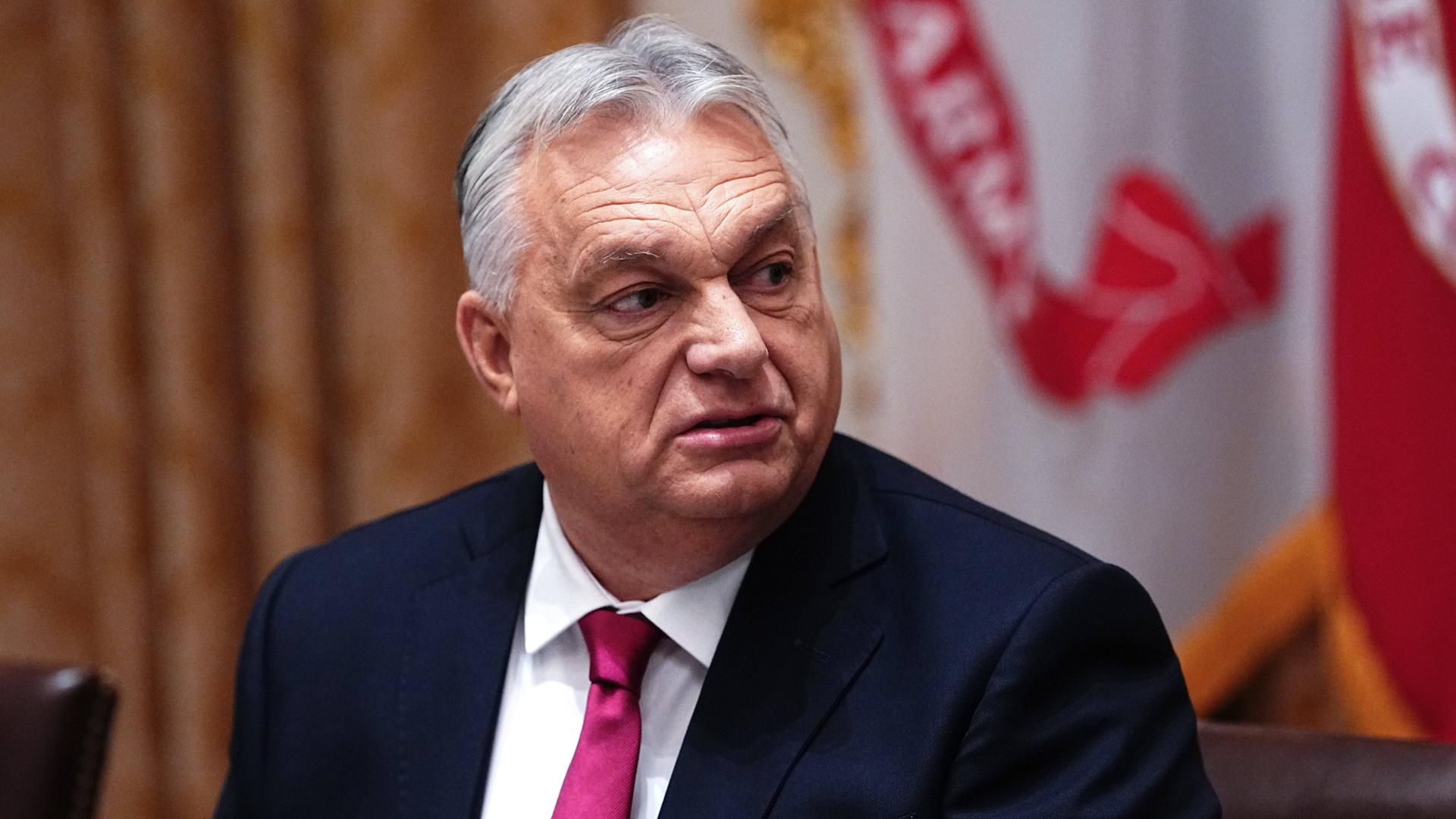
The EU immediately presented the new leadership with 27 new, draconian conditions for the release of the €35 billion in frozen funds. The demands read like a complete sell-out of the Hungarian soul and sovereignty: Budapest must release the gigantic 90 billion euro loan for Ukraine immediately and without objection. The veto against new, even stricter sanctions against Russia must be dropped unconditionally. The traditional, conservative policies on migration and social values (such as resistance to so-called LGBT ideology) must be completely reversed, and the strict EU asylum rules must be fully accepted – otherwise there is a risk of ruinous fines of almost one million euros every day.
It is the exact opposite of what the proud Hungarians have voted for at the ballot boxes for years. During the election campaign, Péter Magyar had cleverly tried to pretend a certain continuity to the voters. But just one day after the election, the masks fell at a rapid pace. In his very first press conference, he openly admitted that he wanted to dutifully wave through the 90 billion loan for the Ukrainian war budget. The frozen EU funds, which are now finally to flow and which he sells as his great success, are already bitterly described by critics as the “Judas’ reward” for giving up national independence. Orbán had always warned urgently that such endless financial packages do not serve the longed-for peace, but only artificially prolong the suffering of the people and place an immeasurable burden on European taxpayers. Magyar is now trampling on this political legacy.
With Orbán’s forced withdrawal from the front row of politics, however, much more than just the domestic politics of a sovereign Eastern European state is slipping. It’s about the big picture: the already extremely fragile energy relations between Europe and Russia, which are hanging by a thread. Orbán was the last remaining reliable mediator who even spoke to both sides at the highest level. He was the courageous man who vetoed the massive aid packages for months because Kiev used the vital Druzhba pipeline as cynical leverage in return. “No oil from Russia, no money for Ukraine,” was his pragmatic motto protecting his people.
Without this balancing, rational pole, any diplomatic rapprochement will now falter from one hour to the next. Negotiations threaten not only to stall, but to fail completely. Uncertainty in the markets and in the capitals is growing not from day to day, but from minute to minute, spreading like an ominous, dark shadow across the entire European continent. The warnings of the experts are unmistakable: Without the cheap Russian oil and gas, parts of which flowed to Europe at all due to Hungary’s stubbornness, the already high prices for energy now threaten to get completely out of control.
And it is precisely at this highly critical point that the remarkable reaction from Moscow begins. While Kremlin spokesman Dmitry Peskov was still diplomatically cool in front of the cameras that “congratulations are not sent to unfriendly countries” – and Hungary is now officially considered such after the change of course, as it is expected to support the hostile sanctions – the real political thunderclap came from Vladimir Putin’s very closest circle of advisers.
Kirill Dmitriev, an extremely high-ranking and influential adviser to Putin, reacted publicly and with lightning speed to the assessment that Hungary’s dramatic election result would massively increase pressure throughout the European Union. Dmitriev’s words were short, completely unvarnished and marked by a frightening cold-bloodedness: “This will only accelerate the collapse of the EU. Check in four months whether I’m right.”
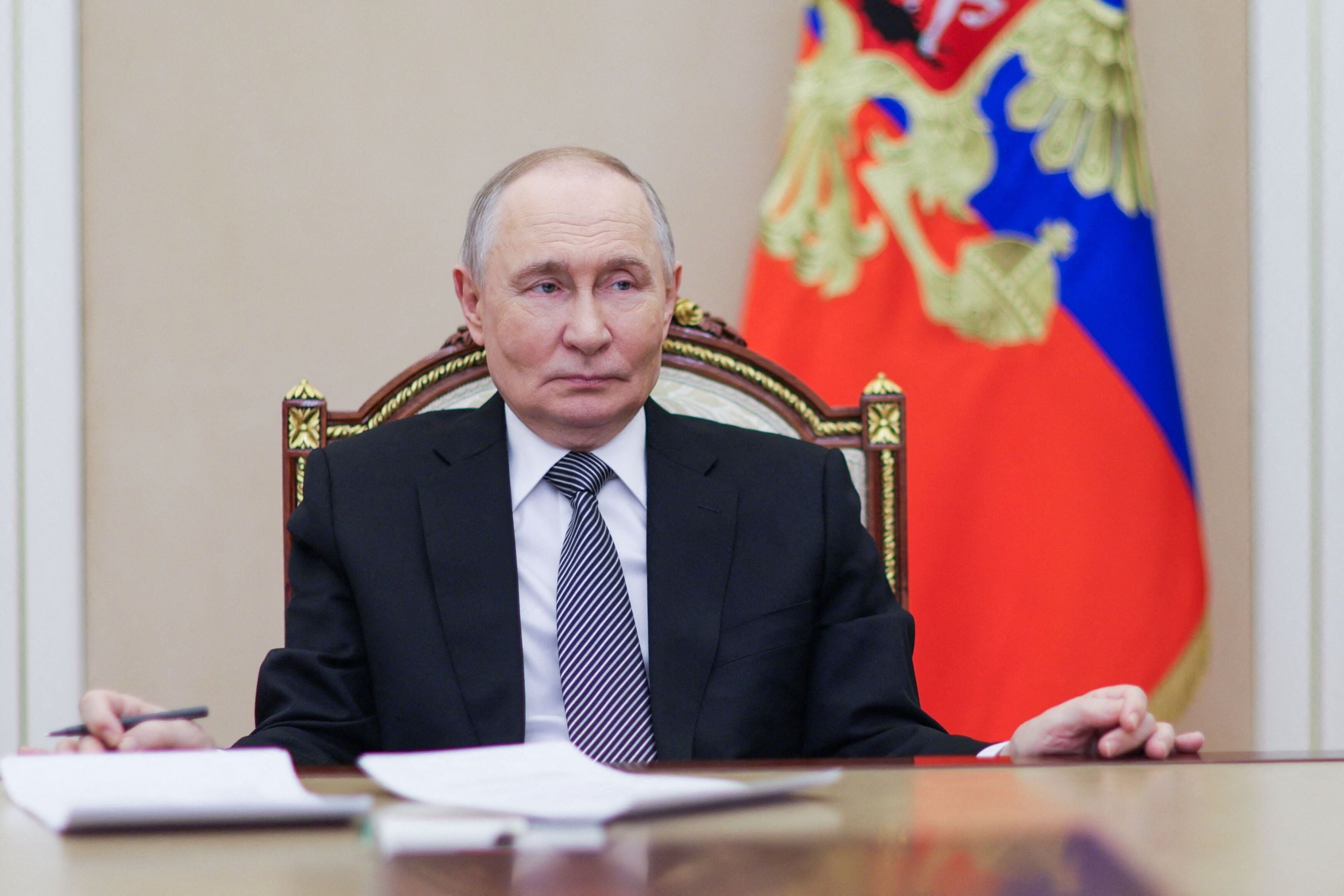
This one, concise sentence is the absolutely unimaginable. It is an open declaration of war on the Brussels system and at the same time a gloomy prophecy that Vladimir Putin and his most trusted circle apparently share with crystal-clear certainty. The Moscow leadership does not see Orbán’s case as a grandiose triumph for the West. Rather, they see it as the final, fatal mistake that will finally bring down the already extremely shaky house of cards of the European Union in record time.
Russia’s influential senator and vice-chairman of the Federation Council, Konstantin Kosachev, once again significantly upped the ante in a detailed, strategic analysis. He spoke quite openly of a “perfect storm” that is now inexorably brewing over Europe. The state coffers are empty, systematically plundered by endless billions in payments to Kiev. At the same time, the incessantly exploding fuel and energy costs are brutally eating away at the hard-earned purchasing power of the working population. In addition, there is the immense pressure to reallocate the already tight budgets for rapidly increasing military spending. Kosachev’s devastating conclusion is as brutal as it is simple: “Orbán is leaving, and the enormous problems remain – and they will implode.”
Für den Kreml und für unzählige besorgte Bürger quer durch ganz Europa war Viktor Orbán niemals das eigentliche Problem. Im Gegenteil: Er war die letzte vernünftige, ausgleichende Instanz in einem politischen System, das zunehmend die Bodenhaftung verliert. Er verteidigte die Druschba-Pipeline stets mit dem absolut einleuchtenden Argument: “Die leeren Versprechen aus Kiew füllen vielleicht den Dachboden, aber die ungarischen Familien können damit im eiskalten Winter weder ihre Wohnungen heizen noch ihre Autos betanken.” Ohne ihn als einflussreichen Drahtzieher und pragmatischen Realpolitiker wird nun alles zwangsläufig teurer, bürokratisch komplizierter und für den sozialen Frieden ungleich gefährlicher. Neue, noch härtere und umfassendere Sanktionspakete liegen bereits in der Brüsseler Schublade griffbereit. Ihre rücksichtslose Umsetzung wird jedoch nicht die abgehobenen Eliten in ihren gut beheizten Büros treffen, sondern die fleißigen Bürger, die ohnehin schon jeden Cent zweimal umdrehen müssen.
Wir stehen heute an einem historischen, vielleicht unumkehrbaren Scheideweg. Die eindringlichen Warnungen, die in Deutschland und anderen europäischen Ländern seit Jahren von Kritikern der etablierten Regierungspolitik geäußert werden, scheinen sich nun in rasender Geschwindigkeit bittere Realität zu werden. Politischer Pragmatismus wird leichtfertig durch blinde Ideologie ersetzt. Günstige und verlässliche Energie opfert man fanatisch auf dem Altar der Sanktionspolitik, und hart erkämpfte nationale Souveränität wird schnöde gegen Brüsseler Kredite und Vorgaben eingetauscht.
The last dam has finally broken. The EU bureaucrats may still celebrate the departure of their sharpest and most capable internal critic with champagne glasses today, but the clock is ticking relentlessly against them. The perfidious mechanism of financial blackmail, political arrogance and complete denial of reality will have fatal consequences for the entire continent. Whether Kirill Dmitriev is right with his gloomy prediction from Moscow will become clear very soon. The period of four months runs from now. Europe is holding its breath – and citizens should be prepared for an unprecedentedly stormy autumn and winter. The actual, most existential crisis in Europe has only just begun.






