The debate over Australia’s cultural identity has flared once again — this time sparked by a fiery on-air monologue from Sky News host Rowan Dean.
His blunt demand to end the long-standing “Welcome to Country” tradition has ignited a storm of reactions across the political and social spectrum, raising deeper questions about history, respect, and national unity.
Speaking during a televised segment, Dean did not hold back. He described the Welcome to Country as a “shambolic mess” and insisted it must come to an immediate end.
But it wasn’t just the criticism that stunned viewers — it was the intensity of his call to action. “It’s time to stop it. If it takes booing, then boo. If it takes a change of government, then change the government,” he declared, setting off a wave of backlash and support alike.

The Welcome to Country ceremony, a practice led by Indigenous elders to acknowledge traditional custodians of the land, has become a common feature at public events, from official government proceedings to major sporting matches. For many, it represents a vital act of recognition and respect toward Aboriginal and Torres Strait Islander peoples — the world’s oldest continuing cultures.
Dean, however, argued that the practice has strayed far from its original meaning. In his view, it has become overused and politicized, turning what was once a meaningful gesture into what he sees as an empty ritual imposed on everyday Australians. “Welcome to Country must stop and must stop right now. We’ve had enough,” he said, framing the issue as one of national ownership and identity.
His most controversial remarks centered on the idea of belonging. “Australia was their land.
Australia is our land. It is my land. It is your land,” Dean said, before adding that it is “not somebody else’s land that we have to be invited and welcomed onto.” That statement, in particular, struck a nerve — touching on the deeply sensitive and unresolved legacy of colonization.
Supporters of Dean’s comments argue that many Australians feel disconnected from the ceremony, seeing it as repetitive or performative rather than meaningful.
Some believe that the widespread use of acknowledgments in corporate and public settings has diluted its significance, turning it into a box-ticking exercise rather than a genuine act of respect.
Critics, however, see Dean’s remarks as dismissive and inflammatory. Indigenous leaders and advocates have long emphasized that Welcome to Country is not about exclusion, but inclusion — a symbolic gesture that invites all Australians to recognize the history of the land they share.
For them, calls to abolish it risk erasing an important cultural bridge.
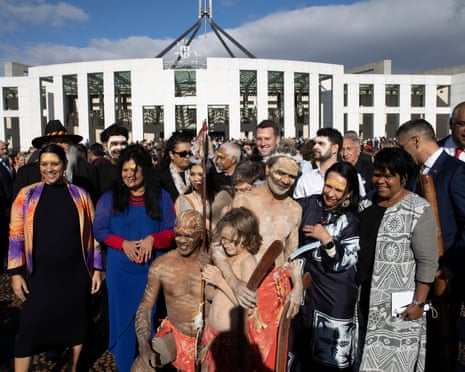
The controversy comes at a time when Australia continues to grapple with broader questions around reconciliation, recognition, and national identity. Debates over Indigenous rights, constitutional recognition, and cultural acknowledgment have intensified in recent years, often exposing deep divisions within the country.
Political figures have so far responded cautiously. While some conservative voices have echoed concerns about “ceremony fatigue,” others have warned against inflaming tensions.
The federal government, led by Anthony Albanese, has consistently supported initiatives aimed at strengthening Indigenous recognition, though it has not directly engaged with Dean’s specific comments.
Media analysts note that moments like this often reflect a broader cultural shift. As Australia becomes more diverse and globally connected, conversations about identity and history are becoming more complex — and more contentious. What one group sees as respect, another may interpret as division.
Social media has amplified the divide. Clips of Dean’s remarks have circulated widely, drawing both applause and outrage. Hashtags tied to the debate have trended, with users sharing personal experiences, historical perspectives, and sharply opposing views on what the ceremony represents.
At its core, the controversy raises a fundamental question: how does a nation acknowledge its past while defining its future? The Welcome to Country, for some, is a step toward reconciliation. For others, it is a symbol of a debate they feel has gone too far.
Whether Dean’s comments mark a turning point or simply another flashpoint in an ongoing cultural conversation remains to be seen. But one thing is clear — the discussion he reignited is far from over.

As reactions continue to unfold, Australians are once again confronted with a difficult but unavoidable reality: the story of the nation is still being written — and not everyone agrees on how it should be told.






