For years, people outside Alberta dismissed the anger as political theater.
Every election cycle seemed to bring the same warnings: Western alienation, separatist frustration, complaints about Ottawa, pipelines, carbon taxes, and federal interference. Most Canadians assumed the outrage would eventually fade like it always had before.
But this time feels different.
Something has shifted inside Canada — and not quietly.
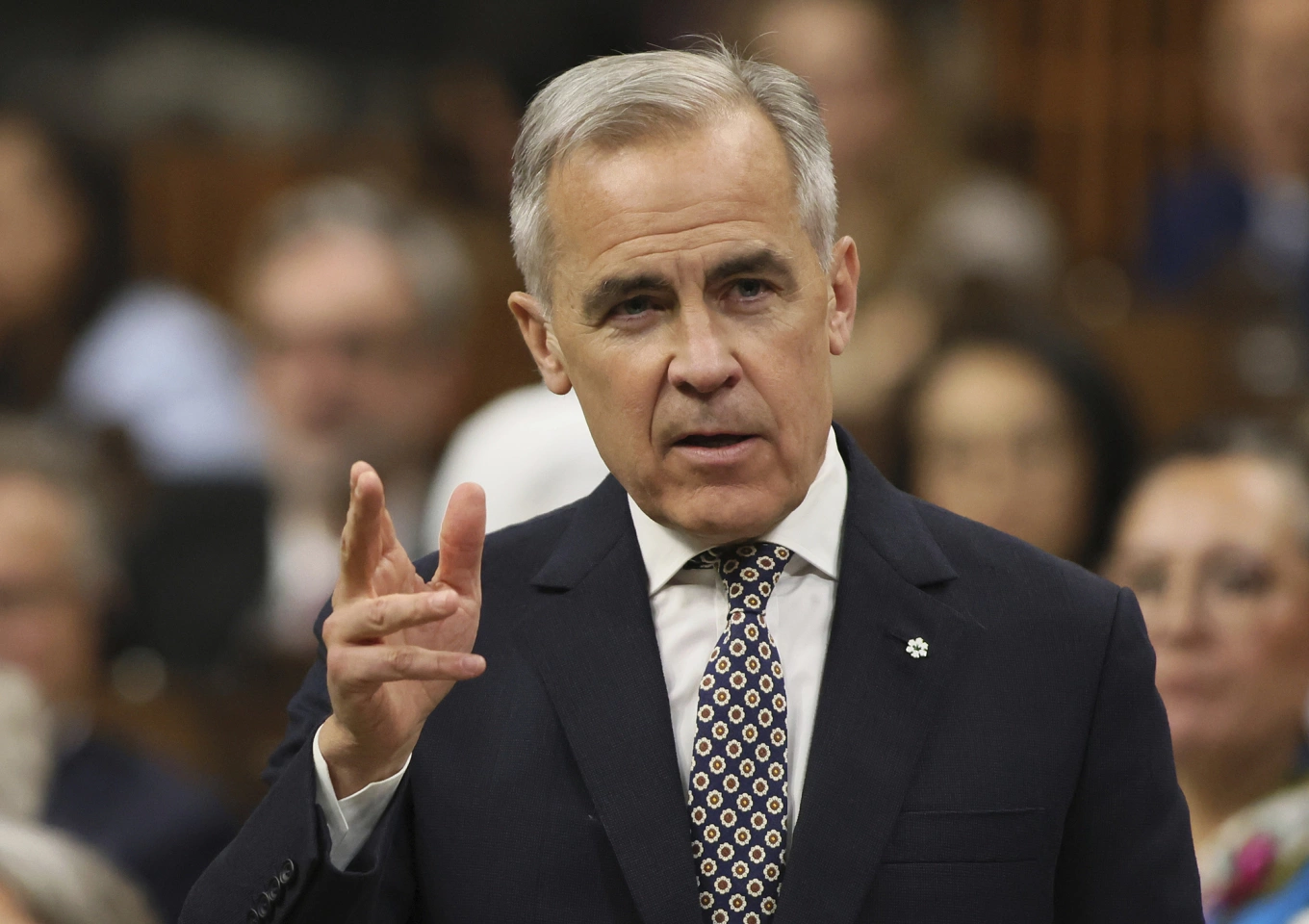
Behind the headlines about climate policy and energy exports, a much deeper national conflict is unfolding. At the center of it stands Alberta, a province that generates enormous wealth for the country yet increasingly feels treated like an outsider inside its own federation.
Now, with more than 301,000 signatures submitted in support of a referendum movement, Canada is approaching a political moment that many federal leaders privately feared could arrive one day but hoped never would.
An October vote could determine whether Alberta begins formally exploring separation from Canada.
And in response, Prime Minister Mark Carney appears to have launched the most aggressive political rescue mission Ottawa has attempted in decades.

Inside the historic Library of Parliament in Ottawa, Carney delivered a speech that caught even longtime political observers off guard.
Instead of criticizing Alberta’s oil industry or focusing entirely on climate targets, he did something unusual for a federal leader: he openly praised Alberta’s role in building modern Canada.
He spoke about the province’s workers, its energy sector, and its contributions to national prosperity. But the moment that truly stood out came when he referenced the Famous Five — the Alberta women who fought the landmark 1929 Persons Case that legally recognized women as persons under Canadian law.
It was not just history.
It was symbolism.
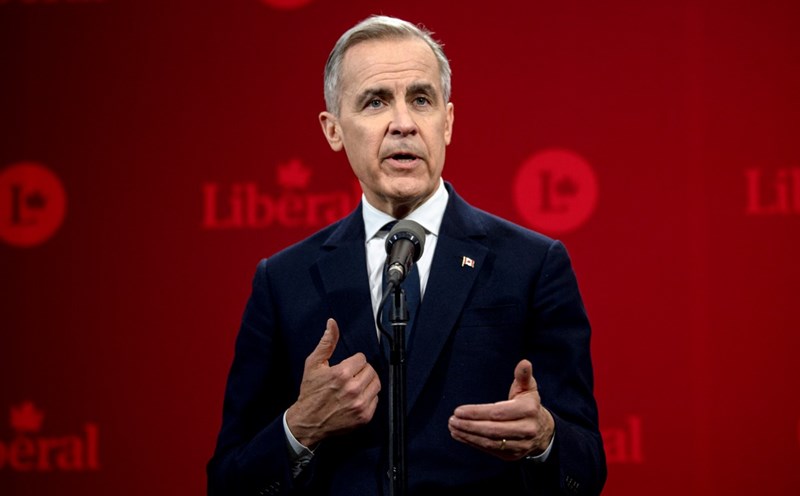
Carney was sending a message that Alberta was not a problem to manage, but a foundational part of Canada’s identity.
The timing mattered.
Because only days later, in Calgary, Carney appeared alongside Alberta Premier Danielle Smith to announce a massive new energy framework that could reshape the Canadian economy for generations.
The proposed agreement centers around a major new pipeline corridor capable of transporting more than one million barrels of oil per day from Alberta to the Pacific Coast, opening direct access to Asian markets.
For decades, Alberta’s biggest frustration has been dependence on the United States.
The province produces enormous amounts of oil, but limited export routes force Canadian producers to sell much of that energy southward at discounted prices. Many Albertans believe Ottawa repeatedly blocked or delayed projects that could have diversified those export markets.
This new proposal attempts to change that entirely.
But the deal comes with conditions.
Alberta agreed to major environmental commitments, including stronger methane reduction targets, a higher industrial carbon price, and support for what officials describe as the largest carbon capture initiative in the world.
That combination surprised both environmental activists and oil executives.
Some climate groups accused Carney of betraying Canada’s green agenda. Some conservatives accused Alberta of surrendering too much to Ottawa.
Yet politically, the strategy behind the agreement is becoming increasingly clear.
This is not simply an energy project.
It is an attempt to stop a national fracture before it becomes irreversible.
Because while the pipeline announcement dominated national news coverage, another reality was growing quietly in the background.
Support for Alberta separatism is no longer confined to fringe internet forums or protest rallies.
Recent polling suggests frustration with Confederation has reached levels not seen in decades. Across rural communities and even parts of Calgary and Edmonton, many residents increasingly believe the federal government benefits from Alberta’s wealth while undermining the industry that generates it.
The grievances are layered and emotional.
Pipeline cancellations.
Environmental regulations.
Equalization payments.
Federal climate policies.
Perceived cultural hostility toward the oil sands.
Years of economic volatility.
And perhaps most importantly, a growing sense that Alberta’s political voice no longer matters inside Canada’s federal structure.
That frustration helped fuel the petition campaign that collected more than 301,000 signatures supporting a referendum initiative.
The proposed vote, expected on October 19, would ask Albertans whether the province should begin a formal process exploring sovereignty options outside Canada.
Federal officials insist the referendum would not automatically trigger separation negotiations.
But few inside Ottawa are treating the situation casually anymore.
Because even a strong protest vote would send shockwaves through financial markets, energy investors, and international allies.
Canada has always projected an image of political stability to the world.
An Alberta sovereignty movement threatens that image directly.
And this is where Carney’s pipeline strategy becomes politically fascinating.
Ottawa appears to understand that symbolic speeches about unity are no longer enough.
For years, federal leaders responded to Alberta’s anger by defending climate goals or urging national solidarity. But many Albertans felt those responses ignored the economic consequences their province was facing.
This time, Ottawa is trying something different.
Instead of simply asking Alberta to remain loyal to Canada, the federal government is attempting to offer Alberta something tangible in return: global market access and renewed economic power.
The message is subtle but powerful.
A stronger Alberta does not weaken Canada.
A stronger Alberta may now be necessary to save Canada.
That represents a major shift in federal political thinking.
Even some longtime critics of Ottawa admitted the symbolism mattered.
For the first time in years, many Albertans saw a federal government publicly acknowledging that the province’s energy sector remains central to Canada’s economic future rather than an embarrassing obstacle to environmental ambitions.
Still, enormous obstacles remain ahead.
Environmental organizations are preparing legal challenges.
British Columbia remains deeply cautious about any expanded pipeline infrastructure crossing the province.
Indigenous negotiations are still unresolved.
Questions about financing and private-sector investment remain unanswered.
And perhaps most importantly, no corporation has formally committed to building the pipeline yet.
The economics of large-scale energy infrastructure have become increasingly uncertain in a world rapidly transitioning toward cleaner technologies.
Critics argue the project could become politically toxic before construction even begins.
Others believe the federal government may ultimately struggle to secure enough investor confidence to make the proposal financially viable.
Yet supporters insist the stakes are now far larger than economics alone.
Because this debate is no longer simply about pipelines.
It is about identity.
About whether Albertans believe they still have a meaningful future inside Confederation.
Across coffee shops, town halls, radio programs, and online forums, the conversation inside Alberta has changed dramatically over the past few years.
People are not only discussing oil prices or taxes anymore.
They are questioning the structure of the country itself.
Some separatist leaders openly argue Alberta would thrive independently due to its natural resources, skilled workforce, and energy wealth.
Others stop short of supporting full separation but believe Ottawa only responds when Alberta threatens political instability.
Either way, pressure on the federal government has intensified.
And that may explain why the timing of Ottawa’s latest decisions appears so carefully calibrated.
Just weeks before the referendum campaign accelerates, the federal government plans to officially designate the pipeline initiative as a project of national interest.
That label carries enormous political weight.
It signals that Ottawa views the project not merely as regional infrastructure, but as essential to Canada’s long-term strategic future.
The symbolism is unmistakable.
Rather than isolating Alberta, Ottawa is attempting to place Alberta at the center of a new Canadian economic vision.
One aimed not only at the United States, but increasingly toward Asian and global energy markets.
If successful, the strategy could fundamentally reshape Canada’s geopolitical position.
Canada possesses some of the world’s largest energy reserves, yet remains heavily dependent on American export channels. A Pacific pipeline corridor would dramatically expand Canada’s ability to reach international buyers directly.
Supporters argue that would strengthen national sovereignty, increase revenues, and reduce economic vulnerability.
But if the plan collapses politically or economically, the consequences could be severe.
Many Albertans may interpret another failed pipeline effort as proof that Confederation simply cannot accommodate the province’s interests anymore.
And that could deepen separatist sentiment even further.
The irony is impossible to ignore.
For decades, Canadians often framed economic growth, climate action, and national unity as competing priorities where one side had to lose for another to win.
This new agreement attempts something radically different.
It argues Canada can expand energy infrastructure, lower emissions, and preserve national unity simultaneously.
Whether that vision succeeds may determine far more than the future of one pipeline.
It may determine whether Canadians still believe the country can function as a shared national project at all.
Now, with October approaching, the pressure is rising rapidly.
Inside Ottawa, Calgary, Vancouver, and boardrooms across the energy sector, everyone understands the same reality:
Canada is entering one of the most politically sensitive moments of the modern era.
And this time, the anger inside Alberta is no longer being ignored.






