Europe’s Nuclear Gamble: Is the U.S. Losing Its Grip?

For nearly eight decades, Europe’s security has been built on one unwavering assumption: if the continent ever faced an existential threat, the United States would stand behind its allies with the full force of its military—including its nuclear arsenal.
Today, that assumption is being quietly but dramatically questioned.
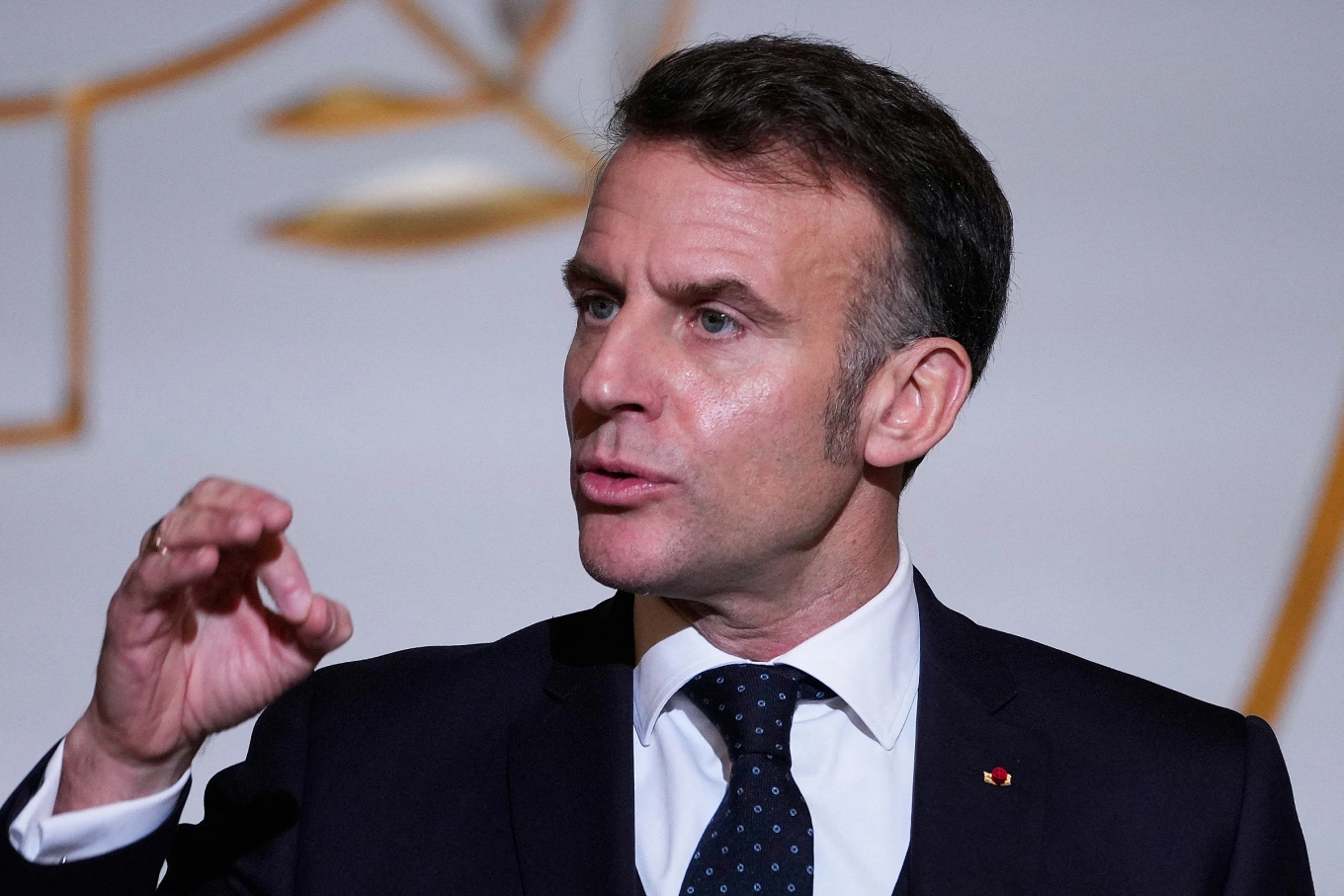
What once seemed like an ambitious political speech by French President Emmanuel Macron is rapidly evolving into one of the most significant strategic transformations Europe has witnessed since the Cold War. Standing before one of France’s nuclear submarines in March, Macron announced a vision that many initially dismissed as symbolic rhetoric: France would strengthen its nuclear deterrence strategy and deepen cooperation with European partners through a new framework of what Paris calls “forward deterrence.”
Only a few months later, that vision is becoming reality.
Several European countries—including Germany, the United Kingdom, Poland, the Netherlands, Belgium, Sweden, Denmark, Greece, and Norway—have begun aligning themselves with the French initiative in different ways. Some are participating in military exercises, others are discussing operational cooperation, while a number of governments are even considering hosting French nuclear-capable Rafale fighter aircraft on their territory.
The speed of these developments has surprised even experienced diplomats.

For generations, Europe relied on the American nuclear umbrella as the ultimate security guarantee. U.S. nuclear weapons stationed across NATO territory, integrated command structures, and decades of strategic cooperation created a system that appeared almost unshakable.
But deterrence depends not only on weapons—it depends on trust.
Increasingly, European leaders are questioning whether future American administrations will remain committed to defending Europe during a major crisis.
Those doubts did not emerge overnight. They have accumulated through years of political polarization in Washington, recurring disputes over NATO defence spending, sudden shifts in foreign policy priorities, and uncertainty about whether long-standing security commitments will continue under changing governments.
Then came the controversy surrounding Greenland.
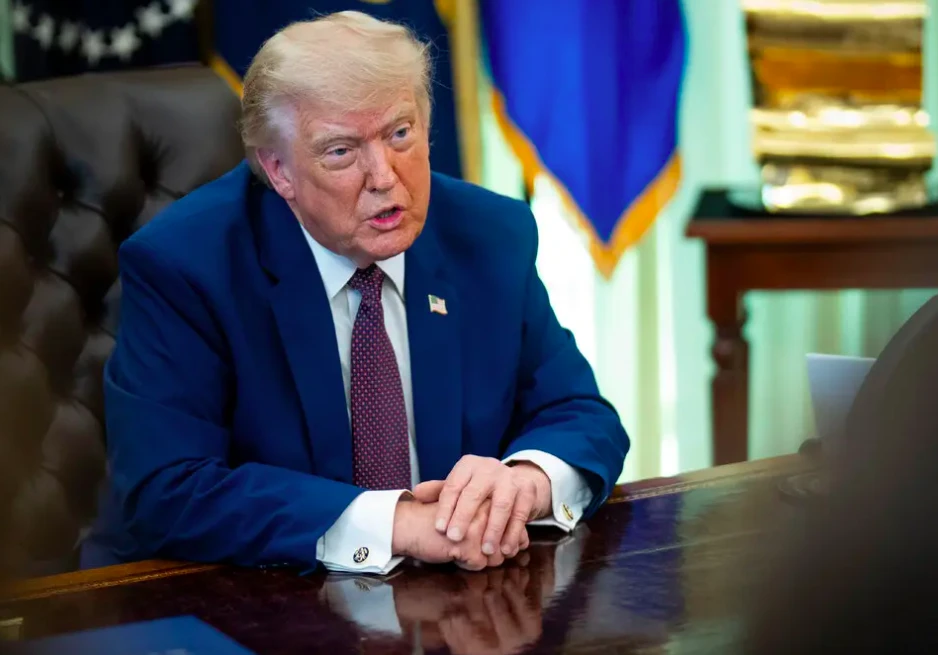
Earlier this year, public discussions from Washington suggesting possible American control over the Danish territory alarmed several European capitals. France, Germany, Sweden, and Norway coordinated defensive deployments to reinforce regional security, sending a powerful political signal.
For many European policymakers, the issue was not merely about Greenland itself. It highlighted an uncomfortable possibility: the very power responsible for protecting Europe could also become a source of strategic instability.

Paris appears determined to ensure Europe has an alternative.
Rather than abandoning NATO, France is building what many analysts describe as a parallel security architecture—one designed to provide Europe with an insurance policy should confidence in Washington continue to erode.
The concept, known as “forward deterrence,” would allow participating nations to coordinate with French nuclear forces, host rotating deployments of nuclear-capable aircraft, observe strategic exercises, and integrate conventional military assets into broader French planning.
However, one critical distinction remains.
Unlike the American model, operational control would stay entirely in French hands.
France possesses approximately 290 nuclear warheads, significantly fewer than either the United States or Russia. Yet many European strategists argue that political reliability may matter more than sheer numbers. A smaller arsenal consistently controlled from Paris could, in their view, offer greater predictability than a larger arsenal influenced by shifting political cycles in Washington.
Ironically, this reflects a philosophy France has embraced for decades.

Former French President Charles de Gaulle insisted that no foreign leader, regardless of alliance commitments, could ever be fully relied upon to risk national destruction for another country’s survival. His insistence on maintaining an independent nuclear force was once considered uniquely French thinking.
Today, that mindset appears to be spreading across Europe.
Germany’s participation illustrates just how profound this change may be. Historically cautious on nuclear matters because of the legacy of the Second World War and decades of anti-nuclear sentiment, Berlin is now openly discussing closer operational cooperation with France and participation in French nuclear exercises expected later this year.
Equally significant is Norway’s decision.
During Prime Minister Jonas Gahr Støre’s visit to Paris, both governments emphasized stronger defence cooperation. Norwegian officials clarified that French nuclear weapons would not be permanently stationed on Norwegian soil during peacetime, but they also acknowledged that an existential threat against Norway could potentially trigger a French nuclear response.
That statement alone represents a major strategic shift.
It effectively extends elements of France’s deterrence posture beyond its own borders and positions Paris as something closer to a continental security guarantor.
The consequences extend well beyond defence policy.
A stronger European security framework could accelerate broader efforts already underway across the continent, including independent payment systems, sovereign cloud infrastructure, domestic semiconductor manufacturing, and expanded defence production. Strategic autonomy in military affairs naturally reinforces calls for greater economic independence as well.
Meanwhile, the United States finds itself in a difficult position.
Reports suggesting Washington may expand its own nuclear deployments in Europe indicate American officials recognize the growing challenge. Yet additional weapons alone may not solve the problem if Europe’s concerns centre on political reliability rather than military capability.
This marks a historic change in strategic thinking.
For decades, European security discussions focused almost exclusively on threats originating from Moscow. Today, some policymakers are quietly acknowledging uncertainty that may also stem from Washington itself.
Publicly, European governments continue to affirm that NATO remains indispensable, and American forces remain deeply integrated across the continent. Yet institutions often evolve gradually, and shifts in confidence can reshape alliances long before formal policies change.
France is also aware that leadership comes with risks. Extending nuclear commitments to multiple partners could draw Paris into crises beyond its traditional sphere of responsibility and require decades of sustained investment.
Those investments have already begun.
France plans to modernize its air bases, expand Rafale fighter production, and introduce a new generation of nuclear submarines beginning in the 2030s as part of a long-term restructuring of Europe’s deterrence posture.
Whether this ambitious strategy ultimately succeeds remains uncertain. European unity on defence has historically been fragile, domestic politics could slow integration, and some governments fear that concentrating too much strategic influence in French hands could weaken NATO cohesion while Russia remains a major security challenge.
Yet even critics agree on one point:
Europe is no longer asking only how to strengthen NATO. It is beginning to ask what happens if the political foundations supporting that alliance become less reliable.
Only a few years ago, such a debate belonged to academic conferences and strategic think tanks.
Today, it sits at the centre of Europe’s future.






