Australia’s political battle over housing and tax reform has erupted again after One Nation leader Pauline Hanson unveiled a controversial alternative to negative gearing changes proposed by the Albanese Government.
The debate intensified as the federal government prepared to release new legislation targeting negative gearing and capital gains tax concessions, measures Labor says are designed to improve housing affordability for younger Australians.

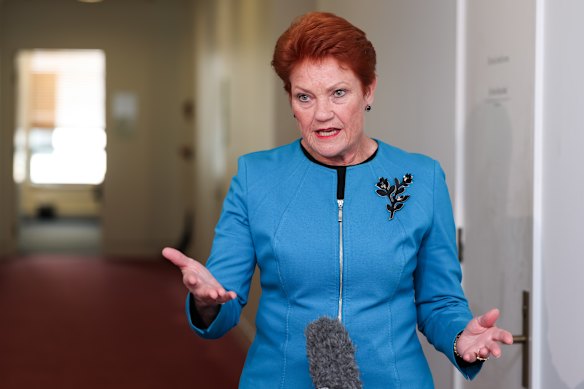
Pauline Hanson, however, rejected key parts of the government’s plan and instead proposed a national cap on property investment ownership.
Under One Nation’s proposal, Australians would still be allowed to use negative gearing, but only on a maximum of two investment properties.
In a statement posted online, Hanson argued that ordinary Australians should not lose access to an investment strategy that previous generations had relied upon for decades.
She claimed Labor was punishing younger Australians instead of genuinely helping them enter the housing market.
Hanson also made it clear that One Nation strongly opposes any changes to capital gains tax concessions, warning that the reforms could damage confidence among property investors.
The Albanese Government’s proposal would protect existing investors through a grandfathering arrangement, meaning current negatively geared properties would remain unaffected.
However, future negative gearing benefits would apply only to newly built homes in an effort to increase housing supply and encourage construction activity.
Negative gearing allows investors to deduct losses from rental properties against their taxable income, reducing the amount of tax they pay.
The Greens, who hold the balance of power in the Senate, have also entered the debate with their own competing proposal.
Unlike One Nation, the Greens want to significantly reduce tax concessions for investors, arguing the current system fuels soaring house prices and locks first-home buyers out of the market.
Under the Greens’ plan, negative gearing and capital gains tax discounts would be limited to just one existing investment property, while second and subsequent properties would lose those benefits entirely.
Greens leader Larissa Waters said the housing crisis could not be solved while wealthy investors continued receiving what she described as massive tax advantages.
She argued younger Australians were being forced out of home ownership while investors gained an unfair edge through government-backed tax concessions.

The unusual overlap between One Nation and the Greens on the need for reform quickly sparked criticism from the Coalition.
Opposition deputy leader Jane Hume dismissed Hanson’s proposal, arguing that carving out special rules for different asset classes would only make Australia’s tax system more complicated.
Hume questioned whether similar restrictions would also apply to shares and other investments, warning that selective reforms could create confusion and economic inefficiency.
The political clash intensified further during Question Time, where Liberal leader Angus Taylor accused Prime Minister Anthony Albanese of abandoning election promises not to alter negative gearing or capital gains tax rules.
Taylor claimed small businesses and investors were now facing uncertainty because of Labor’s changing tax agenda.
Prime Minister Albanese defended the government’s broader economic strategy, pointing to billions of dollars in budget support aimed at helping small businesses and boosting investment across the economy.
As the legislation heads toward a Senate showdown, the battle over negative gearing is rapidly becoming one of the most explosive political fights in Australia, with growing fears that the housing crisis could reshape the nation’s political landscape entirely.