Australia is entering what many analysts now describe as one of the most unpredictable political periods in modern federal history. What once seemed impossible — a major collapse in support for the traditional parties — is now being openly discussed across media, polling circles and political institutions nationwide.
At the centre of the debate is a dramatic surge in support for One Nation, alongside growing frustration toward both Labor and the Coalition. Recent polling and modelling have intensified the conversation by suggesting that Australian politics may be moving toward a far more fragmented and unstable future.
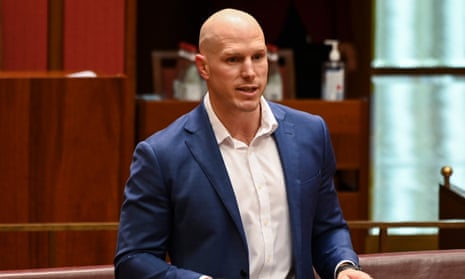
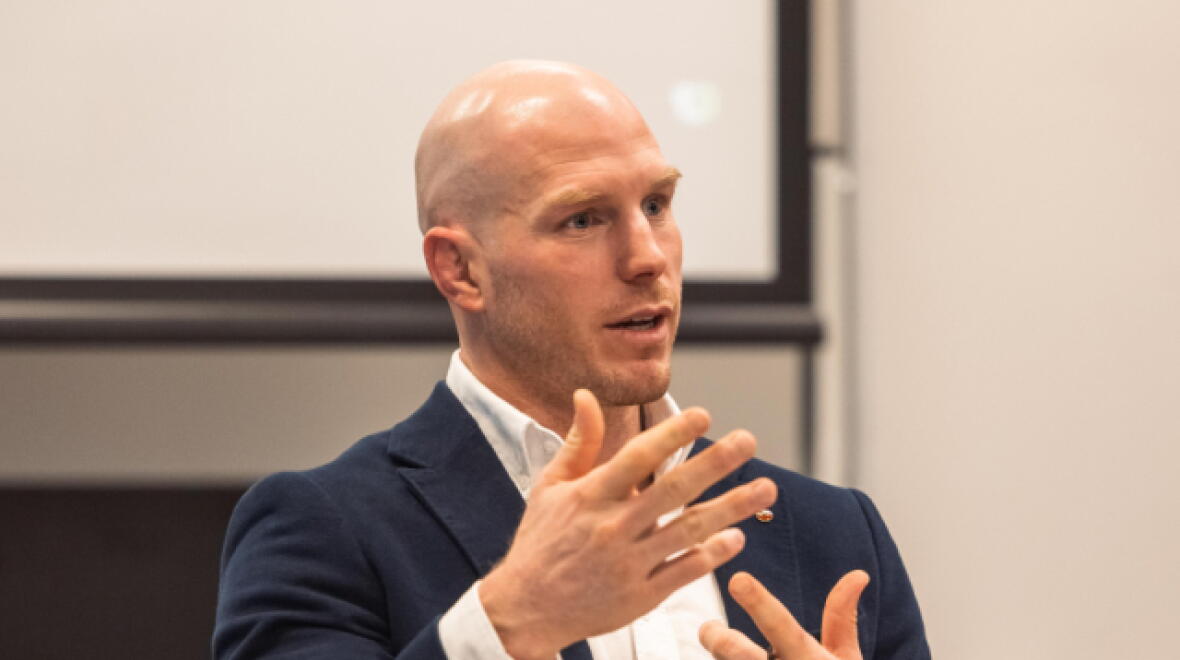
Independent Senator David Pocock says the country is now living through a “real time of flux politically,” warning that voters are increasingly searching for candidates who place ordinary Australians “ahead of vested interests.”
His comments have resonated with many voters who feel disconnected from the major parties and exhausted by years of political spin, economic pressure and ideological conflict.
The latest modelling, conducted by Redbridge Group and Accent Research, suggests One Nation could potentially secure between 46 and 59 seats in the House of Representatives if current voter trends continue.
Such a result would completely reshape the federal political landscape and potentially force the Australian Labor Party into minority government.
The numbers have shocked political insiders because they reflect a level of volatility rarely seen in Australia’s traditionally stable two-party system.
Even senior political figures now openly acknowledge that public anger is growing rapidly over housing affordability, migration, energy costs and the broader cost-of-living crisis.
For many Australians, daily life has become significantly harder over the past few years. Mortgage repayments have surged. Rent prices continue climbing. Grocery bills remain painfully high. Younger Australians increasingly feel locked out of home ownership entirely.
That frustration is now translating directly into political instability.
Many voters no longer believe either major party truly understands the pressure facing ordinary families, small businesses and younger workers trying to build financial security.
One Nation leader Pauline Hanson has capitalised heavily on this mood, focusing her messaging on migration, national sovereignty, energy prices and criticism of political elites.
Supporters argue Hanson speaks more directly about issues many Australians feel mainstream politicians avoid discussing honestly.
Critics, however, accuse the party of oversimplifying complex economic and social problems while relying heavily on populist rhetoric designed to provoke emotional reactions.
Regardless of where voters stand politically, the rise of One Nation highlights a deeper structural shift occurring inside Australian society.
Trust in institutions has weakened significantly. Public confidence in political parties, mainstream media and large bureaucratic systems has eroded steadily over time.
At the same time, social media has transformed how political narratives spread and how public anger mobilises.
Short emotional messages now often carry far greater influence than long policy debates or traditional campaign platforms.
This environment tends to reward outsider figures, anti-establishment movements and emotionally charged political campaigns.
Pocock argues that many Australians are no longer voting purely along traditional ideological lines. Instead, they are increasingly searching for authenticity, independence and politicians perceived as less controlled by party machinery or corporate influence.
That trend has benefited independents and smaller parties across the political spectrum.
The old assumption that Labor and the Coalition would comfortably dominate Australian politics for decades now appears increasingly uncertain.
Polling also suggests younger voters are becoming especially volatile politically.
Many younger Australians feel economically trapped between rising debt, stagnant wages, unaffordable housing and growing uncertainty about their future.
Some are turning toward progressive movements, while others are gravitating toward populist anti-establishment parties like One Nation.
This creates a highly fragmented electorate with very different frustrations and priorities.
Meanwhile, internal tensions inside the Coalition continue growing over issues such as climate policy, migration and Australia’s economic direction.
Figures like Alex Antic and Matt Canavan have publicly challenged aspects of mainstream Coalition policy, particularly around net zero and international climate agreements.
Those divisions further contribute to the perception that Australia’s traditional political structures are weakening.
Labor also faces growing pressure.
The government has recently faced backlash over proposed taxation changes, housing affordability and migration levels.
Critics accuse Prime Minister Anthony Albanese of failing to properly address public anxiety over economic security.
Some commentators argue Labor risks repeating mistakes made during previous national debates where genuine voter concerns were dismissed as misinformation or political fear campaigns.
Political analysts now believe Australia could be heading toward a multi-party system more similar to parts of Europe than the traditional Westminster stability Australians have long been accustomed to.
If that happens, minority governments and unstable parliamentary negotiations may become the new normal.
Such a transformation would fundamentally change how power operates in Canberra.
Legislation could become far harder to pass. Crossbench negotiations would gain enormous importance. Smaller parties and independents could hold the balance of power far more frequently.
Some analysts believe this could improve democratic accountability by weakening party dominance.
Others warn it could produce political paralysis and instability during periods of economic or geopolitical crisis.
The debate over migration has become particularly explosive.
Australia’s rapidly growing population, combined with housing shortages and infrastructure pressure, has fuelled rising anger among many voters.
One Nation has aggressively targeted this issue, arguing current migration levels are unsustainable and damaging affordability for ordinary Australians.
Labor and business groups, however, argue migration remains important for economic growth, workforce supply and long-term national development.
The clash reflects a broader global pattern now visible across many Western democracies.
Economic insecurity, distrust of elites and cultural anxiety are increasingly reshaping political systems worldwide.
Australia is no longer insulated from those trends.
What makes the current moment especially significant is that dissatisfaction is emerging simultaneously across multiple parts of society.
Urban voters are frustrated. Regional voters are frustrated. Young people are frustrated. Older Australians worried about economic decline are frustrated as well.
That broad dissatisfaction creates extremely unpredictable political conditions.
Pocock says voters increasingly want politicians who are prepared to challenge entrenched interests rather than simply protect existing power structures.
Whether that sentiment ultimately benefits independents, populist parties or entirely new political movements remains unclear.
But one thing is becoming increasingly obvious across Australia’s political landscape:
The era of automatic loyalty to the major parties may be ending.
And if the current trajectory continues, the next federal election could become one of the most disruptive and transformative contests in modern Australian political history.