CARNEY FIRES BACK AT WASHINGTON
Canada Rejects ‘Outdated’ U.S. Defence Playbook as Mark Carney Challenges Pentagon Pressure Campaign
QUEBEC — In what may prove to be one of the most consequential moments in recent Canada–U.S. relations, Prime Minister Mark Carney has openly challenged Washington’s narrative on defence spending, delivering a blunt message that is now reverberating throughout NATO capitals.
Canada, he insisted, is meeting its obligations.
What Ottawa refuses to do, however, is spend billions of dollars on military systems designed for a world that may no longer exist.
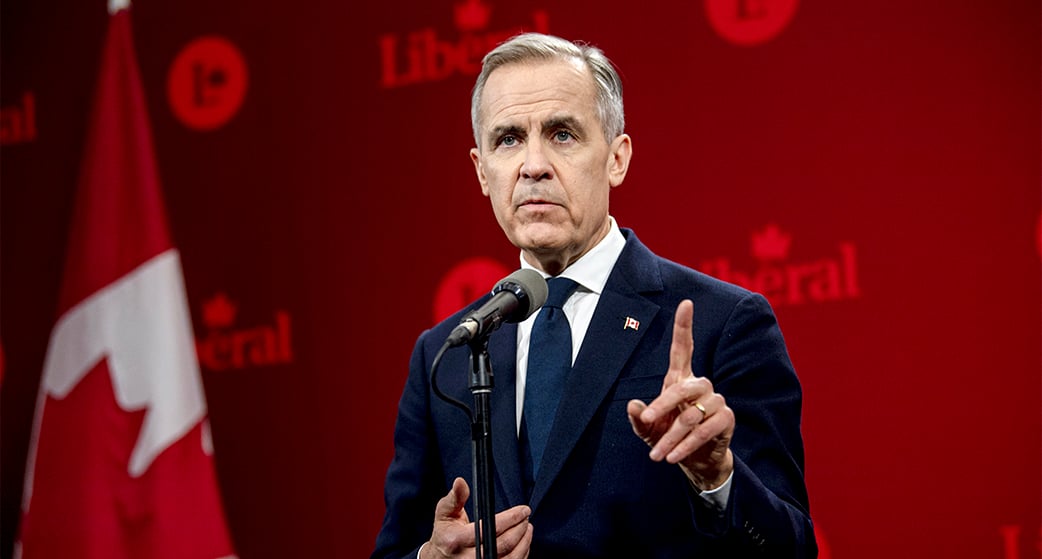
Standing before reporters in Quebec, Carney dismantled months of criticism from American officials who have portrayed Canada as a laggard within NATO. Calm, composed, and unusually direct, the Prime Minister revealed that Canada has already surpassed NATO’s benchmark defence spending target, reaching 2.1 per cent of GDP.
“Canada did it,” Carney stated.
With those three words, Ottawa fundamentally changed the conversation.
For months, officials linked to the administration of President Donald Trump had intensified pressure on Canada, accusing Ottawa of relying on American security guarantees while failing to contribute its fair share to collective defence.
The criticism escalated dramatically when Washington suspended participation in a bilateral defence cooperation board that has existed since 1940, predating NATO itself.
American officials framed the move as a response to Canadian “underinvestment.”
Carney’s response shattered that argument almost instantly.
If Canada is already spending above NATO’s two-percent threshold, then the dispute is no longer about how much Canada spends.
It is about what Canada chooses to spend that money on.
And that is where the real battle begins.
The Ukraine Lesson Washington Can’t Ignore
According to Carney, the war in Ukraine has fundamentally transformed military thinking.
The battlefield of the future is no longer dominated solely by fighter jets, tanks, and traditional weapons platforms. Instead, relatively inexpensive drones are destroying multimillion-dollar armoured vehicles, while artificial intelligence increasingly shapes intelligence gathering, logistics, surveillance, targeting, and battlefield decision-making.
“The tragedy of the war in Ukraine is changing fundamentally the nature of offence and defence,” Carney said.
The Prime Minister repeated the phrase “fundamental change” several times, underscoring what appears to be a major shift in Canadian defence doctrine.
Rather than automatically purchasing weapons systems based on assumptions developed years ago, Ottawa wants flexibility to invest in emerging technologies, including drones, AI, machine learning, cyber capabilities, and next-generation defence systems.

The message was unmistakable.
Canada is preparing for tomorrow’s wars, not yesterday’s.
The F-35 Debate Returns
One of the clearest examples involves Canada’s ongoing review of major procurement programs, including questions surrounding the future role of the F-35 fighter jet.
Critics in Washington have portrayed such reviews as signs of hesitation or weakness.
Carney sees them differently.
“We’ll only spend the money that makes sense,” he declared.
It was a statement that challenged decades of North American defence orthodoxy.
Historically, interoperability with American military systems has heavily influenced Canadian procurement decisions. In many cases, purchasing U.S. equipment was treated as the default option.
That assumption now appears to be under review.
Behind closed doors, military strategists throughout NATO are increasingly debating whether traditional procurement cycles have become dangerously disconnected from the pace of technological innovation.
Fighter aircraft programs can take decades to develop.
Drone technology can evolve in a matter of months.
The contrast is impossible to ignore.
Defence or Business?
At the heart of the dispute lies a politically sensitive question.
Is Washington primarily concerned about alliance readiness?
Or is it also protecting the commercial interests of America’s defence industry?
The United States remains the world’s largest arms exporter, and NATO procurement decisions represent billions of dollars in potential contracts for American defence contractors.
Canada’s defence budget alone represents a significant market opportunity.

By resisting pressure to follow long-established procurement pathways, Ottawa risks disrupting a system that has traditionally been shaped by American strategic and industrial influence.
Carney never explicitly accused Washington of putting commercial interests ahead of military necessity.
He did not have to.
When he criticized reliance on “a list that was prepared five years ago,” many observers interpreted it as a direct challenge to the procurement priorities being pushed by American officials.
A New Canadian Approach
What makes the confrontation particularly remarkable is how unusual it is.
For generations, Canadian prime ministers have generally avoided public disputes with Washington on defence matters. Disagreements were often managed quietly through diplomatic channels.
Carney appears to be taking a different path.
His approach reflects a growing desire among several Western allies to build greater strategic autonomy amid concerns about political unpredictability in Washington.
Across Europe, governments are investing in independent defence capabilities.
New industrial partnerships are emerging outside traditional U.S.-centric frameworks.
Canada is increasingly exploring procurement diversification strategies aimed at reducing long-term dependence on American suppliers.
This makes the current dispute about much more than defence spending.
It is about who gets to define the future of Western military strategy.

A Debate That Could Reshape NATO
Supporters of Carney’s position argue that blindly purchasing legacy systems simply to satisfy alliance politics would be strategically irresponsible.
The battlefield is changing too quickly.
Ukraine has already demonstrated that relatively inexpensive autonomous systems can challenge military assets worth millions.
Yet critics warn that conventional military power remains essential.
Fighter aircraft, naval fleets, missile defence systems, and armoured forces continue to play a central role in deterrence against major powers such as Russia and China.
The debate is far from settled.
But one reality is becoming increasingly difficult to ignore.
The original accusation against Canada has collapsed.
Washington argued that Canada was failing to meet its NATO commitments.
Carney responded by revealing that Canada is already above the alliance target.
As a result, the conversation shifted immediately.
The issue is no longer spending levels.
It is spending priorities.
And that distinction changes everything.

Canada Is No Longer Staying Quiet
Following Carney’s appearance in Quebec, one thing became abundantly clear.
Canada is no longer willing to absorb criticism from Washington without publicly challenging the assumptions behind it.
Rather than defending Canada’s record, Carney positioned his government as strategically ahead of the curve — adapting to lessons from Ukraine, embracing technological transformation, and refusing to spend billions merely to satisfy outdated expectations.
That message resonated far beyond Canadian borders.
Across NATO capitals, policymakers are confronting the same uncomfortable question.
What if the future of warfare no longer matches the procurement systems the alliance spent decades building?
The answer could shape not only the future of Canada-U.S. relations, but the future direction of NATO itself.
Because beneath the political rhetoric, the trade tensions, and the diplomatic sparring lies a reality that is becoming impossible to ignore.
The battlefield is evolving faster than the institutions designed to defend it.
And Canada has decided it will not wait for Washington to catch up.






