For generations, Canada and the United States have been regarded as two of the closest military partners in the world.
Their armed forces have trained together, planned together, and defended North America together through institutions that have become symbols of one of the strongest alliances in modern history.
But recent developments suggest that Ottawa may be entering a new chapter—one that could reshape how Canada approaches defense, security, and its relationship with Washington.
The shift is subtle, but experts say it carries enormous implications.
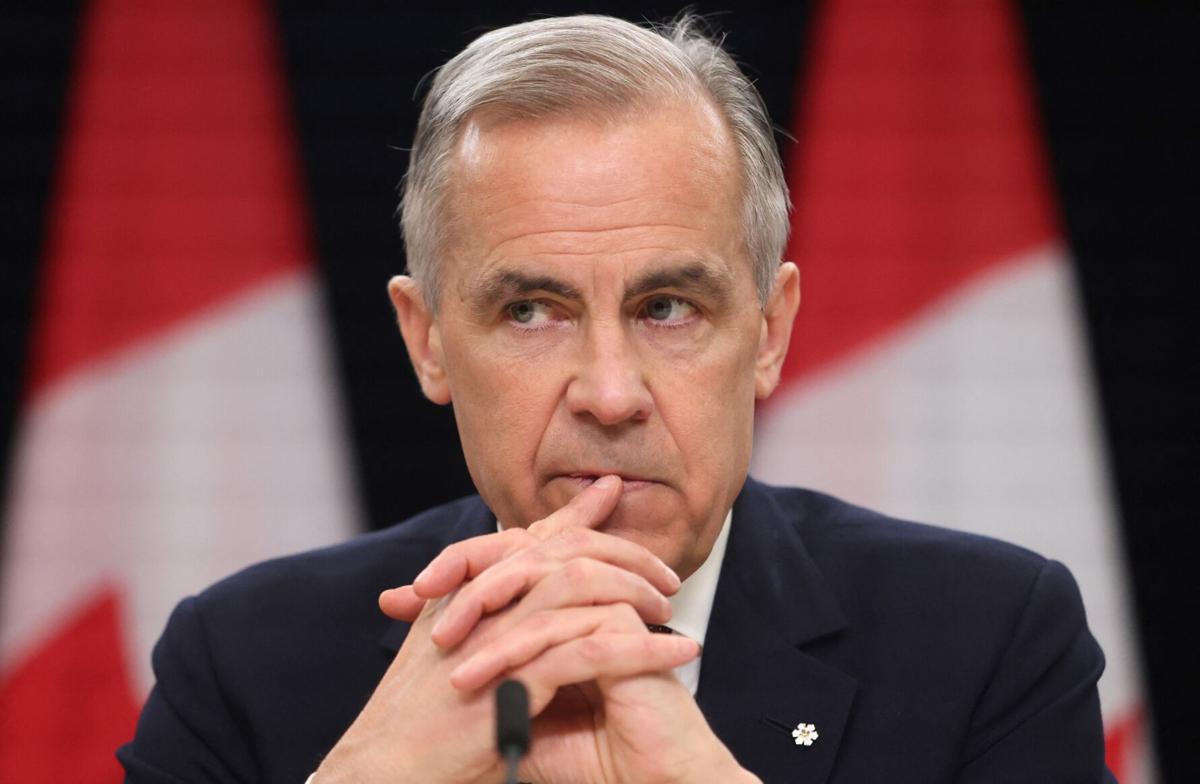
At the center of the discussion is Prime Minister Mark Carney’s emerging vision for Canada’s place in an increasingly uncertain world.
Rather than relying overwhelmingly on a single ally, Canada appears to be pursuing a strategy focused on diversification, resilience, and greater strategic independence.
The most visible sign of this change emerged when Canadian officials indicated that future defense procurement decisions could involve greater cooperation with European partners.
While Canada has already committed to purchasing American-made F-35 fighter jets, discussions surrounding future military investments have increasingly emphasized the importance of expanding relationships with European defense industries.
For many observers, this represents more than a procurement decision.
It signals a broader reassessment of Canada’s long-term strategic priorities.
The timing is particularly significant.
Around the same period, reports emerged that the United States was stepping back from participation in a longstanding bilateral military board that had existed in various forms for decades.
Although the move attracted relatively little public attention, defense analysts noted that such institutional changes are rarely meaningless.
In relationships as deeply integrated as those between Canada and the United States, even modest adjustments can signal changing priorities.
For decades, the Canada-U.S. defense partnership has been built on extraordinary levels of cooperation.
The two countries jointly operate NORAD, share intelligence through multiple international networks, conduct joint military exercises, and coordinate responses to emerging threats.
Few nations enjoy such a close security relationship.
Yet the international environment that shaped that partnership is changing rapidly.
Global competition among major powers is intensifying.
Supply chains have become increasingly vulnerable.
Military technology is evolving at unprecedented speed.
And governments around the world are reassessing how much dependence they should place on any single supplier or strategic partner.
These concerns have become especially relevant in recent years as political shifts in various countries have occasionally led to sudden changes in trade policies, defense priorities, and international commitments.
For Canadian policymakers, the lesson appears increasingly clear: flexibility matters.
Supporters of the government’s approach argue that diversification does not mean abandoning the United States.
Instead, they describe it as a form of strategic insurance.
By developing stronger relationships with European defense manufacturers and expanding military cooperation beyond traditional channels, Canada can reduce potential vulnerabilities while maintaining its existing alliances.
In this view, diversification strengthens sovereignty rather than weakening partnerships.
Prime Minister Carney has repeatedly spoken about the importance of ensuring that Canada remains capable of making independent decisions in an unpredictable global environment.
His administration has emphasized economic security, domestic industrial capacity, and long-term resilience as key pillars of national policy.
Defense policy increasingly appears to be following the same logic.
The government’s broader strategy includes investments in domestic manufacturing, critical technologies, artificial intelligence, cybersecurity, and military modernization.
Officials argue that a stronger domestic defense sector can provide both economic benefits and greater strategic flexibility.
European governments have taken notice.

Several European defense companies have actively sought closer relationships with Canada, presenting themselves as partners capable of contributing to the country’s modernization efforts.
The growing emphasis on transatlantic cooperation reflects broader trends throughout NATO, where member states are seeking new ways to strengthen collective defense capabilities amid rising global tensions.
Some analysts see Canada’s evolving approach as part of a wider transformation occurring across Western democracies.
Countries that once prioritized efficiency above all else are increasingly prioritizing resilience.
Instead of asking only which option is cheapest, governments are now asking which option provides the greatest long-term security.
That shift is influencing everything from energy policy to industrial strategy—and now defense procurement.
Not everyone is convinced.
Critics argue that the United States remains Canada’s most important ally and will likely continue to play that role for the foreseeable future.
They caution against interpreting procurement discussions as evidence of a major geopolitical realignment.
From their perspective, maintaining close defense integration with Washington remains essential to Canadian security.
Others point out that Canada’s military infrastructure is already deeply interconnected with American systems.
Changing that reality would require enormous investments, extensive planning, and many years of implementation.
As a result, any transition toward greater diversification would likely be gradual rather than revolutionary.
Still, perception matters.
International observers are paying close attention to the signals emerging from Ottawa.
The question being asked in diplomatic circles is no longer whether Canada values its partnership with the United States.
That answer remains obvious.
Instead, the question is whether Canada is beginning to redefine the balance between partnership and dependence.
The distinction may seem subtle.
But in strategic terms, it could prove highly significant.
If current trends continue, Canada may increasingly position itself as a nation capable of maintaining strong alliances while simultaneously broadening its options.
Such an approach could provide greater freedom of action during future crises and reduce exposure to unexpected policy shifts abroad.
For Washington, the implications are equally noteworthy.
Canada remains one of America’s closest allies, largest trading partners, and most trusted security collaborators.
Any effort by Ottawa to diversify defense relationships is therefore likely to attract attention in U.S. political and military circles.
Whether viewed as prudent planning or a sign of growing independence, the message is difficult to ignore.
Canada is not walking away from its alliance with the United States.
But it may be entering a period in which that alliance is no longer the only foundation of its strategic future.
As geopolitical uncertainty continues to grow, Ottawa appears determined to build a defense posture that is broader, more flexible, and less vulnerable to external shocks.
What began as discussions about fighter jets may ultimately represent something much larger.
A new vision of Canadian sovereignty.
A new approach to national security.
And perhaps the beginning of one of the most important strategic transformations in Canada’s modern history.






