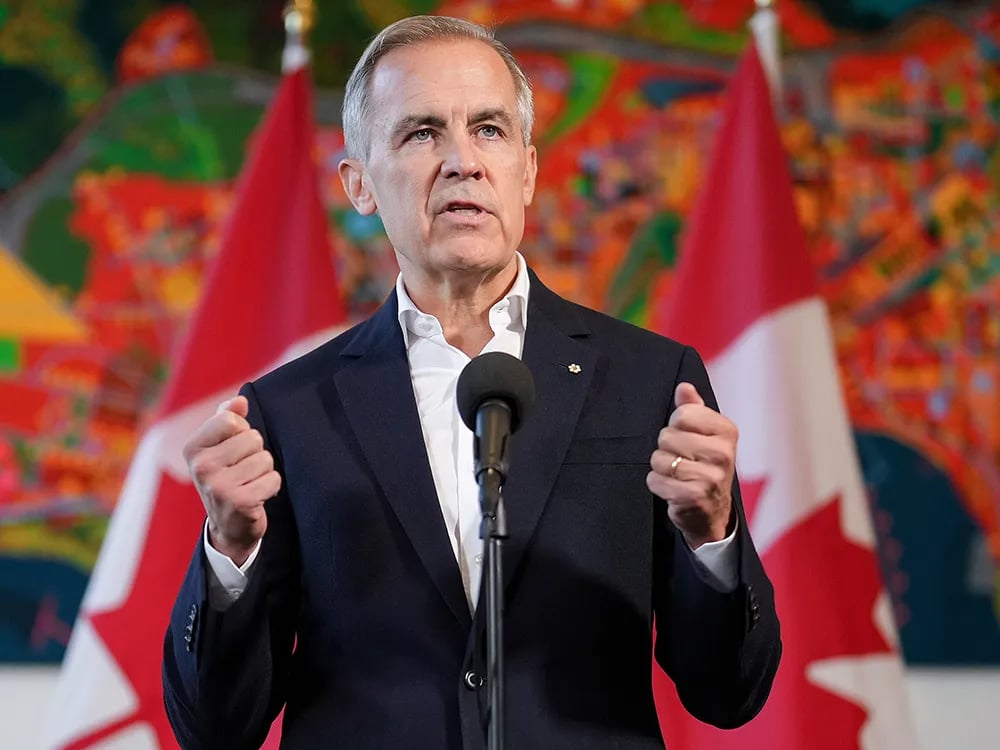
Mark Carney’s appearance before business leaders in Vancouver this week was presented as a routine economic discussion, but the message delivered by the Canadian prime minister carried far broader geopolitical implications. Against a backdrop of mounting trade tensions with Washington and deep instability in global energy markets, Carney outlined a vision of Canada that is increasingly less dependent on the United States and more integrated into a wider network of global partnerships.
What stood out most during the speech at the Hyatt Regency in downtown Vancouver was Carney’s firm rejection of what he described as a “small deal” with Washington merely to secure tariff relief. The statement marked a significant departure from the traditional Canadian approach of rapidly seeking compromise whenever trade friction with the United States intensified. Instead, Carney signaled that Ottawa is prepared to endure prolonged economic pressure while building alternative markets abroad.
The timing of the speech amplified its significance. Only days earlier, the Pentagon announced a pause in the Permanent Joint Board on Defense, an 86-year-old institution established during the Second World War to coordinate military cooperation between Canada and the United States. The board had survived decades of political disputes, including Cold War tensions and repeated trade conflicts, making the suspension especially notable.
American officials tied the move directly to Canada’s recent foreign policy direction. Elbridge Colby, the U.S. under secretary of defense for policy, suggested Washington could no longer ignore what he described as growing gaps between Canadian rhetoric and defense commitments. The criticism focused heavily on Ottawa’s defense spending levels and Carney’s repeated emphasis on diversifying Canada’s international partnerships beyond its traditional American alliance.
Rather than softening his tone in response to the Pentagon’s decision, Carney appeared to double down on his broader economic strategy. He framed Canada not as a junior partner seeking accommodation, but as a country repositioning itself within an increasingly fragmented global order. The message resonated with a business audience already concerned about the risks of excessive reliance on a single export market.
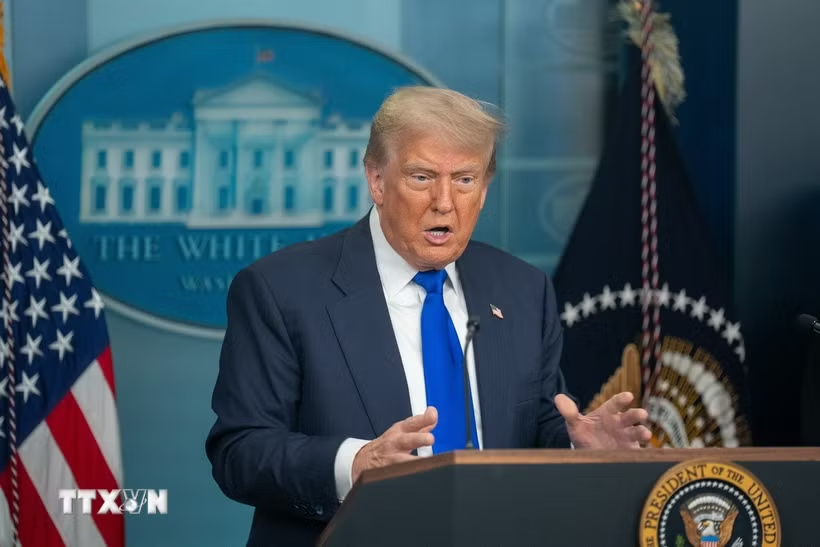
For decades, Canada’s economy has been closely tied to the United States, with roughly three-quarters of Canadian export revenue flowing south of the border. That relationship has historically provided stability, but it has also exposed Canada to major economic vulnerability whenever American trade policy shifted. Tariff disputes, supply chain disruptions, and political tensions in Washington have repeatedly produced ripple effects across Canadian industries.
Official trade figures now suggest that Ottawa’s diversification efforts may already be gaining traction. Canadian exports to markets outside the United States reportedly rose by 17.2% in 2025, while exports to the American market declined by nearly 6% over the same period. The U.S. share of Canadian goods exports fell to 71.7%, representing one of the lowest levels seen in decades.
What makes those numbers especially significant is the timing. Many of the agreements and trade corridors now expanding were negotiated before the latest tariff disputes emerged. That suggests the current strategy was not improvised in reaction to recent American pressure, but rather developed quietly over several years as global economic conditions shifted.
Carney’s most consequential remarks, however, centered on energy. The prime minister argued that the world is entering a period of prolonged energy insecurity and that Canada is uniquely positioned to help stabilize supply. His comments came amid continuing disruptions linked to the conflict involving Iran, the United States, and Israel, which has repeatedly threatened shipping through the Strait of Hormuz.
The Strait of Hormuz remains one of the most critical energy chokepoints in the world, handling roughly one-fifth of globally traded oil and liquefied natural gas shipments. Continued instability in the region has pushed oil prices higher and intensified concerns among major importers in Europe and Asia about the reliability of Gulf energy supplies.
In that environment, Canada’s geographic and political position becomes increasingly attractive. The country possesses substantial reserves of oil, natural gas, hydroelectric power, uranium, and critical minerals, while remaining far removed from the military tensions affecting the Middle East. Carney’s speech effectively presented Canada as a stable democratic supplier capable of filling part of the emerging global energy gap.
At the center of that strategy is the politically sensitive issue of new pipeline infrastructure. During his Vancouver remarks, Carney acknowledged British Columbia’s longstanding concerns about pipeline expansion but outlined a framework designed to address multiple domestic objections simultaneously.
The prime minister stated that any future pipeline development would proceed only if the proposed Pathways carbon capture project moves forward. The initiative aims to reduce emissions from oil sands production by capturing and storing carbon underground, allowing Canadian energy exports to meet stricter environmental expectations from international buyers.
Carney also emphasized that British Columbia would need to receive substantial economic benefits from any new export infrastructure and insisted that consultation with First Nations communities would remain “non-negotiable.” The approach appeared designed to prevent the type of prolonged political conflict that has stalled major Canadian energy projects over the past decade.
Financial observers are likely to interpret those conditions as an effort to create long-term investment certainty. By aligning environmental standards, provincial economic interests, and Indigenous consultation before announcing major infrastructure expansion, Ottawa appears to be signaling to global investors that Canada can complete large-scale projects without descending into political paralysis.
At the same time, Washington’s frustration over defense spending remains a serious issue. Canada recently reached NATO’s benchmark of spending 2% of GDP on defense, but debate continues over whether Ottawa can realistically achieve the alliance’s longer-term targets. American policymakers argue that Canada’s military contributions remain insufficient relative to the scale of continental security challenges.
Yet beneath the tensions, economic realities continue to bind both countries closely together. American manufacturers, automakers, and defense contractors remain heavily integrated with Canadian supply chains. Increased friction between Ottawa and Washington therefore carries consequences not only for Canadian exporters but also for American industries dependent on Canadian inputs and resources.
Rather than escalating the confrontation publicly, Carney has focused on building parallel economic structures. His government recently launched the Canada Strong Fund, a proposed sovereign wealth fund with an initial capitalization of $25 billion intended to support strategic domestic investments and reduce dependence on foreign capital flows.
Simultaneously, Ottawa has expanded trade and security partnerships across Europe, Asia, and the Indo-Pacific region. Agreements involving the European Union, Nordic countries, Australia, India, Brazil, and several Asian economies suggest Canada is attempting to establish a broader network of commercial and geopolitical relationships capable of balancing its overwhelming dependence on the United States.
The broader transformation reflects changes far beyond North America alone. The war in Ukraine, instability in the Middle East, growing economic rivalry between Washington and Beijing, and the emergence of more regionally fragmented trade systems have all contributed to a world in which reliance on a single dominant market increasingly appears risky for middle powers like Canada.
The central question now is not whether Canada will replace the United States as its primary trading partner — geography and economic integration make that highly unlikely in the foreseeable future. The more important question is where Canada’s future growth will be concentrated. If the next generation of energy exports, industrial projects, and mineral contracts increasingly flows toward Europe and Asia, the balance of leverage between Ottawa and Washington could gradually shift over time.
For now, the Canada–United States relationship remains enormous in scale and deeply interconnected. However, Carney’s Vancouver speech suggested that Ottawa no longer sees economic diversification as optional. Instead, it is being presented as a long-term national strategy designed to give Canada greater resilience in an increasingly unpredictable global economy. Whether that strategy ultimately succeeds remains uncertain, but the direction now appears unmistakably clear.