
Standing before a national television audience, Michelle Rempel Garner delivered one of the sharpest critiques yet of the federal government’s handling of Canada’s immigration system, accusing Prime Minister Mark Carney of presiding over what she described as a growing failure of management, accountability, and national security oversight. Her remarks came amid mounting scrutiny surrounding reports that an individual allegedly connected to Iran’s Islamic Revolutionary Guard Corps, or IRGC, had been granted permission to travel to Canada despite the organization’s terrorist designation under Canadian law.
The televised exchange quickly evolved into a broader political debate over public confidence in Canada’s immigration system, the role of ministerial discretion, and whether Ottawa has maintained sufficient safeguards against individuals with ties to extremist organizations. Rempel Garner argued that the controversy was not merely an administrative error, but evidence of systemic breakdowns within the immigration approval process.

This is a government that recently faced an auditor general’s report highlighting what Rempel Garner described as “massive fraud” in the international student visa program. Referring to the latest controversy, she rejected suggestions that the system functioned properly simply because the individual was ultimately denied entry. Instead, she emphasized that the permit itself had already been issued, arguing that authorities had consciously approved the travel authorization before public reporting brought the matter into the spotlight.
During the interview, Rempel Garner insisted that the case involved far more than a routine procedural decision. She noted that special permits are only granted after officials determine that allowing entry serves the public interest, even when an individual would normally be considered inadmissible. In her view, the approval of a person allegedly tied to the IRGC represented a serious lapse in judgment at the governmental level.
The Conservative MP further argued that the timeline surrounding the controversy raised troubling questions. According to her account, the individual was permitted to board a flight before journalists exposed the case publicly. She maintained that it was media scrutiny—not proactive government oversight—that triggered the subsequent response, a point she used to challenge claims that internal safeguards had operated effectively.
The discussion then turned toward transparency and accountability within the federal government. Rempel Garner stated that opposition members want answers regarding who approved the permit, when the authorization was granted, and whether similar cases may already exist within the immigration system. She stressed that no individual could travel directly from Iran to Canada without receiving some form of official authorization from Canadian authorities.
When interviewers raised the possibility that international organizations such as FIFA might also bear responsibility because of the individual’s affiliations, Rempel Garner dismissed attempts to shift blame away from Ottawa. She argued that Canada’s immigration laws clearly establish restrictions concerning members of listed terrorist entities and maintained that the federal government ultimately bears responsibility for enforcing those standards.
At the center of the controversy is the IRGC itself, an organization Canada has designated as a terrorist entity. Rempel Garner argued that many Canadians, particularly members of communities directly affected by the Iranian regime, fear that individuals connected to the regime have already managed to enter the country undetected. She said those concerns are contributing to a broader erosion of public trust in immigration enforcement.
The Conservative MP also linked the incident to what she described as a wider decline in public confidence toward immigration policy overall. According to her, Canadians increasingly view the system as disorganized and poorly managed because of repeated controversies involving security screening, visa approvals, and enforcement failures. She argued that restoring trust requires visible competence and stronger enforcement standards from the federal government.
The debate expanded beyond immigration procedures and into foreign policy. Rempel Garner accused Canada of becoming increasingly passive in international forums when confronting Iran. She contrasted the current government’s approach with the former Conservative government led by Stephen Harper, which she described as more willing to isolate Iran diplomatically on the world stage.
Speaking about Canada’s recent conduct at the United Nations, Rempel Garner criticized Ottawa for remaining silent during debates involving Iran’s participation in discussions related to women’s rights and nuclear non-proliferation. She suggested that Canada’s diminished assertiveness internationally reflects a broader weakening of leadership under the current administration.
Beyond the immediate controversy, Rempel Garner expressed concern about what she called “hardening attitudes” among Canadians toward immigration in general. She argued that unless the government restores order, fairness, and credibility to the system, public frustration will continue to intensify. According to her, opposition Conservatives have attempted to introduce what she described as “common sense” reforms aimed at rebuilding trust.
She also pointed to growing dissatisfaction within Liberal ranks themselves. During the interview, she referenced reports indicating that several Liberal MPs had privately expressed concerns to the CBC regarding the government’s handling of immigration policy. In her view, those internal frustrations signaled a deeper recognition inside the governing party that the file had become politically and administratively unstable.
One of the strongest moments of the interview came when Rempel Garner described immigration as one of the most important ministries in federal government, arguing that it requires experienced and highly capable leadership. Instead, she claimed successive Liberal governments had treated the department as what she bluntly called the “armpit of cabinet,” cycling through numerous ministers without establishing consistent oversight or long-term management stability.
She argued that the repeated turnover in ministerial leadership has created an environment where accountability is diluted and institutional discipline has weakened. According to Rempel Garner, meaningful reform requires leadership willing to enforce consequences for errors and fraudulent activity rather than allowing systemic problems to persist unchecked.
The discussion also touched on broader concerns involving the justice system and immigration enforcement. Rempel Garner referenced cases in which non-citizens convicted of serious crimes allegedly received legal arrangements allowing them to avoid immigration-related consequences. In her assessment, these patterns reinforce public perceptions that the federal government lacks control over both enforcement and accountability mechanisms.
As frustration mounted, Rempel Garner openly questioned why no senior officials had been dismissed following the auditor general’s findings on fraud and the latest permit controversy. She characterized the situation as fundamentally a management failure and argued that Canadians have not seen evidence of sufficient competence from current leadership to restore confidence in the system.
The broadcast later shifted into a broader commentary segment examining the political implications of the controversy. The host framed the situation as evidence of a government struggling to maintain control over one of its most sensitive responsibilities: determining who is permitted to enter Canada. The commentary argued that failures in immigration oversight carry consequences not only for politics, but also for public safety and national security.
Particular attention was placed on the allegation that a former IRGC-linked official had successfully navigated Canada’s immigration approval process before public exposure halted the situation. The segment emphasized that opposition MPs, including Rempel Garner and Melissa Lantsman, have continued demanding detailed explanations regarding how the approval occurred and what safeguards failed.
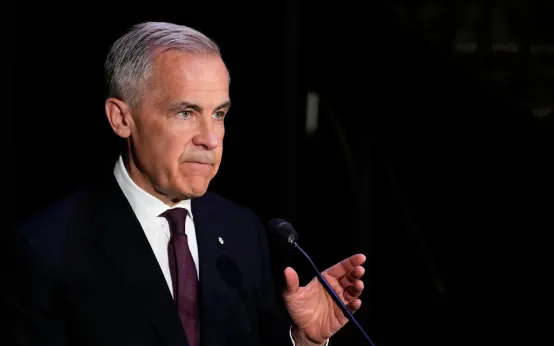
The commentary further criticized Prime Minister Carney for declining to publicly address the matter in detail. According to the segment, the government’s reluctance to provide clear explanations has intensified criticism and allowed opposition parties to portray the silence as evidence of administrative confusion and weak accountability.
For many Canadians, the controversy now represents a broader test of trust in federal institutions. Questions surrounding security screening, ministerial discretion, and transparency have moved beyond partisan debate and entered a wider national discussion about the future of Canada’s immigration framework. Critics argue that without clearer answers, public skepticism toward the system may continue to grow.
While the government has not publicly provided a detailed explanation regarding the permit approval process described during the interview, the political fallout surrounding the controversy appears far from resolved. Opposition parties continue to press for investigations and accountability, while broader debates over immigration policy, national security, and Canada’s international posture toward Iran remain deeply contested across the country.






