Canada’s Trade Diversification Strategy Draws Attention as Ottawa Signals Long-Term Economic Shift

Canada’s evolving economic strategy is attracting growing attention both at home and abroad after Industry Minister Melanie Joly outlined Ottawa’s objective of significantly expanding trade relationships beyond the United States. The remarks, delivered during a major discussion on economic security and democratic resilience, have prompted renewed debate across Canada’s political landscape about the future direction of the country’s trade policy.


The discussion emerged against a backdrop of continued trade tensions between Canada and the United States, particularly surrounding tariffs, supply chains, and economic security. While the Canada-U.S. relationship remains central to the national economy, Ottawa appears increasingly focused on reducing vulnerability to external political and economic disruptions.
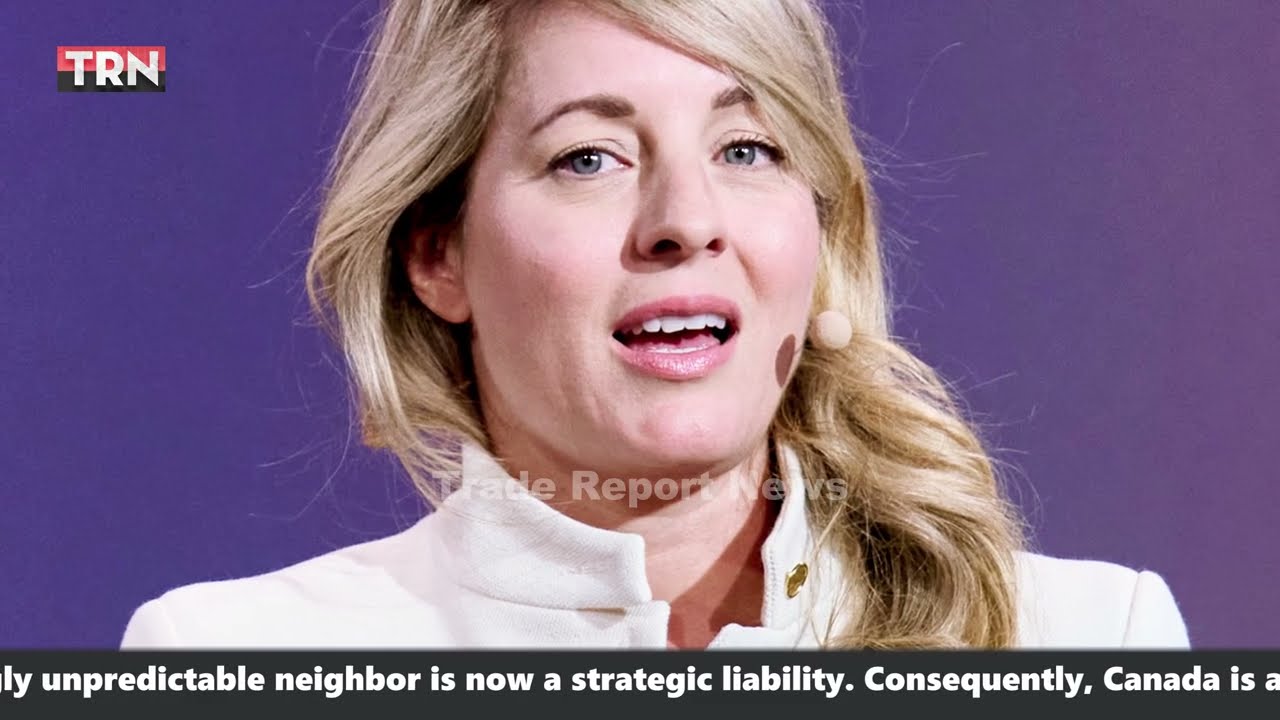
Speaking at a major international policy forum, Melanie Joly emphasized the federal government’s intention to double non-U.S. exports while expanding commercial partnerships across multiple regions. Her comments were widely interpreted as a signal that diversification has become a core element of Canada’s long-term economic planning.
The transcript portrays the government’s approach as a response to changing global conditions rather than a rejection of the United States. Officials have argued that expanding market access and strengthening alternative trade relationships can provide additional economic resilience during periods of uncertainty.
Much of the discussion focused on the impact of tariff policies associated with the administration of Donald Trump. According to the transcript, Canadian officials have increasingly viewed repeated trade disputes involving steel, aluminum, automotive production, and broader supply-chain concerns as evidence that excessive dependence on a single market may carry strategic risks.
For decades, Canadian governments generally treated economic integration with the United States as a source of long-term stability. Geography, established trade agreements, and deeply interconnected industries created a framework that supported investment and cross-border growth for generations.
However, the transcript suggests that repeated trade disputes encouraged policymakers in Ottawa to reconsider aspects of that model. Rather than responding through confrontation, the federal government appears to have focused on building additional partnerships and strengthening domestic economic capacity.
The remarks were delivered during a discussion that also included Pete Buttigieg and other international policy figures. Participants examined broader questions surrounding democratic resilience, economic security, and the role of governments in managing global uncertainty.
Observers noted that Joly’s comments carried particular significance because of her current responsibilities within Canada’s industrial policy framework. The ministry plays a central role in manufacturing strategy, investment attraction, industrial competitiveness, and responses to changing trade conditions.
Recent trade data cited in the transcript indicated growth in exports to non-American markets alongside a decline in the U.S. share of total Canadian exports. Supporters of diversification argue that such trends demonstrate the practical implementation of Ottawa’s broader strategy rather than merely a political message.
The government’s approach extends beyond trade agreements alone. According to the transcript, Ottawa has pursued stronger economic relationships with partners in Europe and the Indo-Pacific while expanding cooperation in sectors such as critical minerals, advanced manufacturing, clean energy, and infrastructure development.
At the same time, federal officials continue to emphasize the importance of maintaining a strong relationship with the United States. The transcript repeatedly notes that Canada is not seeking to replace its largest trading partner but rather to reduce exposure to disruptions that could arise from future political or economic developments.
This balancing act has come under increasing political pressure as policymakers attempt to strengthen domestic resilience while preserving one of the most integrated bilateral economic relationships in the world. The challenge has highlighted widening divisions within Parliament regarding the best path forward for Canadian trade and industrial policy.
Government representatives have argued that diversification should be viewed as a complementary strategy rather than a substitute for cooperation with Washington. They maintain that a broader network of economic partnerships can strengthen Canada’s position while continuing to support North American competitiveness.
Critics, meanwhile, have questioned whether diversification efforts can meaningfully reduce the importance of the U.S. market given the depth of existing economic ties. Others have raised broader concerns about government accountability and whether ambitious trade objectives can be achieved within the proposed timelines.
The transcript also emphasizes Canada’s role as a supplier of critical resources, including energy products, minerals, fertilizer inputs, and industrial materials that remain important to American industries. This interdependence continues to shape discussions on both sides of the border.
Throughout the discussion, Ottawa offered a carefully measured response to questions about changing geopolitical dynamics. Rather than framing the issue as a dispute between allies, officials presented diversification as a practical adjustment to a more competitive and uncertain global environment.
For policymakers in Ottawa, the debate extends beyond trade figures alone. It involves questions about economic security, investment attraction, supply-chain resilience, and Canada’s ability to maintain influence within a rapidly evolving international economy.
As Canada continues pursuing new trade opportunities while maintaining close ties with the United States, the broader political implications remain under close scrutiny. Whether the strategy ultimately reshapes investment patterns and economic relationships will depend on future outcomes, but for now the debate remains unresolved within Canada’s broader political landscape.






