Carney Faces Growing Scrutiny as Floor-Crossing Controversy Fuels Debate Over Democratic Accountability
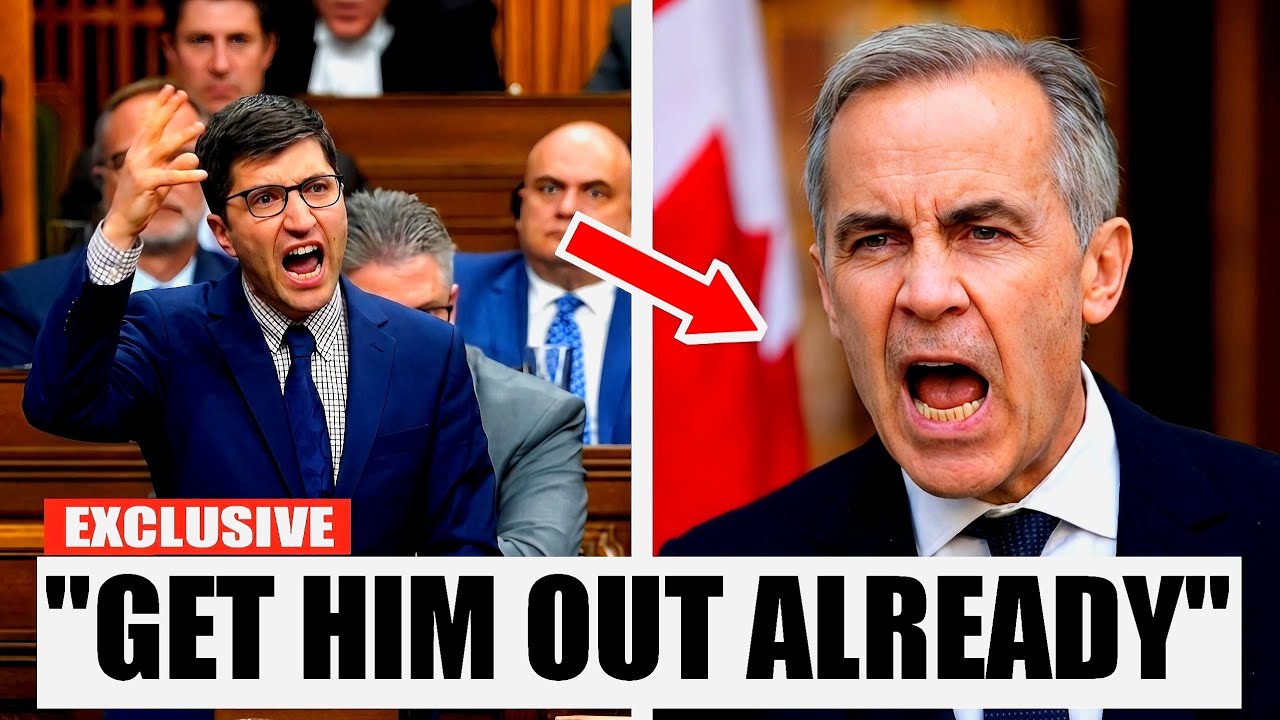
Canada’s political climate has entered another turbulent chapter as criticism intensifies around Prime Minister Mark Carney and the governing Liberal Party of Canada following the controversial defection of opposition MPs to the Liberal caucus. The debate, amplified through parliamentary exchanges and political commentary online, has reignited broader questions about party loyalty, voter representation, and democratic legitimacy in Ottawa.
The controversy centers on remarks made in Parliament regarding a newly elected member from Scarborough Southwest who had previously issued harsh criticism of the Liberals before later joining their ranks. Opposition members seized upon those past statements, quoting descriptions of the Liberals as “the surest path to greater evil,” as well as accusations that the party was “untrustworthy and conniving.”
During heated exchanges, Conservative MPs argued that the situation reflects a deeper problem within federal politics. According to critics, the issue is not merely ideological disagreement but the perception that political power has become the overriding objective for parties seeking parliamentary dominance. The remarks framed the floor crossing as evidence of political opportunism rather than genuine policy alignment.
The dispute quickly expanded beyond a single MP. Commentators aligned with conservative circles suggested that the Liberal government’s strategy relies increasingly on attracting dissatisfied members from rival parties, particularly from the New Democratic Party. Critics argued that such defections undermine the expectations of voters who elected candidates under different party banners.
Supporters of the government, however, have historically defended floor crossings as a legitimate feature of parliamentary democracy. In Canada’s Westminster system, MPs are elected individually and are not legally required to resign their seats after changing political affiliation. While controversial, party switching has occurred repeatedly across multiple governments and political eras.
Critics of the move contend that the ethical issue lies not in legality but in voter trust. They argue that citizens cast ballots based on campaign promises, ideological platforms, and party identity. When an elected representative changes allegiance shortly after an election, opponents say constituents may feel that the original mandate has effectively been altered without public consent.
The parliamentary criticism also carried a broader warning about concentrated political power. Conservative voices suggested that majority governments, once secured, often become less responsive to public consultation and opposition scrutiny. The debate reflects longstanding tensions within Canadian politics over how much authority majority governments should wield once elected.

Much of the rhetoric directed at Carney has also focused on his professional background. Before entering politics, Mark Carney served in senior financial positions, including leadership roles at Goldman Sachs and the Bank of England. Critics cited those credentials as evidence that Carney represents a technocratic governing style more associated with institutional expertise than grassroots politics.
Supporters of Carney, meanwhile, have argued that his economic experience is precisely what Canada requires during a period marked by global instability, inflation concerns, and shifting trade relationships. Liberal allies frequently portray his international financial background as an asset that strengthens Canada’s credibility abroad and reassures investors.
The controversy has also revived memories of past scandals associated with previous Liberal governments. Opposition figures referenced issues such as the WE Charity controversy, the SNC-Lavalin affair, and the ArriveCAN controversy as examples of what they describe as a pattern of weak accountability in Ottawa.
Political analysts note, however, that accusations surrounding democratic erosion remain deeply contested. While critics portray floor crossing as a betrayal of voters, defenders argue that MPs must retain the freedom to leave parties whose values or leadership no longer align with their own convictions. The debate ultimately reflects competing interpretations of representative democracy itself.
The Scarborough controversy has become especially symbolic because of the sharp language previously directed at the Liberals before the eventual political realignment. Opponents argue that such reversals fuel public cynicism and contribute to declining trust in political institutions across Canada.
;Resize=620)
The discussion has also highlighted the increasingly polarized media environment surrounding Canadian politics. Independent political commentators and online channels have played a major role in amplifying criticism of the Liberal government, often accusing mainstream media organizations of failing to scrutinize the governing party aggressively enough.
At the same time, defenders of traditional media institutions argue that online commentary can sometimes blur the line between analysis and political activism. They caution that emotionally charged narratives may intensify public anger while simplifying the complexities of parliamentary procedure and coalition-building.

Beyond partisan arguments, the controversy has exposed broader public frustration with political consistency. Many Canadians, regardless of party preference, continue to express concerns about transparency, accountability, and whether elected officials remain faithful to the commitments made during election campaigns.
Opposition Conservatives, led federally by Pierre Poilievre, have increasingly framed themselves as defenders of democratic accountability and parliamentary oversight. They argue that strong opposition scrutiny is necessary to prevent governments from becoming insulated from public criticism after winning majorities.
The Liberals, however, maintain that attracting support from politicians across ideological lines can also be interpreted as evidence of broad confidence in government leadership. Supporters argue that political cooperation and evolving alliances are not inherently signs of democratic decline but rather features of a flexible parliamentary system.
Observers note that floor-crossing controversies rarely disappear quickly because they touch directly on questions of political legitimacy. While some voters accept party switching as part of democratic evolution, others view it as a violation of the trust established during elections. The absence of mandatory by-elections for defecting MPs ensures the debate remains unresolved.
The episode also illustrates the increasingly emotional tone of modern Canadian political discourse. Language surrounding “betrayal,” “power,” and “control” has become more common across both traditional debates in Parliament and digital political commentary platforms, reflecting a wider climate of polarization.
For now, the political consequences for Mark Carney remain uncertain. Although critics portray the controversy as evidence of internal instability and democratic dissatisfaction, there has been no indication of an imminent resignation. Nevertheless, the dispute continues to fuel sharp national debate over political loyalty, voter expectations, and the future direction of Canadian democracy.






