
What began as another tense political exchange in Ottawa suddenly turned into something much bigger.
In front of a national television audience, Prime Minister Mark Carney directly confronted Alberta Premier Danielle Smith’s growing flirtation with separation politics — and by the end of the interview, even longtime observers admitted the conversation had shifted dramatically.
Because Carney did not simply criticize the movement.
He challenged its entire foundation.
And the moment he compared Alberta’s referendum push to Brexit, the political atmosphere in Canada changed almost instantly.
For months, separation rhetoric has been growing louder in Alberta. Rising frustration over federal energy policy, equalization payments, carbon regulations, and Ottawa’s influence over provincial affairs has fueled a wave of political anger across the province. Supporters of sovereignty argue Alberta contributes enormous wealth to Canada while receiving little respect in return.
But during the live exchange, Carney delivered a warning that caught even his critics off guard.
A referendum, he argued, is never “just a message.”
It can become a point of no return.
That single line immediately ignited debate across the country.
Because behind the scenes, federal officials are increasingly worried that separatist language once considered fringe is becoming normalized inside mainstream political conversations. Some analysts now fear Canada could be entering its most dangerous unity debate since the Quebec referendums of 1980 and 1995.
And Carney appears determined to stop that momentum before it accelerates further.
The Prime Minister’s first argument focused on legitimacy.
According to Carney, Alberta voters were never directly asked in the last provincial election whether they supported separation from Canada. Danielle Smith campaigned heavily on provincial autonomy, energy rights, and resisting federal overreach — but not on leaving Confederation itself.
That distinction matters enormously.
Carney argued that presenting a future referendum as though it already carries democratic approval is misleading Canadians and creating political pressure around a question voters never formally endorsed.
Critics of Smith’s government quickly seized on the statement.
Some constitutional experts have also pointed out that referendum campaigns often evolve far beyond the original political context in which they were introduced. What begins as symbolic pressure can rapidly become emotionally charged and politically irreversible.
That is exactly why Carney brought up Brexit.
The comparison stunned the room.
According to Carney, Britain’s 2016 referendum was initially presented by many politicians as a negotiating tactic — a way to gain leverage against Brussels without necessarily expecting the country to actually leave the European Union.
But once the vote happened, events spiraled beyond political control.
Markets crashed.
Governments collapsed.
Businesses fled uncertainty.
Families and regions became deeply divided.
And nearly a decade later, Britain is still dealing with the economic and political consequences.
Carney knows this story better than most world leaders.
During the Brexit crisis, he served as Governor of the Bank of England and became one of the central figures managing financial instability during one of the most turbulent periods in modern British politics. He witnessed firsthand how quickly referendum politics can transform from abstract slogans into real economic consequences.
That experience gave extra weight to his warning.
“People think these votes are symbolic until suddenly they aren’t,” one commentator later summarized after the broadcast.
And then Carney shifted to economics.
That was the moment the conversation moved beyond politics and into something much more strategic.
The Prime Minister cited recent international wealth comparisons showing Canadian median household wealth sits roughly 23% higher than in the United States. According to Carney, that gap is not accidental — it reflects decades of investment into public healthcare, education systems, childcare support, and broader social protections designed to reduce inequality and create long-term economic stability.
Supporters of the federal government immediately amplified the argument online.
Their message was simple: Canada’s model works.
And Carney’s broader implication was even more provocative.
He appeared to suggest that separation movements built primarily around anger toward Ottawa risk overlooking the economic structures that helped create Alberta’s prosperity in the first place.
That argument triggered immediate backlash from separatist supporters.
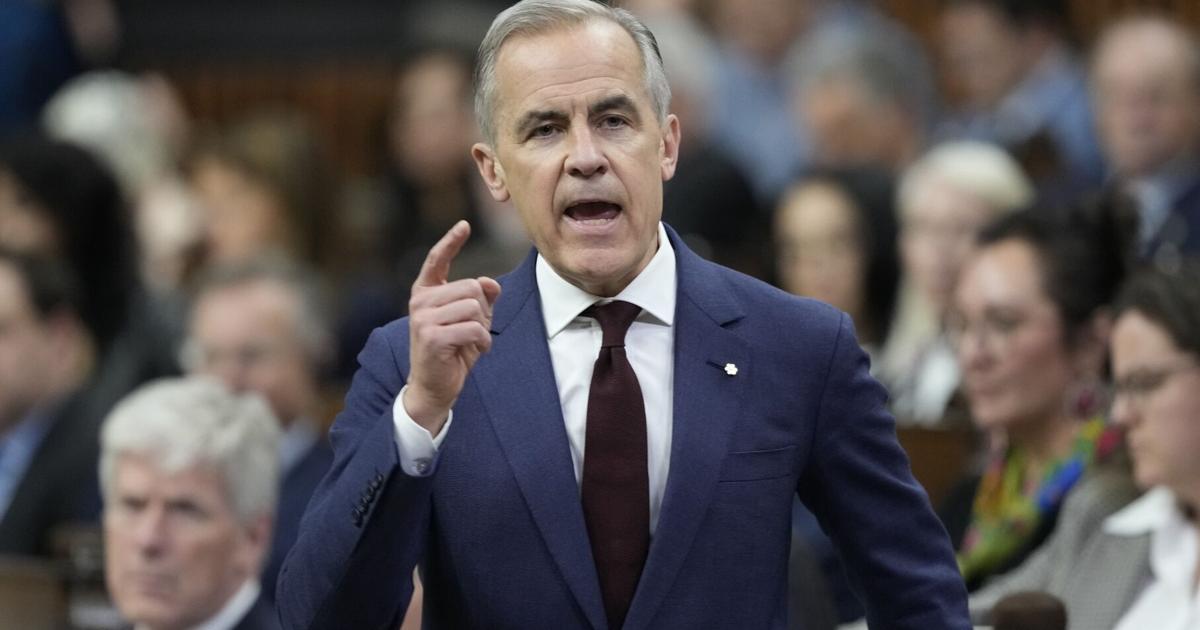
Critics accused Carney of using fear tactics and economic anxiety to discredit legitimate frustrations inside Alberta. Many argued the province has carried Canada economically for decades through oil and gas revenues while facing increasing restrictions from federal environmental policy.
Some also pointed to stalled pipeline projects, federal emissions targets, and disputes over natural resource authority as evidence that Ottawa increasingly ignores western Canadian priorities.
But Carney’s supporters believe the Prime Minister intentionally reframed the debate away from emotion and toward consequences.
That shift could prove politically significant.
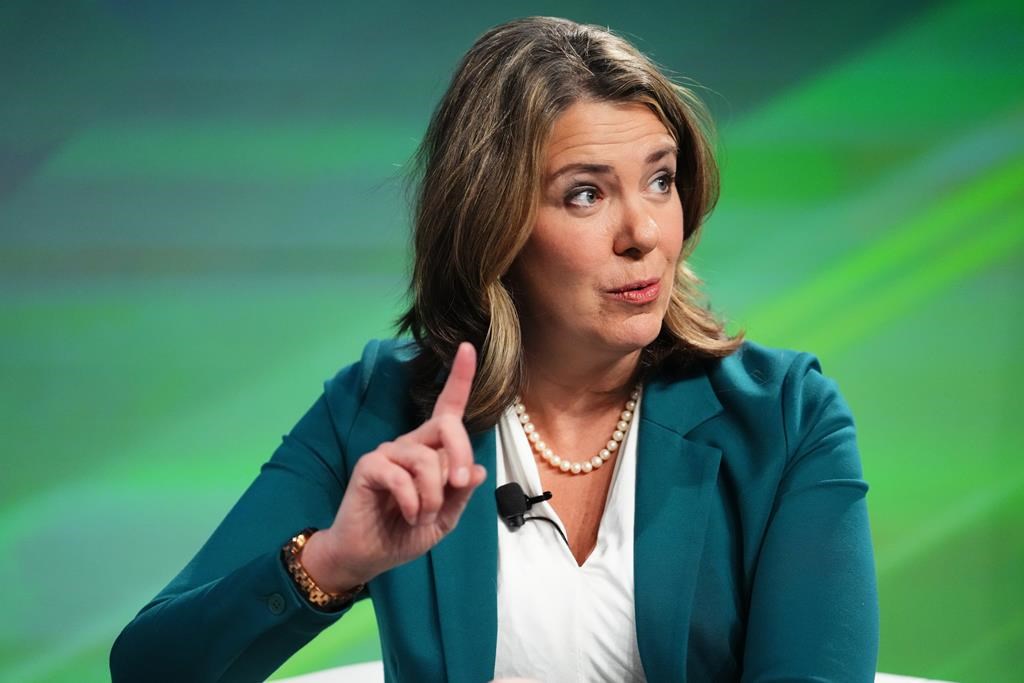
Because until now, much of the separation discussion has centered around identity, resentment, and provincial frustration. Carney instead forced Canadians to confront practical questions few politicians want to discuss publicly:
What currency would an independent Alberta use?
What happens to pensions?
Who controls trade agreements?
What happens to Indigenous treaties?
Could businesses relocate?
Would investors pull back during years of constitutional uncertainty?
And perhaps most importantly:
Would separation actually make Albertans wealthier?
Those questions are becoming harder to ignore.
Several economists have warned that even the appearance of constitutional instability inside Canada could create major investor anxiety, particularly in the energy sector where long-term infrastructure projects depend heavily on regulatory predictability.
That concern is especially relevant right now.
Global markets are already facing rising geopolitical tensions, slowing growth forecasts, energy uncertainty, and trade instability linked to the United States and China. Under those conditions, investors generally avoid jurisdictions facing constitutional disputes or political fragmentation.
Carney understands that dynamic extremely well.
Before entering politics, he spent years at Goldman Sachs and later led both the Bank of Canada and the Bank of England. His political style is often criticized as technocratic and overly financial, but supporters argue that background allows him to frame political crises through the lens of economic risk rather than ideological theater.
And during this interview, that is exactly what he did.
Instead of directly attacking Alberta voters, Carney focused on unpredictability.
Instead of debating identity politics, he debated financial consequences.
Instead of escalating rhetoric, he tried to make separation sound economically dangerous.
Whether that strategy works remains unclear.
Because outside Ottawa, frustration inside Alberta continues growing.
Recent polling suggests a significant portion of Albertans feel alienated from federal institutions, particularly regarding energy development and environmental policy. While outright support for full separation still remains below majority levels, support for greater provincial autonomy has surged sharply over the past several years.
That creates a dangerous political environment.
Movements that begin as demands for autonomy can evolve rapidly once public anger intensifies. Quebec’s sovereignty movement followed a similar trajectory over decades before culminating in two historic referendums that nearly fractured the country.
Some federal strategists now privately worry Alberta could follow a comparable path if economic pressures worsen or if relations with Ottawa continue deteriorating.
Danielle Smith herself has repeatedly attempted to walk a careful line.
She publicly denies actively pursuing separation while simultaneously defending the right of Albertans to debate it openly. Critics argue this approach allows separatist sentiment to grow without requiring clear accountability from provincial leadership.
Carney’s televised confrontation may have been designed to force that ambiguity into the open.
By challenging the movement directly, the Prime Minister essentially demanded clarity: is this merely political pressure — or is Alberta genuinely moving toward a constitutional crisis?
The answer remains uncertain.
But after the interview aired, one thing became impossible to ignore.
This debate is no longer confined to fringe political circles.
It is now a national conversation.
And for many Canadians watching the exchange unfold live, the most unsettling part was not Carney’s criticism of separation itself.
It was the realization that federal leaders are beginning to speak as though the threat is becoming real.
Because once a country starts openly debating whether it can stay together, the political landscape changes forever.
Now Canada may be approaching that moment.
And the next question could determine everything:
Did Mark Carney successfully expose a political bluff…
Or did he accidentally give the separation movement the national spotlight it was waiting for?






