Carney SECURES Two Pipelines in One Week — The 2.8 Billion Annual Payoff Every Canadian Needs to See
CALGARY — In a remarkable week of announcements, Canada has advanced two major pipeline projects that could reshape its energy export landscape and reduce long-standing dependence on a single market.
The developments signal a strategic push to diversify oil export routes at a time of ongoing trade tensions with the United States.
Prairie Connector Gains Momentum
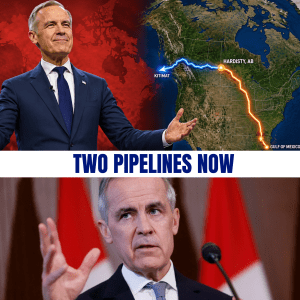
South Bow, the Canadian midstream company, confirmed binding 20-year commercial commitments for its Prairie Connector pipeline. The project would transport up to 450,000 barrels per day from Hardisty, Alberta, to U.S. delivery points including Cushing, Oklahoma, and ultimately the Gulf Coast.
The company described the successful open season as a critical milestone, with a final investment decision targeted for mid-2027.

West Coast Pipeline Agreement Signed
Fifteen days earlier, Prime Minister Mark Carney and Alberta Premier Danielle Smith signed an implementation agreement for a proposed West Coast pipeline. The project aims to carry up to 1 million barrels per day from Alberta to the British Columbia coast for export to Asian markets.
Alberta is required to submit a formal proposal to Ottawa’s major projects office by July 1, with potential construction starting as early as September 2027 under an optimistic timeline.
Historic Scale of Expansion
Together, the two initiatives represent the largest simultaneous pipeline expansion announcement in Canadian history. If both proceed, they would add approximately 1.45 million barrels per day of new export capacity.
This volume exceeds the total new pipeline infrastructure Canada has added over the past two decades.
Economic Benefits Projected
Analysts estimate the projects could recover up to $2.8 billion annually in lost revenue by narrowing the long-standing price differential between Western Canadian Select crude and global benchmarks.
Over a 20-year lifespan, the cumulative economic gain could exceed $56 billion, flowing through royalties, taxes and pension fund returns held by millions of Canadians.
End of Single-Market Dependence
For decades, Canadian oil producers have been constrained by limited export options, primarily selling to refineries in the U.S. Midwest. This concentration created persistent price discounts that cost the economy tens of billions of dollars yearly.
The new pipelines would open access to Gulf Coast refineries to the south and Asian buyers to the west, introducing genuine competition for Canadian crude.
Trans Mountain as Foundation
The recently expanded Trans Mountain pipeline has already demonstrated the value of diversification. Since opening in 2024, it has narrowed price differentials and generated significant additional revenue for producers and governments.
However, the line is operating near capacity, underscoring the need for further infrastructure.
Regulatory and Political Support
The Carney government has streamlined the approval process for projects of national interest. This framework includes accelerated reviews and cabinet designation, designed to move critical energy projects forward more efficiently than in the past.

Challenges Remain Significant
Both projects face substantial hurdles. The West Coast pipeline requires detailed Indigenous consultations, environmental assessments and provincial approvals in British Columbia. The tanker moratorium on northern British Columbia waters adds further complexity.
Prairie Connector must secure remaining permits and financing despite its advanced commercial commitments.
Broader Energy Strategy
The pipeline announcements coincide with progress on natural gas infrastructure. Enbridge’s Sunrise project and LNG Canada’s potential Phase Two expansion suggest a coordinated effort to develop multiple export streams simultaneously.
Strategic Implications
Success would enhance Canada’s global energy influence and provide greater leverage in trade negotiations. Reduced dependence on any single customer could strengthen the country’s economic resilience.
Pension and Revenue Impact
Canadian pension funds, including the Canada Pension Plan Investment Board and provincial plans, hold significant stakes in energy companies. Higher realized prices for Canadian oil would directly benefit retirees through improved investment returns and increased government revenues.
Timeline and Realism
While Prairie Connector has clearer momentum, the West Coast project remains at an earlier stage. Optimistic timelines assume seamless regulatory and political alignment that has historically proven difficult.
A Defining Moment
The simultaneous advancement of pipelines in opposite directions marks a departure from past patterns of stalled infrastructure development. For the first time in recent memory, Canada is actively pursuing diversified export capacity on multiple fronts.
Looking Forward
Whether these projects reach completion will depend on regulatory outcomes, Indigenous partnerships and market conditions. Their success could fundamentally alter Canada’s position as an energy exporter for decades to come.
The coming months will determine if this week’s announcements translate into concrete infrastructure that delivers long-promised economic benefits to Canadians.






