Carney’s Environmental Gamble Sparks Liberal Revolt as Poilievre Conservatives Target Bill C-5
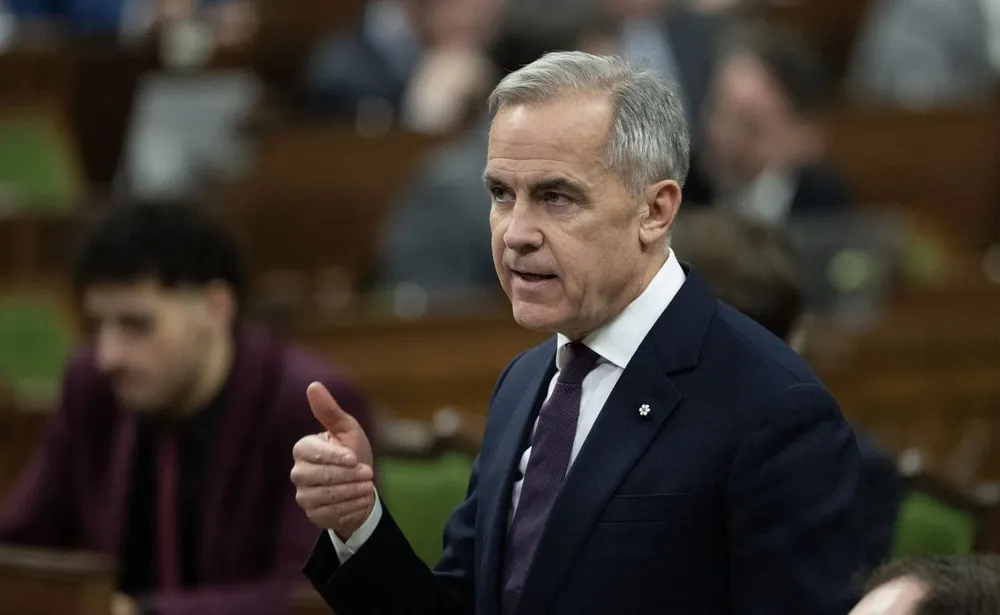
In Ottawa, a growing political storm is unfolding around Prime Minister Mark Carney and his government’s controversial fast-track development agenda. What began as a debate over economic growth and infrastructure approvals has now evolved into a broader national confrontation over environmental protections, federal power, and the future identity of Canada’s Liberal government.
Conservative MPs argue that the government’s handling of Bill C-5, known as the One Canadian Economy Act, exposes a major contradiction at the heart of Carney’s political brand. During parliamentary discussions, opposition members claimed Conservatives had attempted to improve the legislation by introducing clearer definitions around what qualifies as a project in the “national interest.” According to the debate presented in the transcript, those proposals were ultimately rejected by the Liberal government, leaving significant discretionary authority in the hands of cabinet ministers.
For many Liberal voters, the controversy is particularly striking because Carney entered federal politics with a reputation built heavily around climate finance and environmental responsibility. Before becoming prime minister, he spent years advocating internationally for green investment strategies and warning about the financial dangers posed by climate change. Critics now argue that his current infrastructure strategy appears fundamentally at odds with those earlier positions.
The government’s accelerated project approval agenda centers on more than $60 billion in proposed developments, including natural gas expansion projects, mining operations, nuclear energy initiatives, and port infrastructure. Among the projects highlighted in the transcript were LNG Canada Phase Two in Kitimat, British Columbia, expansions tied to copper and zinc mining, and new infrastructure connected to the Port of Montreal.
Supporters of the legislation maintain that Canada faces mounting economic pressure from global instability and shifting trade relationships, particularly with the United States. Carney’s government argues that long approval timelines have weakened Canada’s ability to compete internationally and delayed projects considered strategically important to national economic security.
At the center of the dispute is the government’s proposal to significantly streamline environmental review procedures. Under the proposed framework described in the transcript, some major projects could move through the federal approval process within approximately one year, a dramatic reduction compared with previous timelines that often stretched across several years.
Critics, however, warn that the speed of the process may come at the expense of transparency and environmental oversight. Concerns intensified following discussion of proposed “federal economic zones,” areas where projects could reportedly receive lighter regulatory treatment and where certain environmental requirements might be reduced or modified.
Environmental advocates and opposition politicians have questioned the lack of detailed definitions surrounding these proposed zones. According to the transcript, critics argue that Canadians are being asked to trust broad governmental powers before the full scope of the framework has been publicly clarified. That uncertainty has fueled accusations that the government is centralizing authority while reducing external oversight.
The controversy deepened further when questions emerged regarding protections under Canada’s Species at Risk Act. The transcript describes concerns that cabinet ministers could potentially receive expanded authority to exempt projects from portions of the law’s “jeopardy test,” a safeguard designed to prevent developments that threaten endangered species or their recovery.
One of the most politically damaging developments for the government has been criticism coming from within Liberal ranks themselves. Former Environment Minister Steven Guilbeault reportedly expressed public concern that the proposed changes could go further than environmental reforms introduced during the government of former Prime Minister Stephen Harper.
That comparison carries substantial political weight in Canada. Environmental reforms introduced under Harper’s Conservative government more than a decade ago generated intense public backlash and legal disputes. The Liberal Party spent years positioning itself as the political force that would restore environmental safeguards and rebuild public trust in federal review systems.
The transcript also references criticism from former Liberal Environment Minister Catherine McKenna, who reportedly warned that weakening consultation and oversight mechanisms could trigger additional legal battles, potentially slowing projects rather than accelerating them. Her comments added to the perception of a widening divide inside the Liberal coalition over the government’s new direction.
Legal challenges are already beginning to emerge. Environmental organizations in Quebec have reportedly launched constitutional proceedings against Bill C-5, arguing that concentrating decision-making authority within cabinet structures undermines democratic accountability and weakens opportunities for judicial and public scrutiny.
Political analysts across Ottawa are closely watching how this dispute may reshape Canada’s political landscape. Polling referenced in the transcript suggested that while many Canadians support faster approvals for major economic projects, a significant portion of Liberal voters continue to prioritize environmental protections over economic speed.
That dynamic creates a difficult balancing act for Carney. His electoral coalition included environmentally focused voters who viewed him as a pragmatic but climate-conscious alternative capable of combining economic expertise with long-term sustainability planning. The current backlash raises questions about whether that coalition can remain intact if the government continues prioritizing rapid industrial development.
At the same time, the government faces growing economic pressure from multiple directions. Concerns surrounding American tariffs, supply chain instability, and broader geopolitical uncertainty have intensified demands for Canada to accelerate domestic infrastructure and resource projects. Supporters of the legislation argue that failing to act quickly could leave Canada economically vulnerable during a period of global volatility.
Behind the parliamentary confrontation also lies a deeper philosophical divide over Canada’s future economic model. Conservatives argue that private-sector resource development remains essential for national prosperity and energy independence. Environmental critics counter that weakening safeguards risks undermining Indigenous consultation, biodiversity protections, and long-term climate commitments.
The transcript repeatedly highlights accusations that Carney’s government is attempting to reconcile two increasingly incompatible political objectives: satisfying investors and industry leaders while simultaneously maintaining credibility among climate-conscious voters. That tension now appears to be defining one of the most consequential policy debates of his premiership so far.
Observers are also watching for potential internal Liberal dissent. The public comments attributed to Guilbeault and McKenna have fueled speculation that additional MPs may eventually voice concerns if public opposition grows or if legal challenges begin gaining traction in the courts.
The broader implications extend beyond a single bill. The dispute surrounding Bill C-5 has become symbolic of a larger national debate over how Canada balances environmental responsibility with economic competitiveness in an era of geopolitical uncertainty and resource-driven growth strategies.
For now, the issue remains unresolved. Court challenges are advancing, political divisions are deepening, and both supporters and critics of the legislation are framing the debate as a defining test of Canada’s future direction. Whether Carney’s government can maintain public confidence while pursuing aggressive development policies may ultimately determine not only the fate of Bill C-5, but also the long-term stability of the coalition that brought the Liberals back to power.






