Something happened in Vancouver this week that could quietly reshape the future of Canada’s economy, energy sector, and even the balance of power between Ottawa and the provinces.
During a high-profile appearance in British Columbia, Prime Minister Mark Carney delivered a message that stunned political observers across the country. If British Columbia continues blocking major national energy projects, Ottawa may simply move its investment, focus, and political energy elsewhere.
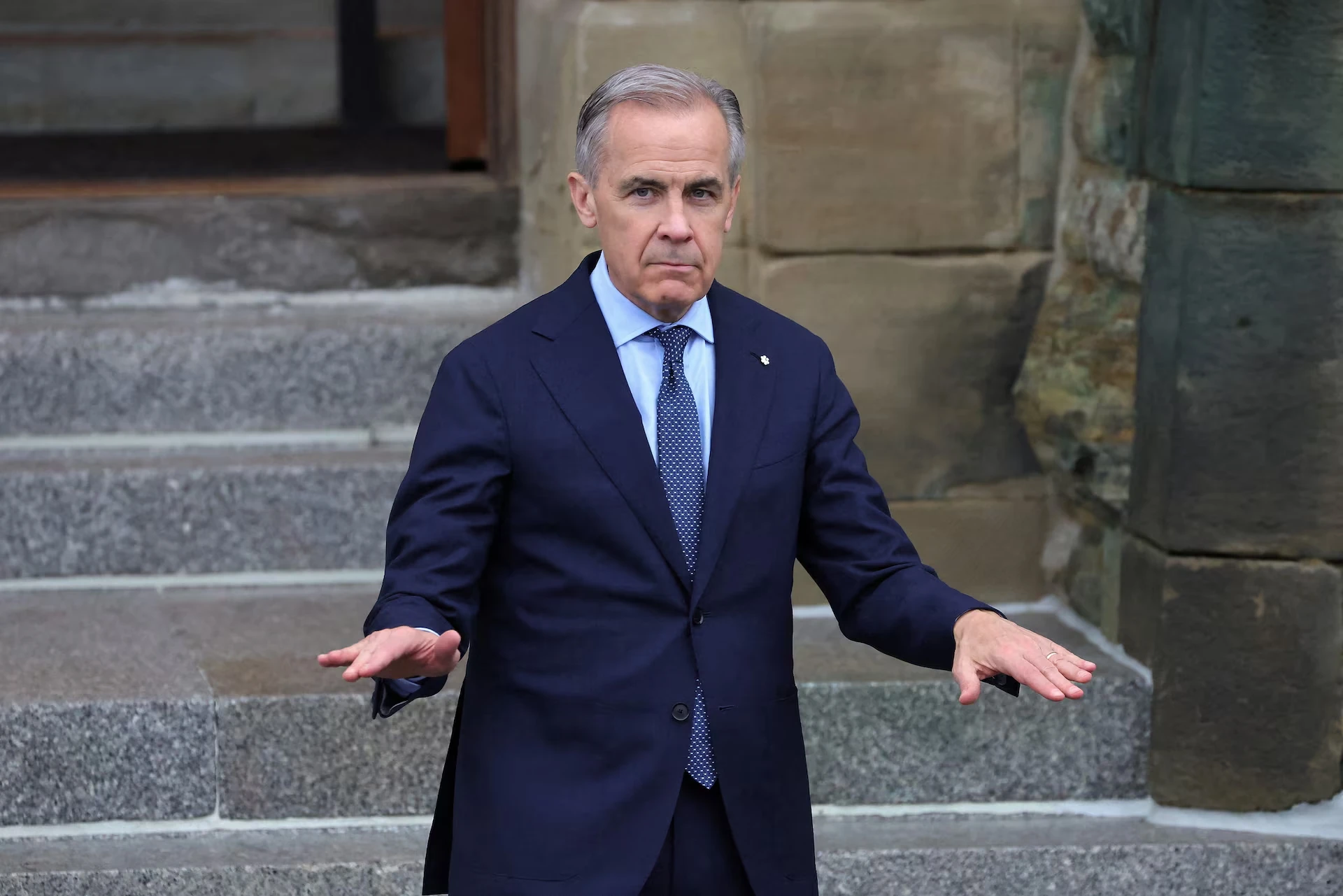
It was a short statement. But the implications behind it were enormous.
For many Canadians, the remark sounded less like a policy disagreement and more like a direct warning to British Columbia’s government. Behind the scenes, officials in Ottawa, Alberta, and B.C. are now locked in what insiders describe as one of the most serious federal-provincial confrontations in years.
At the center of the storm is a proposed new oil pipeline connecting Alberta’s energy sector to Canada’s Pacific coast. Supporters say the project could transform Canada into a global energy powerhouse at a time when the world is desperate for stable oil and gas supplies.
Critics say it could become an environmental and political disaster.
The proposed pipeline would reportedly transport close to one million barrels of oil per day from Alberta to export terminals on the Pacific coast, allowing Canada to dramatically expand exports to Asian markets. Alberta officials argue the country is losing billions of dollars every year because it remains too dependent on the United States as its primary energy customer.
For years, Alberta leaders have argued that Canada’s natural resources are being “landlocked” by political opposition and environmental restrictions. They believe new Pacific access is essential if Canada wants to compete with major energy exporters like the United States, Saudi Arabia, and Russia.
But British Columbia Premier David Eby has drawn a hard line.
Eby and his government remain strongly opposed to expanding tanker traffic along B.C.’s northern coastline, arguing that the environmental risks are simply too high. Concerns over oil spills, marine ecosystems, Indigenous territories, and coastal tourism continue dominating opposition arguments inside the province.
One of the biggest obstacles remains Canada’s tanker ban on parts of British Columbia’s northern coast. The restrictions currently limit large-scale crude oil exports from ports such as Prince Rupert and Kitimat — locations many energy executives view as strategically critical for future trade with Asia.
That is where the political battle suddenly became explosive.

Carney’s remarks suggested Ottawa may be preparing to challenge the idea that provinces can indefinitely block projects considered nationally important. While he did not directly threaten constitutional action, many analysts believe the federal government is now signaling a willingness to test the limits of federal authority.
And that changes everything.
For decades, Canada’s political system has depended heavily on negotiation and compromise between provinces and Ottawa. But as economic pressures intensify, patience inside federal circles appears to be wearing thin.
Behind closed doors, many business leaders have reportedly been urging Ottawa to move more aggressively on major infrastructure projects. Canada’s approval processes have become notoriously slow, with some resource developments taking years — or even decades — to move forward.
Investors are increasingly frustrated.
Several international energy companies have already scaled back Canadian operations over the past decade, citing regulatory uncertainty, political conflict, and mounting project delays. Some executives argue Canada has effectively made itself one of the hardest developed countries in the world to build large energy infrastructure.
Carney appears determined to change that perception.
The Prime Minister has repeatedly argued that the world is entering a new era of energy instability. Global conflicts, supply disruptions, sanctions, and rising geopolitical tensions have pushed energy security back to the center of international politics.
According to Carney, Canada has an opportunity that may not last forever.
With massive oil reserves, political stability, and access to global markets, Canada could become one of the world’s most reliable long-term energy suppliers. But supporters of new pipelines argue the country cannot achieve that goal unless it expands export infrastructure quickly.
That urgency is now colliding directly with British Columbia’s environmental concerns.
For Eby, the issue is about far more than economics. His government argues that protecting B.C.’s coastline is a responsibility that cannot simply be overridden by federal political pressure. Environmental groups within the province have also warned that expanding tanker routes could increase the risk of catastrophic spills along one of Canada’s most ecologically sensitive regions.
The debate has rapidly evolved into something much larger than a simple infrastructure dispute.
It is now becoming a national argument about power itself.
Can provinces still stop projects they oppose?
Or does Ottawa ultimately have the authority to push through projects considered essential to Canada’s economic future?
That constitutional gray area is suddenly becoming one of the most important political questions in the country.
Political strategists say Carney may also be responding to growing frustration outside British Columbia. In Alberta and Saskatchewan especially, many voters feel western economic interests have been repeatedly sacrificed for political reasons.
That resentment has been building for years.
Some western leaders argue their provinces contribute enormous wealth to the national economy while facing endless obstacles whenever they attempt to expand energy production. Calls for greater provincial autonomy — once considered fringe political rhetoric — have become increasingly mainstream in some conservative circles.
Carney appears aware of that political danger.
By publicly confronting British Columbia’s opposition, the Prime Minister may be trying to reassure western Canada that Ottawa is finally prepared to prioritize national economic growth over regional gridlock.
But the strategy carries enormous political risks.
British Columbia remains one of Canada’s most environmentally conscious provinces, and opposition to new pipelines remains deeply entrenched in many communities. Indigenous groups are also divided, with some supporting economic development opportunities while others remain firmly opposed to expanded oil infrastructure.
Any aggressive federal intervention could trigger protests, legal battles, and political backlash across the province.
And yet Ottawa may believe the economic stakes are simply too high to back down.
Canada’s economy is currently facing multiple pressures at once: slowing productivity growth, global competition for investment, rising living costs, and increasing uncertainty in international markets. Many economists argue that resource exports remain one of the country’s most powerful economic advantages.
Supporters of pipeline expansion say Canada cannot afford to keep delaying projects while competitors rapidly expand their own energy exports.
Some analysts believe Carney’s comments were carefully designed to send a message not only to British Columbia — but also to global investors watching Canada closely.
The message was simple: Canada intends to build again.
Whether that promise becomes reality remains unclear.
Legal experts note that the federal government does possess significant constitutional authority over interprovincial trade and infrastructure. However, environmental regulation, Indigenous consultation requirements, and provincial permitting powers create a deeply complicated legal landscape.
A prolonged court battle now appears increasingly possible.
Meanwhile, public opinion remains sharply divided.
Some Canadians view new pipelines as essential for jobs, economic growth, and national competitiveness. Others believe doubling down on fossil fuel infrastructure contradicts climate goals and exposes Canada to future economic risks as the global energy transition accelerates.
The political consequences could be massive either way.
If Carney succeeds in advancing the project, he could strengthen support in western Canada and position himself as a leader willing to confront bureaucratic paralysis. But if the conflict spirals into a constitutional and environmental crisis, the fallout could damage national unity and deepen regional tensions.
For now, one thing is becoming impossible to ignore.
This is no longer just a fight over a pipeline.
It is a fight over who ultimately gets to decide Canada’s economic future — the provinces, the federal government, or the markets themselves.
And after Carney’s stunning warning in Vancouver, the entire country may soon discover just how far Ottawa is willing to go.