China Returns as Canada Faces a Question It Can No Longer Ignore

Something unusual is happening in Canada right now, and most people are focused on the wrong part of the story.
At first glance, it looked like a routine political disagreement between provincial leaders over constitutional interpretation and Indigenous consultation requirements.
But when you zoom out, the timing becomes difficult to ignore.
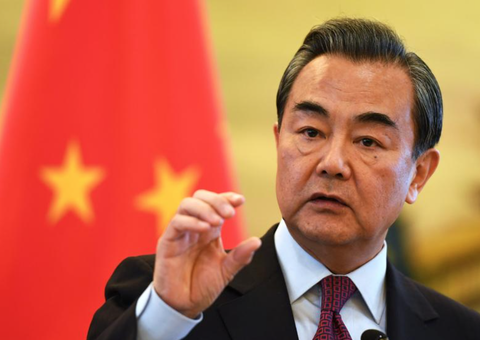
On the very same day Canadian premiers were publicly clashing over legal obligations and resource development, China’s foreign minister arrived in Canada for one of the highest-level diplomatic visits in years.
Normally, those two stories would have nothing to do with one another.
This time, however, they may be pointing toward the same underlying question: Can Canada move quickly enough to take advantage of emerging economic opportunities?
The debate inside Canada centered on a familiar issue. Who ultimately decides whether major infrastructure and resource projects move forward?
One side argued that consultation obligations require careful legal consideration and constitutional protection.
The other side pushed back, arguing that excessive uncertainty risks creating paralysis at exactly the moment Canada needs economic momentum.
What made the exchange stand out was not the policy disagreement itself.
Canada has debated these issues for decades.
What stood out was the visible frustration.
The discussion quickly moved beyond legal theory and into something more fundamental: whether Canada’s decision-making system is becoming too slow for an increasingly competitive world.
And that’s where the arrival of China becomes important.
Major diplomatic visits rarely happen by accident.
When senior officials travel across the world after years of limited engagement, it usually means discussions are already taking place behind closed doors.
Trade, investment, resource access, energy cooperation, and supply chain security are often part of those conversations.
China’s renewed interest comes at a fascinating moment.
Canada has spent the past several years trying to diversify its economic relationships beyond the United States.

The objective has never been to replace its largest trading partner.
The objective has been to reduce dependence by creating additional options.
That strategy has become increasingly visible through discussions surrounding energy exports, critical minerals, transportation corridors, and access to Asian markets.
From Beijing’s perspective, Canada offers something valuable.
It possesses enormous natural resources, political stability, advanced financial institutions, and access to Arctic and Pacific trade routes that are attracting growing international attention.
But opportunities alone do not guarantee results.
Investors, governments, and multinational corporations all focus on one critical factor above everything else: certainty.
Markets can tolerate high costs.
They can tolerate political disagreements.
What they struggle with is unpredictability.
That is why the legal debate unfolding inside Canada matters far beyond provincial politics.
Every delay, court challenge, regulatory review, or constitutional dispute influences how quickly major projects can move from proposal to reality.
For years, critics argued that Canada was losing opportunities because large infrastructure projects often took too long to approve.

Supporters of existing processes countered that careful review protects rights, communities, and long-term stability.
Both arguments contain elements of truth.
The challenge is that global competition rarely pauses while countries resolve internal disagreements.
And global competition is becoming more intense.
Around the world, governments are racing to secure supply chains, energy resources, critical minerals, and strategic trade partnerships.
Countries capable of moving quickly often gain advantages that can last for decades.
This creates a difficult balancing act for Canada.
The country wants to maintain strong legal protections and constitutional obligations while also remaining attractive to investors and trading partners.
Those goals are not always easy to reconcile.
That tension is increasingly visible across discussions involving pipelines, mining projects, transportation infrastructure, and export corridors.
Meanwhile, external interest continues growing.
China’s visit sends a signal that Canada remains an important player in global economic calculations despite years of diplomatic distance.
It suggests that major powers still view Canada as a country worth engaging with.
Yet the larger question remains unresolved.
Can Canada translate international interest into tangible economic outcomes?
Because attracting attention is only the first step.
The harder challenge is converting that attention into projects, investments, jobs, and long-term partnerships.
And that requires more than diplomatic meetings.
It requires a system capable of making decisions with enough speed to keep pace with changing global conditions.
The contradiction facing Canada today is surprisingly simple.
Externally, opportunities appear to be expanding.
Internally, debates over process, consultation, and jurisdiction remain as complex as ever.
Neither side of that equation is likely to disappear.
Which means Canada’s future may depend on how successfully it balances both.
If the country can maintain constitutional protections while accelerating strategic development, this period could be remembered as the beginning of a new era of economic expansion.
But if uncertainty continues to grow faster than confidence, Canada risks watching opportunities arrive at its doorstep only to move elsewhere.
And that may be the real story developing beneath the headlines.
Not the clash between premiers.
Not even the arrival of a Chinese diplomat.
But a country quietly deciding whether it can adapt fast enough to seize the opportunities suddenly appearing before it.






