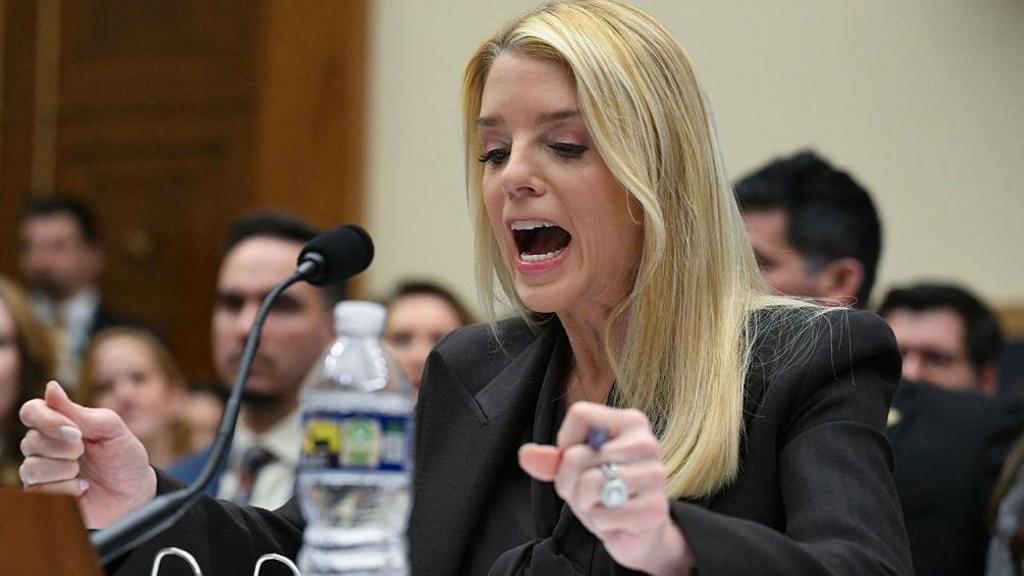
In a House Judiciary Committee oversight hearing focused on Department of Justice operations, Representative Chip Roy, a Republican from Texas, directly questioned Attorney General Pam Bondi regarding the status of any additional prosecutions tied to the Jeffrey Epstein case. Bondi responded by confirming that the department maintains pending investigations related to individuals potentially connected to Epstein’s activities.

The February 11, 2026, session featured extended discussion on the handling and release of documents associated with Epstein, the financier convicted of sex trafficking offenses who died in custody in 2019. Bondi addressed concerns raised by lawmakers about redactions in recently disclosed files, explaining that instances where victim names appeared without proper redaction were addressed promptly upon identification. She described the corrections as part of efforts to balance transparency with victim protection amid a large volume of materials—over three million pages—released under executive direction.
Bondi highlighted actions taken during the first Trump administration, including the 2019 federal charges brought against Epstein in the Southern District of New York and the subsequent 2020 indictment of Ghislaine Maxwell, his associate convicted in 2021. She contrasted this with what she characterized as limited engagement on the matter during the intervening Biden administration. The exchange occurred against a backdrop of broader scrutiny over compliance with the Epstein Files Transparency Act, legislation mandating greater disclosure of related records.
Roy’s line of inquiry centered on whether additional individuals beyond Epstein and Maxwell could face charges based on information in the files. Bondi stated affirmatively that investigations remain active within the department, though she provided no specifics on targets, timelines, or the nature of the probes. The response drew attention in the hearing room, as it appeared to diverge from earlier departmental indications suggesting no immediate new prosecutions were anticipated.
The discussion also touched on procedural aspects of the document release. Roy inquired about the inadvertent inclusion of certain survivor names in public versions of the files. Bondi attributed this to the compressed timeframe for review and processing, noting that the department acted to implement retroactive redactions where necessary. She emphasized ongoing commitments to refine protections for victims while fulfilling statutory disclosure requirements.
The hearing reflected persistent partisan and institutional tensions surrounding the Epstein matter. Democrats on the committee pressed Bondi on perceived shortcomings in redactions and the pace of accountability, with some expressing frustration over responses they viewed as evasive. Republicans, including Roy, focused on departmental achievements under current leadership and sought assurances regarding forward momentum in investigations.
Epstein’s case has long involved questions about networks of influence, with released materials naming numerous high-profile figures in various contexts, though many mentions lack evidence of criminal involvement. The Justice Department’s recent efforts have included directing resources toward reviewing historical files, coordinating with the FBI on potential new leads, and encouraging victims or witnesses with information to come forward.
Bondi’s confirmation of active investigations aligns with statements urging continued cooperation from affected individuals. Department officials have maintained that credible allegations receive appropriate scrutiny, consistent with standard prosecutorial protocols. The lack of detailed elaboration during the hearing left room for interpretation, with observers noting the statement’s potential to sustain public and congressional interest in the case.
Subsequent developments have included further congressional actions. In March 2026, the House Oversight Committee issued a subpoena compelling Bondi to provide testimony in a closed-door setting regarding the department’s compliance with transparency obligations and overall handling of Epstein-related materials. The move followed a bipartisan vote authorizing the subpoena, reflecting cross-party concerns over redactions, withheld documents, and investigative progress.
The subpoena seeks to examine decisions around file management, including any prosecutorial memoranda or draft indictments that remain undisclosed. Department responses have described the subpoena as unnecessary, offering alternative briefings while asserting adherence to legal standards. This escalation underscores the challenges in navigating sensitive investigations involving historical figures and voluminous records.
Broader context includes ongoing debates about executive authority in document classification, victim privacy rights, and the role of congressional oversight in high-profile cases. The Epstein files release has prompted varied reactions, with some praising steps toward openness and others criticizing incomplete redactions or selective emphasis.
Roy’s questioning positioned the exchange as a probe into accountability mechanisms rather than a confrontation, though media coverage often highlighted the intensity of the session. Bondi’s responses aimed to convey active stewardship of the matter under current leadership, while acknowledging logistical hurdles in large-scale disclosures.

As investigations proceed behind closed doors, the public record from the hearing serves as a reference point for evaluating departmental performance. The affirmation of pending work has fueled speculation about possible future developments, though official channels emphasize that prosecutorial decisions rest on evidence, legal thresholds, and independent judgment.
The episode illustrates the complexities of congressional-DOJ interactions in politically charged arenas. With oversight continuing through subpoenas and potential additional hearings, the Epstein matter remains a focal point for discussions on justice, transparency, and institutional responsibility.
In the months since the February hearing, attention has shifted partly to compliance questions and procedural disputes, yet the core inquiry into any unresolved aspects of the case persists. Bondi’s statements during the session with Roy continue to inform analyses of the department’s approach, balancing historical actions with commitments to ongoing review.






