Australia’s housing debate has erupted into a fierce national battle after Housing Minister Clare O’Neil forcefully rejected claims that the government’s proposed tax reforms could trigger a dramatic collapse in house prices.
What began as a policy discussion over changes to negative gearing and capital gains tax has rapidly escalated into a wider economic and political showdown, with banks, analysts, and government officials now clashing over the future of Australia’s already fragile housing market.
The controversy intensified after analysts from Morgan Stanley warned that the proposed reforms could push Australian home prices down by as much as 10%, potentially sending shockwaves through the country’s property sector.
At the same time, Westpac issued its own alarming forecast, predicting that one-third of new investor activity could disappear if the changes move forward, while total housing turnover could fall by nearly 20%.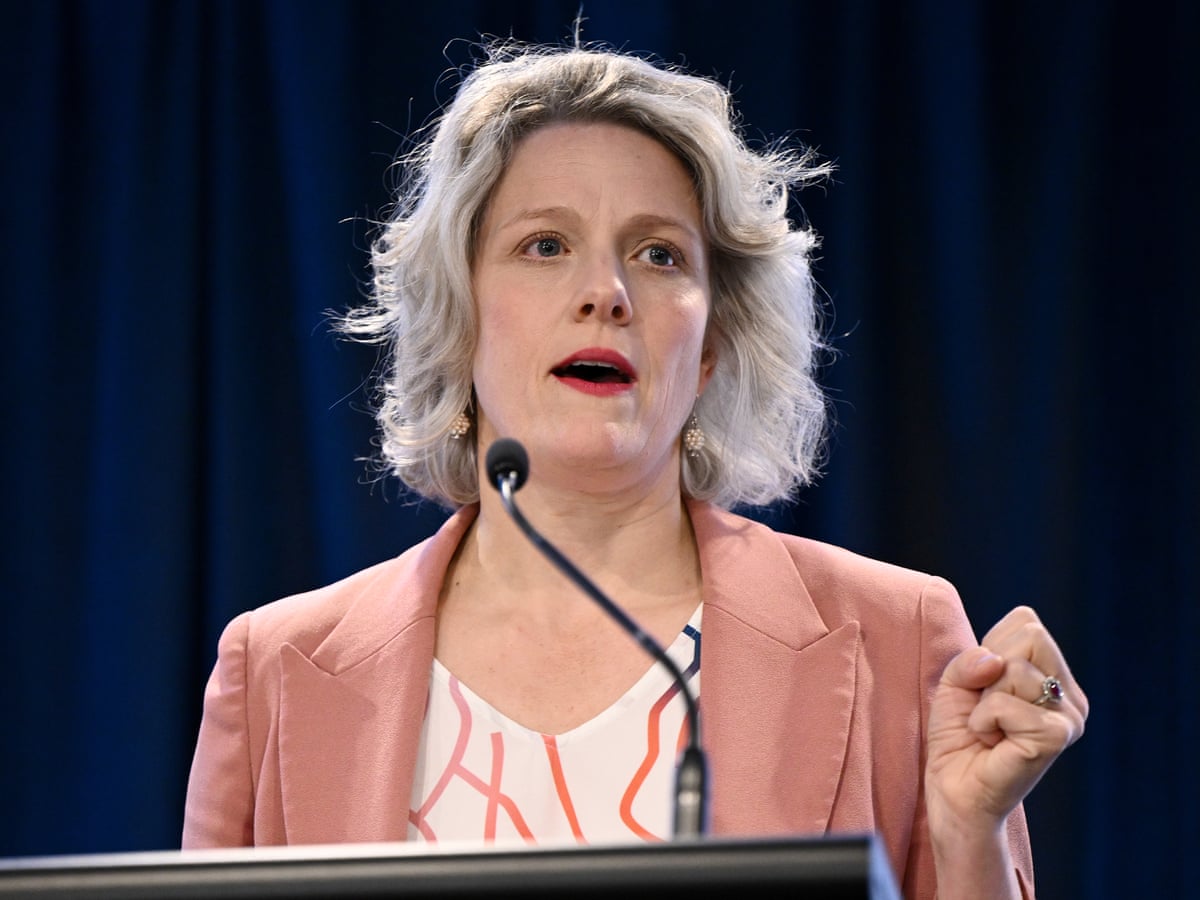
The warnings immediately triggered anxiety among investors, homeowners, and political commentators, many of whom fear the government could unintentionally destabilize one of Australia’s most important economic pillars.
But Clare O’Neil has refused to accept that narrative.

Responding directly to the growing criticism, the Housing Minister argued that the government’s budget measures are not the main force influencing house prices and accused critics of oversimplifying the issue.
“House prices in our country move. The biggest driver of them is what goes on with interest rates,” O’Neil said in a strong defense of the reforms.
She also pointed to Treasury modelling, insisting the actual impact of the tax changes on property prices would be relatively modest.
According to O’Neil, Treasury estimates suggest the reforms would create only a “mild affordability impact” while helping approximately 75,000 rental households transition into home ownership over time.
Supporters of the government argue the reforms are designed to make Australia’s housing market fairer by reducing speculative investor advantages and giving first-home buyers a better chance to enter the market.
They claim the current system has fueled years of soaring prices, locking younger Australians out of home ownership while rewarding investors with generous tax incentives.
Critics, however, warn that reducing investor participation could backfire badly.
Some economists argue that if investor demand drops too sharply, housing construction and supply could slow, potentially worsening long-term affordability pressures instead of solving them.
Others fear a sudden cooling in the property market could damage household confidence, especially at a time when many Australians are already struggling with high mortgage repayments and cost-of-living pressure.
Despite the heated predictions, Australia’s Treasury has taken a far less dramatic position than private analysts.
Treasury forecasts suggest house price growth would slow by approximately 2% in the short term rather than collapse outright — a more moderate assessment that has also received backing from the Grattan Institute and analysts at Commonwealth Bank.
That massive gap between government modelling and private-sector forecasts has now become the centre of the political fight.
Opposition figures and market critics accuse the government of underestimating the risks, while Labor supporters argue banks and investment groups are exaggerating worst-case scenarios to protect existing investor advantages.
Behind the economic arguments lies a much deeper political reality.
Housing affordability has become one of the defining issues in modern Australian politics, especially for younger voters who increasingly see home ownership as unattainable.
At the same time, millions of Australians already own property and fear any policy that could weaken housing values or threaten retirement wealth tied to real estate.
That creates an explosive balancing act for the government: improve affordability without triggering a wider property downturn.
As the debate intensifies, Australians are now hearing two completely different stories.
One side says the reforms are necessary to repair a broken market and finally give ordinary renters a pathway into home ownership.
The other warns the government may be gambling with the stability of the entire housing sector during an already uncertain economic period.
For now, no one can say with certainty which forecast will prove correct.
But with investors nervous, economists divided, and political pressure mounting, one thing is becoming increasingly clear: Australia’s housing war is no longer just about tax policy.
It has become a battle over the future direction of the country’s economy itself.






