By LEO M. TRUJILLO
WASHINGTON — The death of Robert S. Mueller III, the former F.B.I. director and special counsel whose investigation into Russian interference shadowed the first half of the Trump presidency, has ignited a fresh firestorm of political vitriol. While the Mueller family has sought privacy to grieve, President Donald Trump took to his social media platform, Truth Social, to issue a remarkable and unfiltered response to the passing of the man who was once his primary legal antagonist.
“Robert Mueller just died. Good. I’m glad he’s dead,” Mr. Trump wrote in a post signed with his full name, as if issuing a formal executive decree. He further claimed that Mr. Mueller could “no longer hurt innocent people,” a transparent reference to the two-year investigation that resulted in dozens of indictments but stopped short of recommending charges against the sitting president due to Justice Department policy.
The statement, devoid of the traditional solemnity usually accorded to deceased public servants, follows a well-documented pattern for the former president. Observers noted similar lack of sympathy following the deaths of other perceived adversaries, such as the filmmaker Rob Reiner, and during incidents of political violence involving figures like Representative Ilhan Omar. For critics, the post was not merely a breach of etiquette but a “deranged” display of “decency deficit” toward a decorated war veteran.

Mr. Mueller, who reportedly passed away in a senior living facility outside Charlottesville, Virginia, after a private battle with Parkinson’s disease, left behind a legacy defined by decades of nonpartisan service. A graduate of Princeton and a decorated Marine who earned a Bronze Star and a Purple Heart in Vietnam, Mr. Mueller led the F.B.I. through the tumultuous aftermath of the Sept. 11 attacks. He was respected by both parties for 12 years, notably having his term extended by President Barack Obama with unanimous Senate consent.
The animosity from Mr. Trump stems entirely from the 2017 appointment of Mr. Mueller as special counsel. During that tenure, Mr. Mueller’s team charged 34 people, including high-ranking Trump campaign officials like Paul Manafort and Michael Flynn. While Mr. Trump has long claimed the investigation was a “witch hunt” that resulted in “total exoneration,” the Mueller report explicitly stated that if the office had confidence the president had not committed a crime, it would have said so.
The reaction to Mr. Trump’s “celebration” of the death has reached across the aisle. Even some Republican senators, typically hesitant to criticize the head of their party, described the statement as “sad” and a reflection of the degraded state of American political discourse. They argued that regardless of political disagreements, Mr. Mueller’s record of military and civil service deserved a baseline of institutional respect.
For the Mueller family, the former president’s comments added a layer of public spectacle to a private tragedy. Their simple statement asking for peace and privacy stood in stark contrast to the digital “proclamation” issued from Mar-a-Lago. Supporters of the late director argue that Mr. Trump’s inability to “let it go” even after Mr. Mueller had retired from public life reveals more about the former president’s temperament than it does about the merits of the Russia investigation.
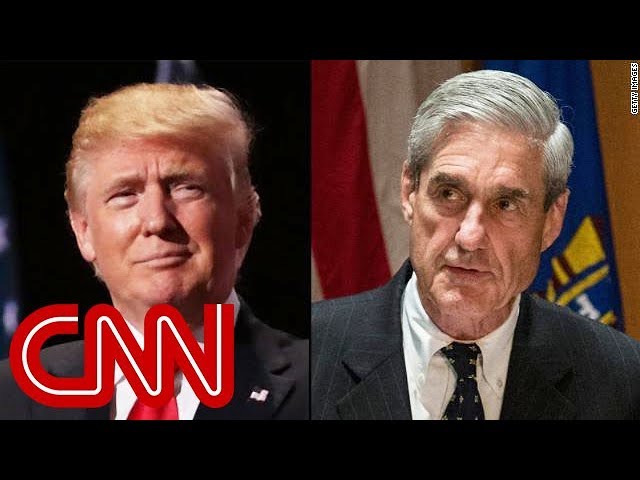
Mr. Trump’s defenders, however, maintain that his anger is justified. They point to the immense pressure and legal costs the investigation placed on the administration, arguing that Mr. Mueller represented a “deep state” effort to subvert a democratically elected leader. From this perspective, the “Good, I’m glad he’s dead” remark is seen not as a lack of decency, but as the raw, honest reaction of a man who felt unfairly persecuted for years.
The irony of the situation was not lost on historians. Before the relationship soured, Mr. Trump had actually interviewed Mr. Mueller to return as F.B.I. director during his first term. The transition from potential appointee to “enemy of the state” highlights the transactional nature of the former president’s loyalties, where anyone who refuses to “bow down” or who holds the executive to the rule of law is eventually targeted.
As Washington reflects on the passing of a man who spent 50 years in the service of the law, the debate over Mr. Trump’s response underscores a persistent national divide. While the Mueller report still exists as a matter of public record, the former president’s final “shot” at the special counsel ensures that their mutual history will end not with a handshake, but with a bitter, signed post that many believe confirms the very character traits Mr. Mueller was tasked with investigating.






