The ‘Binary’ Redaction: How Dan Goldman Used a Single Victim List to Challenge Pam Bondi’s Epstein Transparency
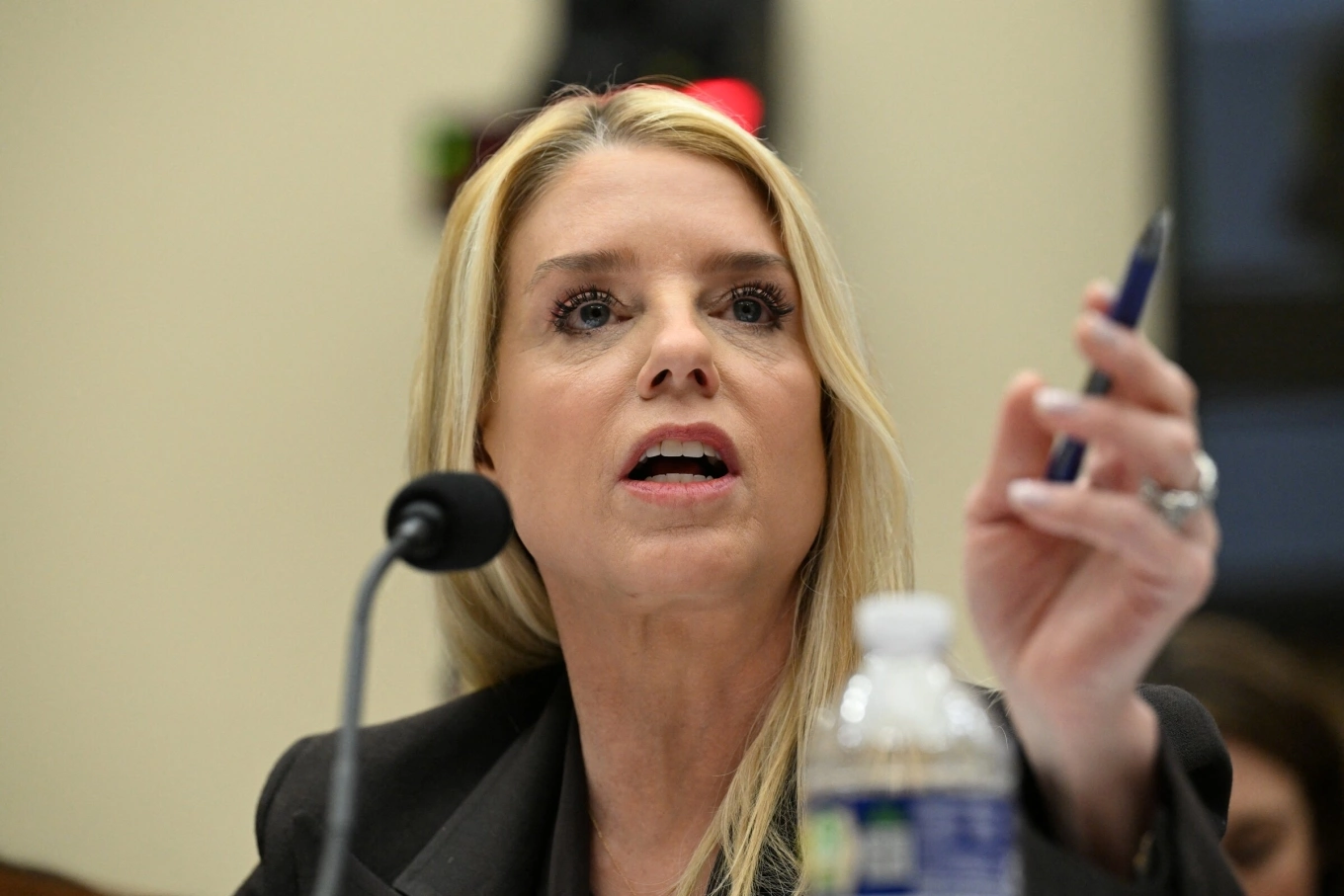
WASHINGTON — In the wood-paneled halls of the House Judiciary Committee, where bureaucratic language often serves as a shield, Representative Dan Goldman (D-NY) delivered a forensic strike this week that has fundamentally shifted the timeline of the Jeffrey Epstein investigation. Using a single anomalous data point, the former federal prosecutor moved beyond the rhythmic sparring of Washington to confront Attorney General Pam Bondi with evidence of what he termed “intentional intimidation” within the Department of Justice.

The confrontation, which has since dominated legal and political circles, centered on a “statistical impossibility” buried within the three million pages of records released under the Jeffrey Epstein Files Transparency Act.
The Architecture of the ‘Improper Redaction’
Representative Goldman began his interrogation not with an accusation, but with a document. After establishing that the DOJ had released millions of files, Goldman pivoted to a specific record entitled “Epstein Victim List.” “This document contains 32 names,” Goldman stated, his voice carrying the calm weight of a legal brief. “One name is redacted. 31 are not. Someone looked at this list and decided to protect one person while exposing 31 others. That is not a mathematical error; that is an intentional decision.”
The strategy was surgical. By focusing on the inconsistent application of privacy protections, Goldman bypassed the standard defense of “procedural necessity.” If the department’s goal was to protect survivors, he argued, the exposure of 31 names proves a catastrophic failure of that mission.
The ‘Privileged’ Email Trap
The turning point of the hearing occurred when Goldman introduced an email exchange between Jeffrey Epstein and Ghislaine Maxwell. According to the record, the email contained notes of statements made by Donald Trump regarding his prior relationship with Epstein.
When Bondi repeatedly shouted the word “privileged” to block the line of questioning, Goldman provided a sharp factual correction on the floor. “It was sent from Jeffrey Epstein to Ghislaine Maxwell,” Goldman noted. “There is no attorney-client privilege between two co-conspirators. This is a misuse of a legal protection to hide evidence from the American people.”
Analysts noted that the most damaging aspect of the exchange was the contradiction of Bondi’s own past statements. A year ago, as a private citizen, Bondi claimed in a televised interview that a “client list” was sitting on her desk. Now, as Attorney General, she maintains that no evidence exists in the files to link the President to any illegal acts—a statement Goldman and other committee members, including Ted Lieu, have characterized as a violation of 18 U.S.C. § 1001.
The ‘Burn Book’ and Separation of Powers
The tension escalated further when Representative Pramila Jayapal accused Bondi of “spying” on lawmakers. During the hearing, Bondi held up a document labeled “Pramila Jayapal Search History,” which logged every file the representative had accessed in the DOJ database.
While the DOJ confirmed it logs all system searches, Jayapal and other members characterized the “burn book” as an “outrageous abuse of the separation of powers” designed to intimidate those conducting oversight. This revelation coincided with reports that the DOJ’s Public Integrity Section—the unit responsible for investigating public corruption—has been gutted from 35 staffers to just two since Bondi took office.
Survivors and the ‘Zero’ Metric
Perhaps the most visceral moment of the 5-hour hearing occurred when Goldman turned to the survivors sitting in the gallery. Addressing Deputy Attorney General Todd Blanche’s claim that the department has met with all victims who wished to speak, Goldman asked the survivors in the room to raise their hands if they had been granted a meeting.
The count was zero. Every survivor present indicated they had reached out through legal counsel and had been “denied or ignored” by the Department of Justice.
Institutional Fallout
The hearing concluded not with a resolution, but with the formal entry of the “Epstein Email” and the “Redaction Audit” into the permanent record. By presenting documented witness accusations—including those from two minors who alleged introductions to Donald Trump in the 1980s—Goldman has provided a roadmap for future inquiries into witness credibility.
As the 2026 political landscape intensifies, the “31 to 1” redaction exchange stands as a stark reminder of the power of forensic oversight. In the halls of Washington, where policy is often debated in the abstract, the presence of a single, selectively protected name on a victim list has proved to be the loudest statement of all. Goldman’s message was clear: “You have prioritized obstruction over justice, and the documents prove it.”






