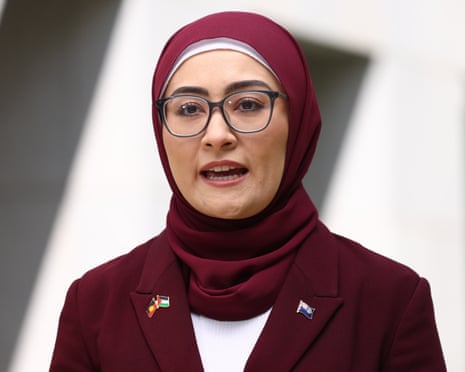
Canberra has been thrown into yet another political firestorm after veteran MP Bob Katter launched an extraordinary attack on independent Senator Fatima Payman, accusing her of presenting a dangerously misleading picture of life for women in Iran and sparking a fierce national debate about democracy, human rights and political responsibility.
What began as a discussion about women’s participation in Iranian society has rapidly escalated into one of the most talked-about political clashes in recent weeks, drawing reactions from politicians, analysts, advocacy groups and Australians across the country.
The controversy erupted after Payman suggested during a public discussion that women in Iran continue to hold positions of influence and remain active participants in civic and public life. While some viewed her comments as an observation about the complexity of Iranian society, critics immediately argued that the remarks risked downplaying decades of well-documented concerns surrounding human rights and women’s freedoms under the Iranian regime.
No critic was more vocal than Katter.

Known for his uncompromising style and blunt delivery, the long-serving Queensland MP delivered a fiery response that reverberated throughout Parliament House. Katter argued that any discussion of women’s status in Iran must be viewed within the broader legal and political realities faced by Iranian women on a daily basis.
“This is dangerous ignorance,” he declared, as tensions inside the political arena rapidly intensified.
His comments quickly drew attention across Canberra, with political insiders reporting growing unease among lawmakers and renewed discussion about how Australian politicians should address sensitive international issues.
At the centre of the dispute is a question that has divided observers worldwide: can a society’s achievements in education, employment and political participation be acknowledged without appearing to overlook broader concerns about civil liberties and human rights?
For Katter, the answer appears clear.
He argued that highlighting examples of female participation in Iranian institutions without fully addressing the restrictions imposed upon women risks creating a distorted picture of reality. According to his supporters, democratic nations have a responsibility to speak openly about human rights concerns and avoid language that may blur those distinctions.

The debate carries particular weight because Iran’s treatment of women has remained under intense international scrutiny for decades.
Human rights organisations have repeatedly documented concerns involving mandatory dress codes, limitations affecting certain legal rights, restrictions on personal freedoms and crackdowns on protest movements. Those issues have become even more prominent following recent waves of demonstrations led largely by women demanding greater freedoms and institutional reform.
Supporters of Payman, however, insist that her comments have been interpreted too narrowly.
They argue that recognising the achievements and participation of women within Iranian society does not automatically amount to endorsing the policies of the Iranian government. In their view, understanding complex societies requires nuance rather than sweeping conclusions.
Many of her defenders point out that women in Iran continue to contribute significantly in education, business, medicine and public life despite operating within a restrictive political environment.
From that perspective, acknowledging those contributions can coexist with criticism of the broader system.
Yet opponents remain unconvinced.

They argue that public figures, particularly elected officials, must exercise extreme care when discussing countries whose human rights records remain highly contested on the world stage.
Because parliamentary debates are closely watched both domestically and internationally, critics say even subtle wording choices can shape public perceptions and influence diplomatic conversations.
The confrontation between Katter and Payman has therefore evolved into something much larger than a disagreement between two politicians.
Observers say it reflects a growing tension within modern foreign policy discussions, where symbolism, language and public messaging often carry almost as much weight as formal policy itself.
Political analysts note that conversations surrounding Iran have become increasingly sensitive in recent years, particularly following highly publicised protests and ongoing international debates regarding democratic freedoms and civil rights.
In Katter’s view, the issue ultimately comes down to moral clarity.
His intervention framed the debate as a choice between recognising limited participation within a constrained system and recognising what he considers genuine democratic empowerment.

Supporters applauded his stance, arguing that Australia should remain steadfast in defending universal human rights standards regardless of political sensitivities.
Others, however, believe the exchange demonstrates the danger of oversimplifying complicated international realities.
They warn that reducing complex societies to binary narratives can obscure the experiences of ordinary citizens who continue to navigate difficult circumstances while contributing meaningfully to their communities.
The clash has also highlighted the challenges facing multicultural democracies such as Australia.
As politicians from diverse cultural backgrounds bring different perspectives and experiences into national debates, discussions surrounding international issues can become particularly sensitive.
Balancing criticism of foreign governments while maintaining respect for diaspora communities remains one of the most difficult aspects of contemporary political discourse.
Media coverage has only amplified the controversy.
Short clips from the parliamentary exchange have circulated widely online, generating passionate reactions from both supporters and critics. Across social media, users have debated whether Katter’s comments represented a necessary defence of human rights or an example of political rhetoric overshadowing a more nuanced conversation.
Foreign policy experts have attempted to inject perspective into the debate, reminding Australians that the nation’s official approach toward Iran continues to be shaped through diplomatic channels, strategic considerations and government policy rather than individual parliamentary exchanges alone.
Nevertheless, analysts acknowledge that statements made by elected representatives can influence public opinion and contribute to broader narratives surrounding international affairs.
Adding another layer of intrigue is Payman’s unique political position.
Since leaving the Labor Party and becoming an independent senator, her political identity has continued to evolve. As a result, both supporters and critics often interpret her comments through the lens of that transition, further intensifying scrutiny surrounding her public statements.
Beyond the political personalities involved, the dispute has reignited public interest in broader questions about women’s rights, democratic participation and international accountability.
Australians who may not ordinarily follow foreign policy debates have found themselves discussing the role of women under different political systems, examining international reports and revisiting long-standing questions about democracy and human rights.
Experts continue to stress that productive debate requires careful distinctions.
Recognising incremental progress within a society, they argue, is not necessarily the same as endorsing the structures that limit freedom. Yet maintaining that distinction can prove exceptionally difficult during heated political confrontations where emotions often overshadow nuance.

Whether this latest Canberra showdown ultimately fades from the headlines or leaves a lasting mark on Australia’s political landscape remains to be seen.
What is clear, however, is that the explosive exchange between Katter and Payman has touched on issues that resonate deeply with many Australians.
Questions surrounding women’s rights, democratic values, political responsibility and international accountability continue to spark passionate discussion across the country.
And as the fallout from this parliamentary clash continues to unfold, one thing is certain: the debate has travelled far beyond the walls of Parliament House, becoming part of a much larger national conversation about how Australia understands freedom, human rights and its place in an increasingly complex world.






