
PARIS — As the Group of 7 summit in France gets underway amid global tensions, Canadian Prime Minister Mark Carney has used the lead-up to the gathering to pursue an independent diplomatic push across Europe, signaling Canada’s determination to broaden its strategic options.
Mr. Carney arrived first in Paris for high-level talks with French President Emmanuel Macron before proceeding to Dublin. The itinerary, quietly arranged ahead of the main G7 sessions, focuses on defense cooperation, artificial intelligence, quantum technologies and critical minerals — sectors central to Canada’s effort to lessen its economic and security dependence on the United States.
French and Canadian officials described the Paris meetings as substantive. Discussions reportedly covered joint investments in next-generation technologies and enhanced collaboration on critical minerals supply chains, areas where both nations see strategic vulnerabilities in the current global order.
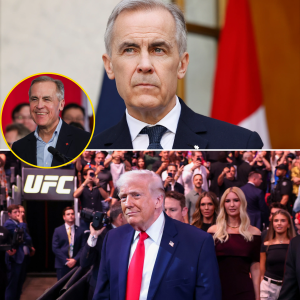
The timing of Mr. Carney’s European stops has drawn attention, especially as reports emerged that former President Donald J. Trump, a dominant voice in Republican politics, had pushed for adjustments to the G7 schedule to accommodate attendance at a major UFC event. While the White House has downplayed any formal delay, the optics have fueled speculation about shifting American priorities.
Canadian diplomats insist the prime minister’s pre-summit engagements were planned independently and are not a direct response to American domestic distractions. Nevertheless, the sequence underscores a subtle but noticeable divergence in how Ottawa and Washington are approaching international coordination.
In Paris, Mr. Carney and President Macron are said to have explored opportunities for deeper defense ties. France has been vocal about European strategic autonomy, a theme that aligns with Mr. Carney’s own emphasis on Canadian sovereignty in security matters.
The two leaders also addressed artificial intelligence governance and quantum research, fields in which Canada has invested heavily through companies like Cohere. Expanding such partnerships could help create transatlantic technology corridors less reliant on Silicon Valley infrastructure.
Critical minerals formed another key agenda item. Canada possesses significant reserves of nickel, lithium and rare earth elements, while France seeks to secure stable supplies for its green transition and defense industries.
From Paris, Mr. Carney traveled to Ireland, where the government is preparing to assume a more prominent role within the European Union. Irish officials have expressed eagerness to accelerate ratification and implementation of the Comprehensive Economic and Trade Agreement, known as CETA, with Canada.
Trade between Canada and the European Union has grown since CETA’s provisional application, but both sides see room for deeper investment flows. Irish leaders view Canada as a stable North American partner for diversifying away from excessive reliance on United States markets.
Discussions in Dublin are expected to cover not only trade but also investment in technology and financial services. Ireland’s established position as a European hub for multinationals makes it a natural bridge for Canadian firms seeking European expansion.
Analysts describe Mr. Carney’s approach as pragmatic hedging. With ongoing uncertainties in U.S. trade policy and political rhetoric, Canada is cultivating relationships that provide insurance against potential disruptions in its most important bilateral tie.
The strategy echoes broader Canadian efforts seen in recent defense procurement decisions, including the choice of Sweden’s Saab over American alternatives for surveillance aircraft. Officials argue that diversification strengthens rather than weakens the transatlantic alliance by distributing risk.
European counterparts have welcomed the outreach. Several EU nations are themselves navigating complex relations with Washington and see value in closer coordination with like-minded democracies.
Still, challenges remain. The United States and Canada share deeply integrated supply chains, massive daily trade volumes exceeding two billion dollars, and longstanding defense cooperation through NORAD. Any meaningful shift requires careful calibration to avoid economic self-harm.
Canadian business groups have urged the government to maintain strong U.S. relations even as it expands European ties. Many exporters worry that political signaling could complicate border crossings, regulatory alignment or investment flows.
Mr. Carney, a former central banker with extensive international experience, has framed his diplomacy as forward-looking. In public remarks, he has stressed that Canada must adapt to a multipolar world where no single partnership can address every vulnerability.
Supporters praise the moves as necessary sovereignty-building. Critics, particularly in conservative circles, caution that overly enthusiastic diversification might erode trust with Washington at an inopportune moment, especially regarding Arctic security and great-power competition with China and Russia.
The G7 summit itself is expected to address trade, security in Europe and the Indo-Pacific, and economic resilience. Yet for Canada, the most consequential diplomacy may already be happening on the sidelines and in the days preceding the formal meetings.
Market observers note modest movements in currency and bond markets reflecting uncertainty around Canada’s shifting posture. The Canadian dollar has shown slight volatility, while discussions of reserve management continue in financial circles.
Looking ahead, Mr. Carney’s government plans further engagements across Europe and Asia. The goal is not to replace the United States relationship but to complement it with additional robust partnerships.
Whether this approach yields tangible long-term benefits will depend on execution, economic outcomes and the evolution of U.S. policy in the coming years. For now, Canada is clearly positioning itself as an active player in shaping its own strategic environment.
As the G7 convenes, the contrast is instructive: while leaders gather at the main table to manage immediate crises, Canada is investing in quieter, longer-term relationship-building that could redefine its global posture.
The coming months will reveal how Washington responds to these parallel tracks and whether the traditional North American partnership adapts or faces further tests.






