Following the recent change of power, political developments in Hungary remain a focus of European debate. Many observers expect a shift in political direction with the appointment of Péter Magyar as Prime Minister-designate. At the same time, initial policy statements and signals indicate that the actual developments could be more complex than initially anticipated.

The central question is whether Hungary, under its new leadership, will move closer to the European Union or whether key elements of the previous policies under Viktor Orbán will continue. This uncertainty shapes both public perception and political assessments in Brussels, particularly within Ursula von der Leyen’s inner circle.
The conversation recorded in the transcript addresses precisely this uncertainty and poses a key question: Does the new government represent a genuine political new beginning – or merely a change in personnel with an unchanged strategic orientation? This question forms the starting point for the subsequent analysis.
A significant point of discussion concerns energy policy. Hungary is expected to continue importing Russian oil, which is interpreted as a sign of continuity. This position stands in tension with the expectations of many EU member states, which are pushing for a reduction in dependence on Russian energy supplies.
Another key aspect is Hungary’s stance on the planned EU loan package for Ukraine. According to the transcript, it is made clear that while Hungary does not fundamentally want to block the loan, it does not want to actively participate in its financing due to its own economic circumstances. This nuanced position highlights the ambivalence between formal approval and practical reluctance.
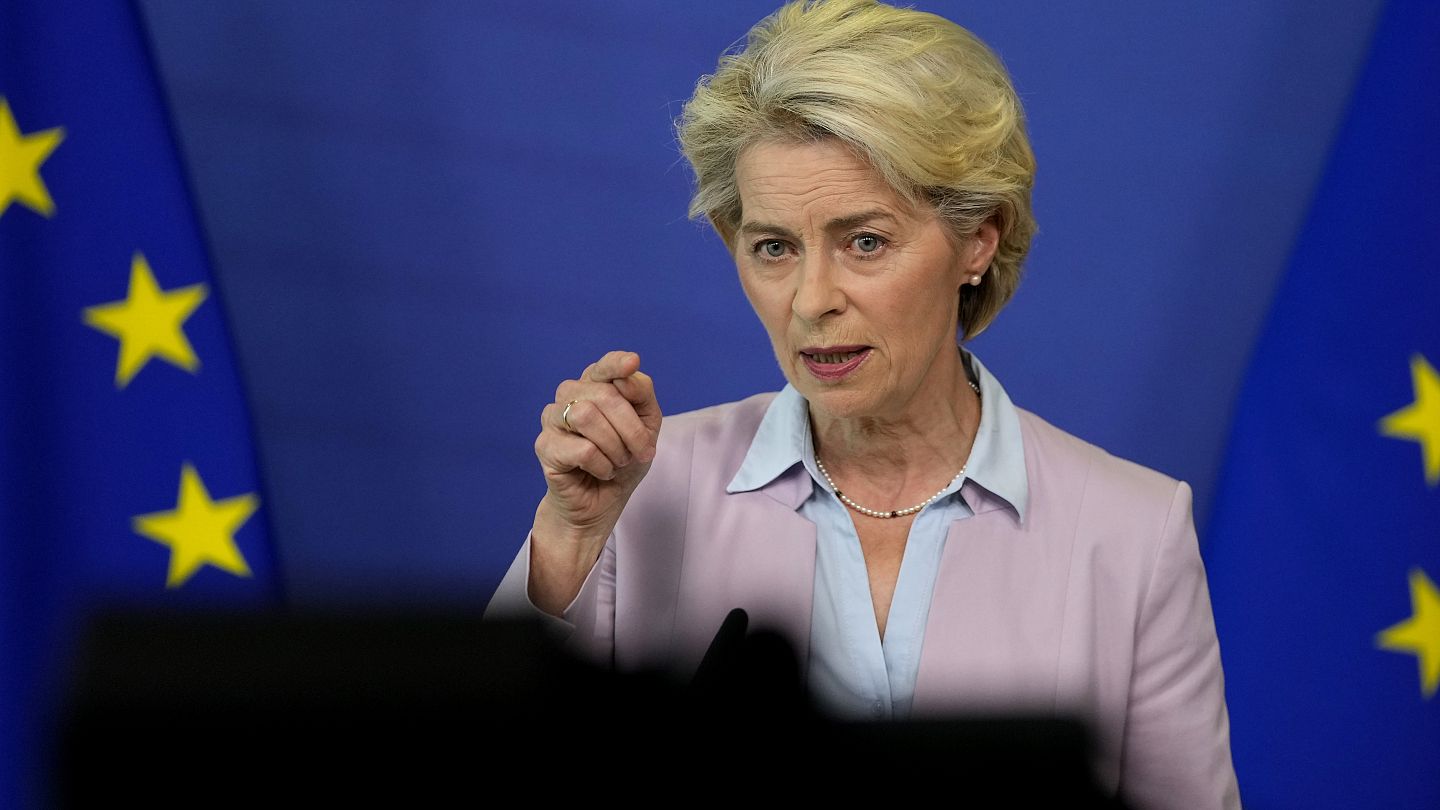
Energy crisis: Ursula von der Leyen unveils five proposals to curb soaring prices | Euronews
Furthermore, Hungary’s opposition to accelerated EU accession is emphasized. This position largely corresponds to Hungary’s previous stance and once again underscores its consistency on key foreign policy issues.
A nuanced picture also emerges regarding its policy toward Russia. Magyar is quoted as saying that he would accept a call from Vladimir Putin. At the same time, he emphasizes his intention to review existing energy contracts and renegotiate them if necessary. These statements suggest a pragmatic approach that encompasses both a willingness to engage in dialogue and strategic flexibility.
Another point of discussion concerns the domestic political situation during the transition phase. The transcript notes that the existing parliament remains capable of acting until its inaugural session. This raises the possibility that further political decisions could still be made, which the new leadership views critically.
In this context, the demand for Orbán’s early resignation is also addressed. This demand is interpreted in the discussion as strategically motivated to limit the previous government’s room for maneuver.
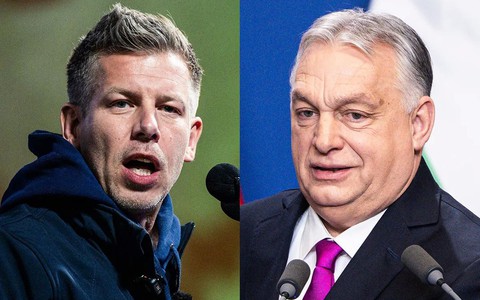
Nga lên tiếng sau thất bại của Thủ tướng Hungary Viktor Orban – Tuổi Trẻ Online
The analysis in the transcript also points to perceived contradictions in the political evaluation of comparable processes. The handling of legislative decisions in other European countries is used as a point of comparison to illustrate differing standards in political criticism.
A central element of the argument is the assessment that the political landscape in Hungary remains strongly influenced by conservative and nationalist positions. This leads to the conclusion that a fundamental ideological shift is not currently discernible.
At the same time, the discussion emphasizes that future developments will depend significantly on how Magyar positions itself between domestic expectations and external pressures. This dual challenge could considerably influence the new government’s political room for maneuver.
The discussion also points to potential economic implications, particularly in connection with energy prices and financial burdens within the EU. These aspects are understood as part of a broader European context that extends beyond Hungary.

In conclusion, it can be stated that the political situation in Hungary continues to be characterized by uncertainty and conflicting expectations. The change of power has not yet revealed a clear reorientation, but rather has highlighted existing tensions within the European Union. Whether this will lead to a long-term






