A quiet procurement decision in Northern Europe is suddenly triggering enormous discussion across NATO defense circles, the Pentagon, and global military markets. Sweden, NATO’s newest frontline member facing growing pressure from Russia, has reportedly approved nearly $4 billion in European defense purchases while American contractors were left completely outside the deal.

What initially looked like a standard military acquisition is now being interpreted by analysts as something far larger. Behind the scenes, many believe Europe may be accelerating toward a new phase of military independence that could gradually reshape the balance of influence inside the Western alliance itself.
For decades, American defense companies dominated NATO procurement almost automatically. From fighter aircraft and missile systems to command infrastructure and battlefield technology, Washington remained the central industrial pillar of Western military power. European countries frequently relied on American systems not only because of military performance, but because NATO itself evolved around American strategic leadership.
But something appears to be changing.
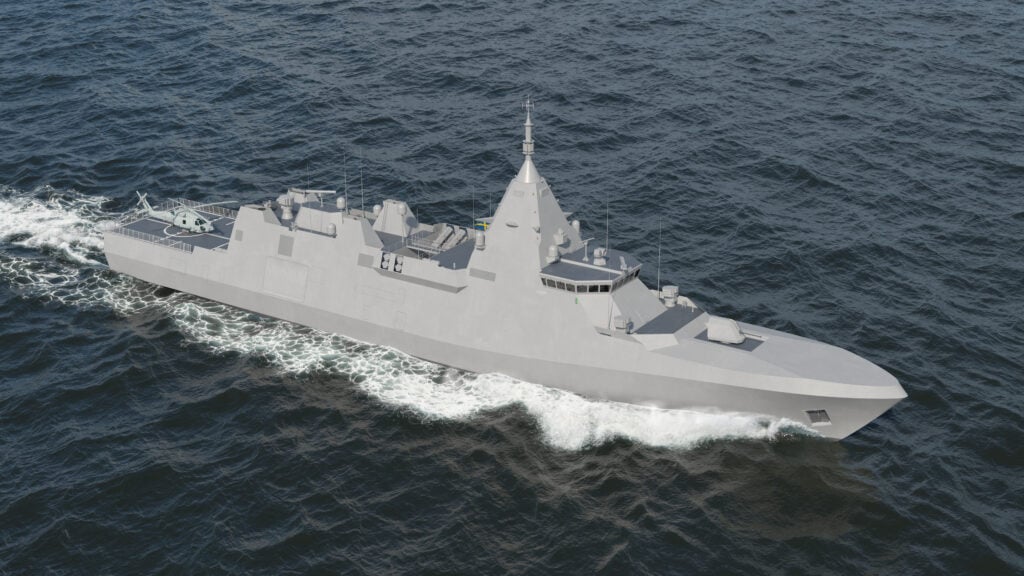
Sweden’s latest procurement package reportedly includes European-produced missile systems, radar platforms, battlefield networking technology, air defense capabilities, and advanced next-generation military integration tools. What immediately caught attention was not simply the scale of the purchases, but the complete exclusion of major American defense firms from the process.
That omission is now fueling growing speculation across military and political circles. Analysts increasingly believe Europe is no longer thinking only about defending itself alongside the United States. Instead, many European governments may now be preparing for a future where Europe must be capable of acting far more independently if global tensions continue escalating.
The timing of Sweden’s decision matters enormously.
Sweden only recently became a full NATO member after decades of military neutrality. Its accession was driven largely by fears surrounding Russia’s invasion of Ukraine and the broader instability now spreading across Europe’s security environment. Because of its geographic position near the Baltic region and Arctic routes, Sweden is now considered one of NATO’s most strategically important frontline states.
That makes its procurement decisions especially significant.
If even newer NATO members are beginning to prioritize European defense-industrial systems over American suppliers, many observers believe the broader strategic direction inside Europe could already be shifting faster than Washington expected.
Some defense economists argue this transformation has been building quietly for years. European leaders repeatedly expressed concern about relying too heavily on American military production, especially after supply chain disruptions, shifting U.S. political priorities, and uncertainty surrounding future American commitments to Europe.
Those concerns intensified dramatically after Russia’s invasion of Ukraine.
The war exposed major weaknesses in Europe’s military production capacity. Ammunition stockpiles depleted faster than expected. Missile inventories faced pressure. Weapons manufacturing struggled to scale rapidly enough for sustained conflict. Many European governments suddenly realized that depending too heavily on foreign suppliers during a major geopolitical crisis creates serious strategic vulnerabilities.
As a result, Europe began investing aggressively in domestic defense production.
Today, governments across the continent are pouring billions into military factories, drone systems, missile programs, cyber warfare capabilities, AI-assisted battlefield systems, and integrated European procurement structures. What once looked like fragmented national military industries increasingly resembles the early stages of a coordinated continental defense-industrial expansion.
Sweden’s latest move appears to fit directly into that broader trend.
Critics inside Washington worry the implications extend far beyond lost contracts for American companies. Defense markets are not just about economics. Military procurement often shapes long-term political influence, strategic interoperability, and alliance dependency for decades.
Countries that buy weapons systems frequently build entire operational structures around them. Training, logistics, maintenance, software integration, and command architecture all become interconnected. Over time, procurement decisions can gradually reshape geopolitical alignment itself.
That is why the Pentagon is reportedly paying extremely close attention.
If Europe increasingly builds military ecosystems around European systems rather than American ones, Washington’s long-term influence inside NATO could slowly weaken. Not disappear entirely, but become less automatic than it once was.
For decades, American dominance inside NATO rested not only on troop numbers or military spending, but also on industrial centrality. American systems became the backbone of alliance interoperability. European militaries depended heavily on American supply chains, spare parts, maintenance support, intelligence integration, and technological coordination.
But now Europe appears increasingly determined to reduce that dependency.
Supporters of Europe’s growing military independence argue the shift is both logical and necessary. They believe Europe cannot rely indefinitely on Washington to carry the overwhelming burden of Western defense, especially as the United States becomes more focused on China and the Indo-Pacific region.
Many European policymakers openly acknowledge that America’s strategic priorities are gradually moving toward Asia.
That reality creates anxiety inside Europe.
If a future crisis simultaneously erupts in both Europe and the Pacific, many European leaders fear Washington could be forced to prioritize containing China over defending Europe at full capacity. Building stronger European military autonomy is increasingly viewed as insurance against that possibility.
Sweden’s procurement choices may therefore represent something much larger than simple industrial preference.
Some analysts are already referring to the current transformation as the emergence of a “European defense pillar” operating inside NATO but with gradually increasing strategic independence from Washington. The concept does not necessarily imply abandoning NATO itself. Instead, it reflects Europe’s desire to become more self-sufficient within the alliance structure.
That distinction is extremely important.
European governments still rely heavily on American nuclear deterrence, intelligence capabilities, satellite infrastructure, and advanced strategic systems. No serious European leader is currently proposing a complete military separation from the United States. However, there is a growing belief that Europe must possess far stronger independent capabilities if future geopolitical instability intensifies.
The broader geopolitical environment is accelerating those concerns rapidly.
Global tensions are rising simultaneously across multiple regions. The war in Ukraine continues draining military resources. Instability in the Middle East threatens energy markets and shipping lanes. China’s growing military power is forcing major strategic recalculations worldwide. Cyber warfare, AI-enabled military systems, and drone technology are transforming how future conflicts may unfold.
Inside that environment, dependence increasingly looks dangerous.
That may explain why Europe is investing so aggressively in military-industrial expansion now rather than later. Leaders across the continent appear to understand that rebuilding military capacity during an active global crisis is far harder than preparing beforehand.
Critics of Europe’s growing military autonomy warn the trend could eventually create friction inside NATO itself. If European systems become increasingly separate from American military architecture, operational coordination could become more complicated during future crises.
Others fear a fragmented defense market might reduce efficiency or create duplication across alliance members.
But supporters argue the opposite.
They believe a stronger European defense industry ultimately makes NATO more resilient by reducing overreliance on any single country. From this perspective, greater European military capacity strengthens the alliance overall rather than weakening it.
Still, one reality is becoming increasingly difficult to ignore.
The era when American defense dominance inside NATO was treated as completely unquestioned may be beginning to change. Sweden’s procurement decision is now being viewed as one visible signal of a much larger strategic shift unfolding quietly beneath the surface.
And Washington appears to understand the significance.
Because what Europe is building now may not simply be new weapons systems or industrial contracts. It may be the foundation of a far more independent geopolitical future — one where Europe increasingly sees itself not only as America’s ally, but also as a military power center capable of standing more firmly on its own.
If that transformation continues accelerating, the balance of influence inside the Western alliance could look very different by the next decade.
And Sweden’s $4 billion decision may eventually be remembered as one of the moments where the shift became impossible to ignore.






