Brussels Builds a New Global Alliance While America Watches From the Sidelines


The global economic order is changing faster than many political leaders expected. While Washington continues escalating tariffs and trade disputes, Europe has quietly accelerated a strategy that could reshape international commerce for decades. The latest signal came directly from Mexico City, where European Commission President Ursula von der Leyen and European Council President António Costa finalized a sweeping modernization of the European Union’s trade relationship with Mexico.
The agreement may appear technical on the surface, but diplomats across Europe and North America understand its deeper meaning immediately. This is not merely another economic treaty. It is part of a rapidly expanding geopolitical strategy designed to reduce dependence on the United States and build a multipolar global trading system.
For decades, the United States stood at the center of nearly every major Western economic alliance. American markets, American capital, and American geopolitical influence shaped the architecture of globalization. But in capitals from Brussels to Ottawa to Mexico City, leaders increasingly believe the world can no longer depend entirely on Washington.
That perception has intensified as protectionism rises in the United States. Higher tariffs, trade restrictions, industrial subsidies, and growing political unpredictability have pushed allies to search for alternatives. The European Union has moved aggressively to position itself as the architect of those alternatives.
The renewed EU-Mexico trade agreement represents one of the clearest examples yet. The original trade framework between Europe and Mexico dates back more than a quarter century. But this updated version dramatically expands cooperation into strategic sectors that barely existed when the first agreement was signed.
Digital commerce, financial services, green technologies, supply chain security, rare earth minerals, and investment protections are now central pillars of the partnership. Nearly all goods traded between the two economies will eventually become tariff-free, creating one of the largest open commercial corridors in the modern world.


What truly captured international attention, however, was the strategic language surrounding critical minerals. Mexico possesses increasingly valuable reserves of lithium, copper, and other resources essential to electric vehicles, batteries, semiconductors, and green energy infrastructure.
For years, Washington assumed North America would naturally dominate access to those resources. Europe’s sudden expansion into Mexico’s strategic sectors challenges that assumption directly. European companies now see Mexico not simply as a manufacturing platform connected to the American economy, but as a long-term strategic partner in the global energy transition.
Mexico’s motivations are equally significant. Approximately 80 percent of Mexican exports still flow into the United States market. That level of dependence has increasingly alarmed policymakers in Mexico City. Political shifts in Washington can instantly affect Mexican manufacturing, jobs, agriculture, and investment flows.
President Claudia Sheinbaum appears determined to diversify before future economic shocks emerge. Expanding ties with Europe gives Mexico leverage, flexibility, and greater geopolitical independence at a time when global trade alliances are rapidly fragmenting.
European officials are also making it clear this agreement is part of something much larger. Brussels is steadily constructing an enormous network of trade relationships stretching across multiple continents. The strategy appears carefully designed to connect industrial democracies, emerging economies, and resource-rich regions into a unified commercial sphere.
Canada already maintains deep trade integration with Europe through the Comprehensive Economic and Trade Agreement. Japan, South Korea, and the United Kingdom have similarly strengthened economic ties with Brussels in recent years. South America is becoming the next major frontier.
The European Union’s controversial Mercosur agreement — linking Europe with Brazil, Argentina, Uruguay, and Paraguay — could become one of the most consequential trade deals of the decade if finalized politically. Despite resistance from some European agricultural sectors, momentum behind the agreement continues building.

Taken together, these agreements create a striking geopolitical reality. Europe is building parallel economic architecture that increasingly bypasses the United States. Not openly hostile. Not formally anti-American. But unmistakably less dependent on Washington’s leadership.
That shift would have seemed unimaginable twenty years ago. Following the Cold War, globalization largely revolved around American economic dominance. Even Europe’s prosperity was deeply intertwined with U.S. financial systems, consumer markets, and strategic influence.
Today, however, many governments see vulnerability in that dependence. Trade wars, sanctions, domestic political polarization, and abrupt policy reversals have convinced allies that diversification is no longer optional. It is becoming an economic survival strategy.
Canada provides a particularly revealing example. Traditionally one of America’s closest economic partners, Ottawa has increasingly deepened relationships with Europe and Indo-Pacific economies. Canadian policymakers understand the risks of overreliance on a single market, even one as large as the United States.
The same logic now shapes European thinking. Brussels recognizes that economic resilience requires broader networks. The European Union does not want supply chains concentrated inside one geopolitical sphere. It wants redundancy, alternatives, and leverage.
This evolving strategy has become especially urgent in the race for green technology dominance. Electric vehicles, renewable energy infrastructure, and artificial intelligence systems all depend on secure access to strategic minerals and advanced manufacturing capacity.
China currently dominates large portions of those supply chains. The United States has responded with aggressive industrial policy and domestic subsidies. Europe, meanwhile, is pursuing a different route: building interconnected trade alliances capable of balancing both American and Chinese influence simultaneously.
Mexico suddenly occupies a crucial position in that contest. Its proximity to North America, growing industrial base, abundant labour force, and strategic resources make it extraordinarily valuable. Europe clearly intends to ensure it gains a permanent foothold before global competition intensifies further.
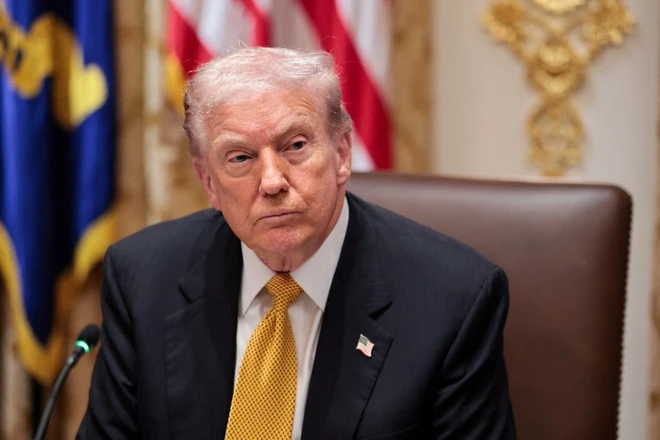
Critics inside the United States increasingly warn that Washington may be isolating itself unintentionally. By prioritizing tariffs and confrontational trade policies, America risks encouraging allies to build independent systems that eventually reduce American leverage altogether.
That does not mean the United States is collapsing economically. Far from it. America remains the world’s largest economy, the dominant military power, and one of the most influential financial centers on Earth. But influence is no longer measured only by size. It is measured by connectivity.
And connectivity is precisely where Europe is gaining ground.
The symbolism of the Mexico agreement therefore matters enormously. European leaders traveled directly to Latin America to demonstrate commitment, visibility, and strategic seriousness. The message was unmistakable: Europe intends to become a central player in the Western Hemisphere’s economic future.
Meanwhile, negotiations continue elsewhere. Brussels is actively pursuing deeper trade partnerships with India, Indonesia, and Australia. Each agreement further expands a commercial network increasingly defined by diversification rather than dependency.
The geopolitical implications extend far beyond economics. Trade relationships create political alignment, diplomatic influence, and long-term strategic trust. Countries that trade deeply together often cooperate on technology standards, climate policy, supply chain security, and international institutions.
Europe understands this reality extremely well. Its trade strategy is no longer simply about exports. It is about building influence in a fractured world where traditional alliances are becoming less predictable.
For the United States, the challenge is becoming harder to ignore. Washington still possesses enormous advantages, but many allies no longer want their economic futures tied entirely to American domestic politics. That concern is reshaping global diplomacy in real time.
Mexico’s decision to deepen integration with Europe reflects precisely that new calculation. Diversification is becoming the defining economic doctrine of the decade. Nations are seeking flexibility before future crises force their hand.
The result may be the emergence of a new global trade order — one where Europe serves as the connective center linking North America, Latin America, Asia, and parts of the Global South through overlapping economic agreements.
In that emerging system, the United States may remain powerful, wealthy, and influential. But it may no longer stand alone at the center of the global economy.






