A surprising idea from Northern Europe is drawing attention far beyond the continent’s borders.
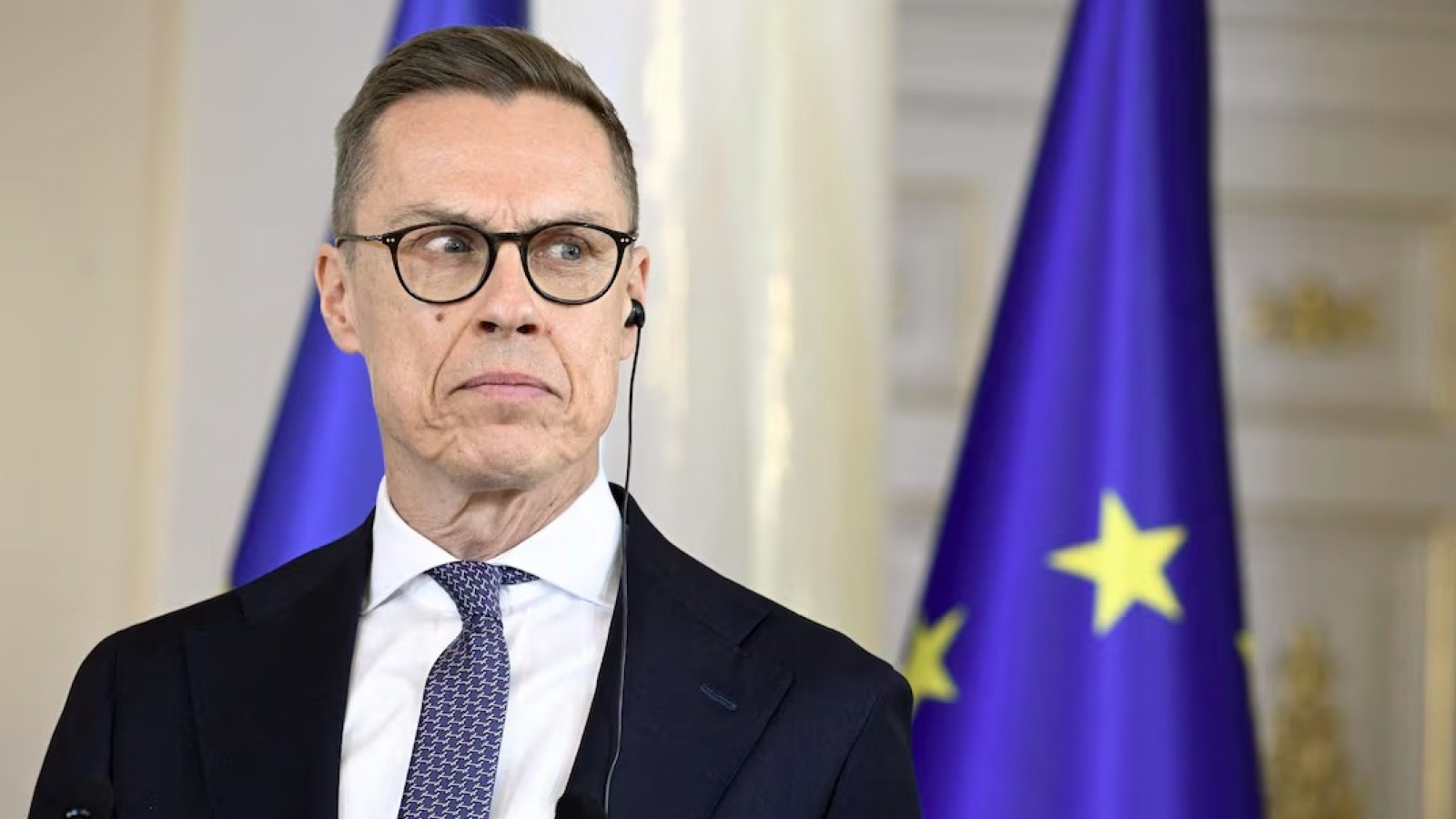
During recent discussions about the future of Europe, Finnish President Alexander Stubb raised the possibility of a dramatically expanded European Union — one that could eventually grow from its current 27 members to as many as 40 countries. Among the names he mentioned was an unexpected candidate: Canada.

The proposal immediately sparked debate among political analysts, diplomats, and commentators around the world.
Could a North American nation ever become part of a European project?
And what would such a move mean for the balance of power between Europe and the United States?
For many observers, the idea sounds almost impossible.
Yet supporters argue that Canada already shares many of the political, economic, and democratic values that define modern Europe.
Over the past decade, ties between Canada and European nations have grown steadily stronger.
Trade has expanded.
Defense cooperation has deepened.
Political coordination has become increasingly common.
And support for Ukraine has brought Canada and Europe closer together than at almost any other point in modern history.
President Stubb argued that Europe’s future strength will depend on its ability to grow, adapt, and build alliances with countries that share its core principles.
According to his vision, enlargement should not simply be about geography.
It should be about values, institutions, and long-term strategic interests.
That argument has led some analysts to reconsider traditional assumptions about where Europe ends and where its influence begins.
Canada, after all, already enjoys one of the closest relationships with the European Union of any non-member state.
The Comprehensive Economic and Trade Agreement (CETA) has significantly increased economic integration between Canada and EU countries.
Canadian businesses have gained improved access to European markets.
European companies have expanded investment across Canada.
Trade flows have grown, creating stronger connections on both sides of the Atlantic.
Defense cooperation has also intensified.
In recent years, Canada has participated in numerous initiatives alongside European allies.
Canadian troops have supported NATO missions in Europe.
Canadian leaders have worked closely with European governments on security challenges.
And both sides have coordinated their responses to major geopolitical crises.
The war in Ukraine has accelerated that process even further.
Canada has emerged as one of Ukraine’s strongest international supporters, aligning closely with many European governments on military assistance, sanctions, and diplomatic strategy.
This growing cooperation has led some policymakers to describe Canada as a natural partner for Europe in an increasingly uncertain world.
At the same time, experts caution that actual EU membership remains highly unlikely in the foreseeable future.
The European Union was originally designed as a regional political and economic bloc.
Membership requirements are complex.
Geographic considerations remain important.
And existing enlargement debates involving countries such as Ukraine, the Western Balkans, and Turkey are already challenging enough.
Even so, many observers believe the significance of Stubb’s comments lies less in the practical question of membership and more in the political message they send.
The message is clear:
Europe increasingly sees Canada as part of its broader strategic community.
That perception reflects major shifts taking place in global politics.
For decades, Canada maintained a close relationship with the United States while also nurturing strong ties with Europe.
Today, many analysts argue that Canada is pursuing a more diversified international strategy.
Strengthening relationships with European partners has become an important component of that approach.
The result is a partnership that continues to expand across multiple sectors.
Economic cooperation.
Defense collaboration.
Technology development.
Energy security.
Supply-chain resilience.
And diplomatic coordination.
All have become areas of growing engagement.
Some commentators have even suggested that Canada is becoming one of Europe’s most important partners outside the continent itself.
Whether that description proves accurate remains to be seen.
What is certain is that the conversation has changed.
Only a few years ago, the idea of discussing Canada in the context of European enlargement would have seemed far-fetched.
Today, the fact that such a discussion can occur at the highest political levels demonstrates how rapidly international relationships are evolving.
For the United States, these developments are being watched closely.
Canada remains one of America’s closest allies and largest trading partners.
No serious proposal currently exists for Canadian EU membership.
However, a stronger Canada-Europe relationship could gradually reshape strategic calculations across the Atlantic.
Rather than replacing Canada’s partnership with the United States, many experts believe deeper European ties would complement it.
Nevertheless, the growing alignment between Ottawa and European capitals reflects a broader trend toward new forms of international cooperation.
As geopolitical tensions rise and traditional alliances face new pressures, countries are increasingly looking beyond old assumptions.
That may be the most important takeaway from President Stubb’s remarks.
The proposal is not simply about adding new flags to the European Union.
It is about redefining how democratic nations work together in a rapidly changing world.
Canada may never become a member of the European Union.
Most analysts believe that outcome remains unlikely.
Yet the fact that such a possibility is even being discussed highlights a remarkable reality.
Europe and Canada are moving closer together.
And that growing partnership could influence global politics, economics, and security for many years to come.
Whether the future brings formal membership, special partnerships, or entirely new forms of cooperation, one thing appears increasingly clear:
The Atlantic relationship is evolving.
And Canada may find itself playing a larger role in Europe’s future than anyone would have imagined just a few years ago.






