Germany’s Extraordinary Submarine Offer Puts Canada at the Center of a Strategic NATO Decision
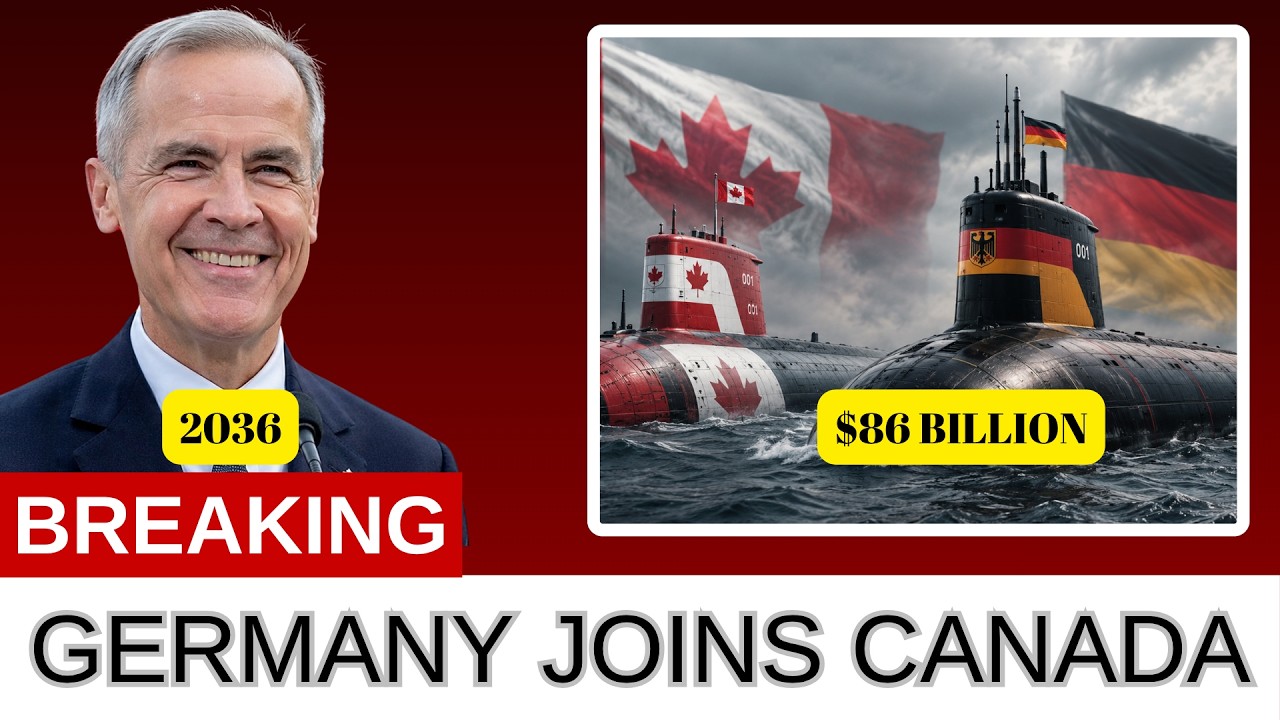
A remarkable proposal from Germany is reshaping Canada’s high-stakes search for a new submarine fleet.
During a major defense exhibition in Ottawa, German Defense Minister Boris Pistorius confirmed that Germany is prepared to give Canada priority access to submarines originally intended for its own navy.
The offer goes even further.
Norway, Germany’s partner in the submarine program, has also agreed to redirect one of its future submarines to Canada if Ottawa selects the European bid.
Such a move is highly unusual in the defense world.
Military procurement schedules are often guarded carefully, with nations reluctant to sacrifice their own delivery timelines for another country’s benefit.
Yet Germany and Norway appear willing to do exactly that.
The proposal comes as Canada faces increasing pressure to modernize its aging submarine fleet.
The current Victoria-class submarines are approaching retirement, with Ottawa planning to phase them out by 2035.
Only one of Canada’s four existing submarines is currently considered fully operational.
That reality has raised concerns about Canada’s ability to monitor and defend its vast maritime territory.
With the world’s longest coastline and growing strategic challenges in the Arctic, submarines are viewed as a critical component of national security.
To address the issue, Canada launched a program to acquire up to 12 new submarines.
The initial acquisition cost is estimated at more than $20 billion, although lifetime maintenance and support expenses could push the total value far higher.
The competition has narrowed to two leading contenders.
One proposal comes from South Korean defense giant Hanwha Ocean and its KSS-III submarine.
The other is offered by ThyssenKrupp Marine Systems, commonly known as TKMS, working in partnership with Norway on the Type 212CD submarine.
For months, Hanwha appeared to hold an important advantage.
The company repeatedly stated that it could deliver four submarines before Canada’s current fleet reaches retirement.
Germany’s timeline, by comparison, remained less clear.
That changed this week.
Pistorius announced that Germany now plans to deliver four Type 212CD submarines to Canada by 2036.
To achieve that goal, Germany and Norway would each give up one submarine from their own production schedules, allowing Canada to move ahead in line.
The decision represents a significant show of confidence in Canada’s strategic importance.
German officials argue that strengthening Canada’s capabilities ultimately strengthens NATO as a whole.
According to Pistorius, the security challenges facing the Arctic and North Atlantic require close cooperation among allies.
The submarine competition, however, extends far beyond military hardware.
Documents reviewed by Canadian media suggest Germany’s proposal includes a broad package of industrial and economic investments across Canada.
Among the most ambitious ideas are plans for energy infrastructure projects, carbon capture technology, and expanded export facilities.
One proposal would support development at the Port of Churchill in Manitoba, creating new opportunities for exports of liquefied natural gas and critical minerals.
Germany is also offering to establish submarine maintenance facilities on both Canadian coasts.
Those facilities would provide long-term support for the fleet while creating highly skilled jobs.
Additional plans include manufacturing submarine propulsion systems, batteries, heavy torpedoes, and anti-torpedo technologies within Canada.
The proposal even references future cooperation on advanced missile technologies.
Partnerships with Indigenous development organizations are also included as part of the broader industrial strategy.
Supporters argue that the package could help establish a lasting domestic defense manufacturing sector.
According to figures cited during the bidding process, Germany estimates its proposal could contribute up to $86 billion to Canada’s economy over the life of the program.
The package could also generate hundreds of thousands of job-years across multiple industries.
South Korea’s offer remains highly competitive.
Hanwha has pledged significant investments of its own, including billions in trade opportunities and thousands of Canadian jobs over the coming decades.
The company has also conducted a visible public campaign, including showcasing one of its submarines on Canada’s West Coast.
The contrast between the two bids has become increasingly clear.
South Korea is emphasizing technology, speed, and industrial investment.
Germany is emphasizing strategic partnership, NATO integration, and long-term economic cooperation.
Prime Minister Mark Carney has acknowledged that both submarines meet the Canadian Navy’s operational requirements.
That means the final decision may depend less on the submarines themselves and more on the broader partnerships attached to each proposal.
Experts note that the choice could shape Canada’s international relationships for decades.
Selecting Germany’s bid would deepen ties with European and Nordic allies focused on Arctic security.
Choosing South Korea could strengthen Canada’s engagement with emerging security partnerships in the Indo-Pacific region.
Either way, the submarine program has evolved into something much larger than a defense procurement project.
It has become a decision about Canada’s future alliances, industrial development, and strategic position in an increasingly competitive world.
With Ottawa expected to announce its decision before the end of June, one thing is already clear.
Canada is no longer simply shopping for submarines.
It has become the partner that major global powers are competing to win.






