HISTORIC: Germany and Norway Give Up Own Sub Slots for Canada – Shared Arctic Fleet
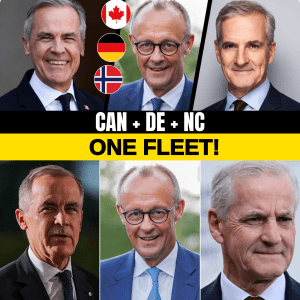
OTTAWA — In a significant move that underscores shifting defense alignments in the North Atlantic, Germany and Norway have offered Canada submarines from their own production schedules, proposing what officials describe as the foundation for a shared European-Canadian submarine fleet to patrol the Arctic and North Atlantic.
The proposal comes just weeks after the United States suspended an 86-year-old bilateral defense partnership with Canada, highlighting growing strains in traditional North American security ties.

A Major Procurement Opportunity
Canada is seeking to replace its aging Victoria-class submarines with up to 12 new vessels under the Canadian Patrol Submarine Project, valued at approximately 60 billion Canadian dollars, potentially reaching 120 billion over the full lifecycle.
Germany’s thyssenkrupp Marine Systems and Norway are offering the Type 212CD, a next-generation diesel-electric submarine equipped with advanced air-independent propulsion, stealth features and capabilities optimized for Arctic operations.
Accelerated Timeline
Under the proposal, Germany and Norway would defer deliveries from their own orders to allow Canada to receive four submarines by 2036, avoiding lengthy new construction delays. The two countries would receive their vessels later.
German Defense Minister Boris Pistorius and Norwegian officials presented the offer in Ottawa, emphasizing not just hardware but a broader strategic partnership.
Economic Benefits
The German bid includes projections of an $86 billion boost to Canadian GDP and an average of 50,000 jobs per year over the first five years. The package encompasses shipbuilding, critical minerals, missile production, port infrastructure and energy projects.
Two submarine maintenance facilities would be built in Canada, one on each coast, creating long-term industrial capacity.
.jpg?utm_source=vi.wikipedia.org&utm_campaign=index&utm_content=original)
Shared Fleet Concept
Norwegian officials described the potential arrangement as moving beyond three separate national fleets toward a more integrated European-Canadian submarine force. Such cooperation would enhance interoperability, shared logistics and joint operational capabilities in strategically vital waters.
Competition With South Korea
Canada had narrowed its competition to the German-Norwegian Type 212CD and South Korea’s Hanwha Ocean KSS-III Batch 2 design. The South Korean bid promises earlier deliveries and significant economic offsets, including $70 billion in benefits.
However, the German-Norwegian offer brings NATO interoperability and a proven platform already in service with Germany and Italy.
Strategic Realignment
The proposal arrives as Prime Minister Mark Carney pursues a policy of strategic diversification. After the United States suspended the Permanent Joint Board on Defense — the oldest continuous bilateral defense body in the Western world — Canada has accelerated partnerships with European allies.
The move fits into a broader pattern of European nations deepening defense ties with Canada amid uncertainties in transatlantic relations.
Middle Power Strategy
Mr. Carney has emphasized building resilience through diversified partnerships. The submarine decision, expected by the end of June, is seen by analysts as a key test of this approach.
A successful German-Norwegian deal could lay the groundwork for further collaboration, potentially drawing in additional European partners such as the Netherlands or Denmark.
Defense Sovereignty
For Canada, acquiring advanced submarines from European partners would reduce long-term dependence on any single supplier and strengthen its ability to assert sovereignty in the Arctic, a region of growing strategic importance amid climate change and increased activity by Russia and others.
Broader Implications
The offer highlights Europe’s willingness to invest in Canada as a reliable partner outside traditional U.S.-centric frameworks. It also signals Canada’s increasing comfort operating within European-led defense initiatives.
While NATO cooperation continues, the emergence of parallel structures reflects a more multipolar approach to North Atlantic security.
Decision Ahead
Canadian officials must weigh not only technical capabilities and economic benefits but also long-term strategic alignment. The choice could shape Canada’s defense posture for decades.
A decision favoring the German-Norwegian bid would represent one of the most significant defense procurements in Canadian history and a notable step in rebalancing transatlantic relationships.
Uncertain U.S. Reaction
The developments come amid ongoing trade tensions and defense policy differences with Washington. How the United States responds to deeper European-Canadian defense integration remains to be seen.
For now, the German and Norwegian proposal stands as a concrete example of how middle powers are adapting to an era of shifting alliances and growing strategic autonomy.






