HISTORIC POLLING SURGE SHAKES AUSTRALIAN POLITICS: IS ONE NATION OFFERING HOPE OR HARNESSING PUBLIC FRUSTRATION?
A dramatic shift in Australia’s political landscape has ignited fierce debate across the country after Pauline Hanson’s One Nation recorded an unprecedented surge in federal polling support. What was once considered a minor political force has suddenly become one of the most talked-about movements in Australian politics.

The latest polling figures have stunned political observers, showing One Nation overtaking major parties in primary vote support and reaching levels few analysts predicted possible just a few years ago. The result has sent shockwaves through Canberra and raised serious questions about the future of Australia’s traditional political order.
For many Australians, the rise of One Nation reflects growing dissatisfaction with the country’s political establishment. Years of economic uncertainty, housing affordability concerns, rising living costs, and frustration with government institutions have created fertile ground for alternative political voices.
Prime Minister Anthony Albanese himself has acknowledged that economic pressures are playing a major role in the shifting political mood. He argued that financial stress is driving voters to seek alternatives, reviving the old political saying that elections are often determined by economic conditions.
Supporters of One Nation argue that the party has succeeded because it is addressing issues that many Australians believe have been ignored by mainstream politicians. Immigration levels, housing shortages, national debt, and cost-of-living challenges frequently appear at the center of the party’s messaging.
Many voters who back One Nation describe the party as a voice for ordinary Australians who feel disconnected from political elites. They see Pauline Hanson as someone willing to challenge consensus views and raise difficult topics that larger parties often avoid.
The housing crisis has become one of the most powerful drivers behind the political shift. Across major cities and regional communities, Australians are struggling with rising rents, expensive property prices, and concerns about future affordability. These pressures have fueled anger toward established parties and increased support for alternative movements.

Migration policy has also become a major point of discussion. Critics of current government policies argue that rapid population growth is placing additional pressure on housing, infrastructure, and public services. One Nation has capitalized on these concerns by advocating stricter immigration policies.
However, not everyone sees the rise of One Nation as a positive development. Critics argue that the party’s popularity is being driven more by frustration and protest voting than by confidence in its policy platform.
Some political analysts warn that periods of economic hardship often create opportunities for populist movements. History has shown that voters facing uncertainty frequently turn toward parties that promise dramatic change and simple solutions to complex problems.
Opponents also point to controversial positions associated with One Nation over the years. Issues involving immigration, multiculturalism, social policy, and cultural identity continue to generate strong reactions among both supporters and critics.
The debate has become especially intense on social media, where discussions surrounding One Nation often reveal deep divisions within Australian society. Some see the party as a necessary corrective to establishment politics, while others fear it could increase polarization and social tensions.
Meanwhile, both Labor and the Coalition are facing difficult questions about why so many voters appear willing to abandon traditional political loyalties. Polling suggests that trust in major institutions and established parties has weakened significantly among large sections of the electorate.
Political strategists are now scrambling to understand whether One Nation’s surge represents a temporary protest movement or a long-term realignment of Australian politics. The answer could determine the direction of future elections and policy debates.
Another important factor is Australia’s preferential voting system. While One Nation may be leading in primary vote polling, electoral outcomes depend heavily on preference flows and coalition-building between parties. This means polling success does not automatically translate into government power.
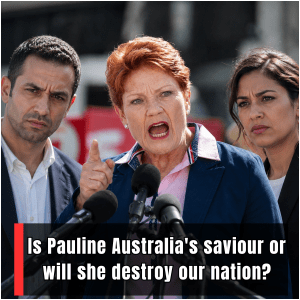
Nevertheless, the symbolic significance of the polling surge cannot be ignored. The fact that a party once viewed as a political outsider is now competing directly with the country’s major parties reflects a profound shift in public sentiment.
For Pauline Hanson and her supporters, the moment represents validation after decades of political struggle. For her opponents, it serves as a warning sign that deeper economic and social concerns are not being adequately addressed.
The coming months will reveal whether One Nation can maintain its momentum or whether voters will eventually return to more traditional political choices. Much will depend on economic conditions, housing affordability, migration policy, and the ability of major parties to reconnect with frustrated Australians.
One thing is certain: Australia’s political landscape is changing rapidly. The historic rise of One Nation has forced a national conversation about trust, representation, economic security, and the future direction of the country. Whether the party represents genuine hope or merely a vehicle for public frustration remains one of the defining political questions of our time.






