INCREDIBLE: Swedish PM Invites Canada to EU – USA Suspended 86-Year Partnership, Europe Offered Subs
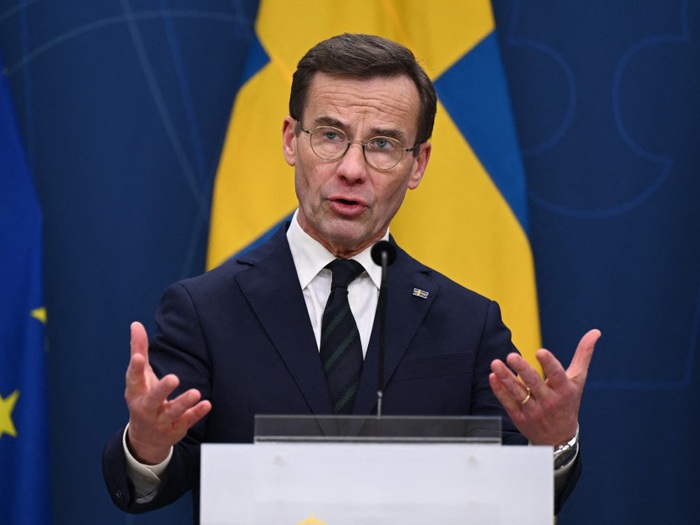
OTTAWA — Sweden’s Prime Minister publicly invited Canada to consider closer integration with the European Union, describing the country as “the most Nordic country in the world outside the Nordics” and calling the EU “a very welcoming club.”
The remark, made during a Canadian television interview, has drawn attention as a symbolic reflection of Canada’s accelerating pivot toward Europe amid deepening strains with the United States.
Symbolic Yet Substantive
While framed with a smile, the Swedish leader’s comment comes against a backdrop of concrete steps that signal a structural realignment. Over the past year, Canada has significantly expanded its defense, trade and security cooperation with European partners.
U.S. Defense Partnership Suspended
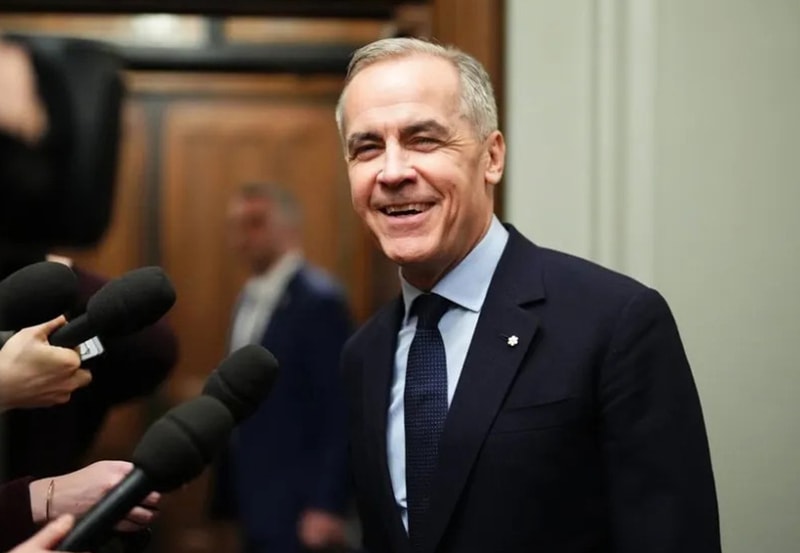
The shift gained momentum after the United States suspended the Permanent Joint Board on Defense, an 86-year-old bilateral military institution established during World War II. The Pentagon cited a speech by Prime Minister Mark Carney at Davos promoting cooperation among middle powers.
The move was announced publicly on social media by a senior U.S. defense official, further straining relations.
Defense Cooperation Deepens
In response, Germany and Norway offered Canada access to Type 212CD submarines in a deal valued at approximately $60 billion. The two countries agreed to relinquish their own production slots to accelerate delivery to Canada.
Norwegian officials described the arrangement as moving toward a shared European-Canadian submarine fleet for Arctic and North Atlantic operations. Sweden has also embedded troops in Canada’s NATO-led brigade in Latvia.
Trade and Economic Ties
Canada and the European Union advanced modernization of their Comprehensive Economic and Trade Agreement, adding provisions on digital trade, investment protections and professional qualifications.
Mr. Carney personally lobbied Irish leaders to complete ratification, viewing Ireland’s upcoming EU presidency as a key opportunity. He has set a national goal to double Canada’s non-U.S. trade within a decade.
Nordic Summit and Partnerships
In March, Mr. Carney attended a formal Nordic-Canada summit in Oslo with the prime ministers of Sweden, Norway, Denmark, Iceland and Finland. The leaders issued a joint statement on shared values, defense cooperation and economic ties.
The European Union also appointed a special envoy dedicated to the Canada relationship, an unusual step underscoring heightened strategic interest.
Security and Defense Framework
Last June, Canada signed a comprehensive security and defense partnership with the EU, creating a unified political framework for cooperation. The agreement covers areas previously handled through fragmented bilateral channels.
 Strategic Realignment
Analysts describe Canada’s actions as a deliberate move toward greater strategic autonomy. While remaining a founding NATO member and close U.S. partner, Ottawa is building parallel institutional ties with Europe to reduce vulnerability to bilateral disputes.
U.S. Actions Accelerate Shift
Canadian officials and observers note that several U.S. decisions — including tariffs, public criticism and the suspension of long-standing defense mechanisms — have contributed to the speed of Canada’s European outreach.
Every American pressure point, they argue, has been met with closer European engagement.
Practical Associate Status
Mr. Carney’s government is constructing what some analysts call de facto associate membership with the EU. This includes comprehensive trade access, defense integration, joint Arctic operations and coordination on critical minerals and technology governance.
The EU is increasingly viewing Canada as a strategic partner comparable to the United Kingdom, the first non-European country to reach such depth of alignment.
Long-Term Institutional Change
The scaffolding being built — trade agreements, defense pacts, shared military assets and political frameworks — will be difficult for future Canadian governments to dismantle, according to officials familiar with the strategy.
Challenges and Limits
Formal EU membership remains constitutionally and geographically impossible. However, the practical relationship increasingly resembles that of a close partner with full access to key frameworks.
Broader Implications
The developments highlight a significant evolution in transatlantic relations. Canada, America’s largest trading partner and longest-standing ally, is diversifying its security and economic relationships at a time of global uncertainty.
For Europe, Canada offers a reliable partner with vast resources, Arctic expertise and shared democratic values. For Canada, the pivot provides options and resilience amid volatile relations with Washington.
Future Trajectory
By the end of 2027, Canada’s relationship with the EU is expected to function in practice like an enhanced associate status across multiple domains. Mr. Carney’s non-U.S. trade target is likely to become a lasting benchmark for Canadian foreign policy.
The Swedish prime minister’s lighthearted invitation captured a deeper reality: Canada is being welcomed into Europe’s strategic fold at a moment when its traditional North American partnership faces historic strain.






