Hidden behind massive industrial zones and tightly controlled supply chains, China is rapidly expanding what analysts describe as one of the largest military manufacturing systems seen in decades. This ambitious buildup has triggered serious concern within the United States defense establishment, with the Pentagon reportedly monitoring developments with growing alarm. The scale and speed of China’s military-industrial transformation represent a fundamental shift in the global balance of power that could reshape international security for generations to come.
From hypersonic missiles and AI-powered drones to advanced naval systems and precision rocket production, Beijing appears to be scaling weapons manufacturing at breathtaking speed. State-owned enterprises and private contractors are working in close coordination with the Chinese military to produce sophisticated platforms at volumes that were previously unthinkable. This industrial capacity allows China to iterate quickly on new designs and deploy advanced systems across multiple theaters simultaneously.
The sheer volume of production is what truly distinguishes China’s approach. While Western nations focus on high-end, expensive platforms with advanced capabilities, China is combining cutting-edge technology with mass manufacturing expertise honed over decades in civilian industries. This dual-use strategy enables the country to produce both quality and quantity in ways that challenge traditional assumptions about military competition.

Defense experts warn that America’s long-standing technological advantage may be shrinking faster than many predicted. Decades of investment in superior training, doctrine, and individual platform performance are now being tested by China’s ability to field large numbers of capable systems. The integration of artificial intelligence, advanced materials, and automated production lines has accelerated China’s military modernization program beyond initial expectations.
But the real fear may not be any single weapon system. It is China’s demonstrated ability to mass-produce entire arsenals faster than rivals can respond. This industrial depth provides Beijing with strategic flexibility that few other nations possess. In a prolonged conflict scenario, China’s capacity to rapidly replace losses and sustain high-intensity operations could prove decisive.
The Pentagon has been studying this development through various intelligence channels and open-source analysis. Reports suggest that Chinese shipyards are producing naval vessels at a rate several times higher than American facilities. Missile production facilities have expanded significantly, with new plants dedicated to hypersonic weapons and long-range precision strike systems coming online regularly.
Advanced drone manufacturing represents another area of rapid progress. China has leveraged its dominance in civilian drone technology to develop military variants ranging from small tactical systems to large unmanned combat aerial vehicles. These platforms are being produced in quantities that allow for saturation tactics and overwhelming enemy defenses through sheer numbers.
The integration of civilian and military industrial bases has been a cornerstone of China’s strategy. Companies with expertise in electronics, automotive manufacturing, and aerospace have been directed to contribute to military programs. This whole-of-society approach creates synergies that enhance both innovation and production efficiency across multiple domains.

Critical minerals and rare earth processing capabilities give China additional advantages. Control over key supply chains for materials essential to modern weapons systems provides strategic leverage that extends beyond the battlefield. This resource dominance allows China to maintain production even during periods of international tension or supply disruption.
Analysts note that China’s military buildup is not occurring in isolation. It is part of a broader national strategy that encompasses economic development, technological advancement, and geopolitical positioning. The country’s leadership views military strength as essential for protecting what they describe as core national interests in an increasingly competitive international environment.
The implications for regional security in the Indo-Pacific are profound. Neighbors including Japan, South Korea, Australia, and Taiwan are closely watching these developments and adjusting their own defense postures accordingly. The rapid expansion of China’s naval capabilities, in particular, has prompted renewed focus on maritime security and alliance coordination among like-minded nations.
For the United States, this presents a complex strategic challenge. American defense planners must balance investment in next-generation technologies with the need to maintain sufficient force structure and industrial capacity. The Pentagon has acknowledged the need to revitalize domestic manufacturing and reduce dependence on foreign supply chains for critical components.
However, rebuilding industrial capacity takes time and significant investment. China’s existing advantages in scale and speed create a window of vulnerability that U.S. strategists are working urgently to address. Bipartisan efforts in Congress have focused on increasing defense spending and incentivizing domestic production of key military systems.
The role of artificial intelligence in China’s military modernization cannot be overstated. Beijing has made AI development a national priority, with military applications receiving substantial resources and attention. From autonomous systems to decision support tools and cyber capabilities, AI is being integrated across all domains of warfare in ways that could fundamentally change how conflicts are conducted.
Naval expansion remains perhaps the most visible element of China’s military growth. The People’s Liberation Army Navy has grown into the world’s largest fleet by hull count, with modern destroyers, frigates, and aircraft carriers entering service at an impressive pace. New shipyards and production facilities continue to expand, supporting both current needs and future ambitions.
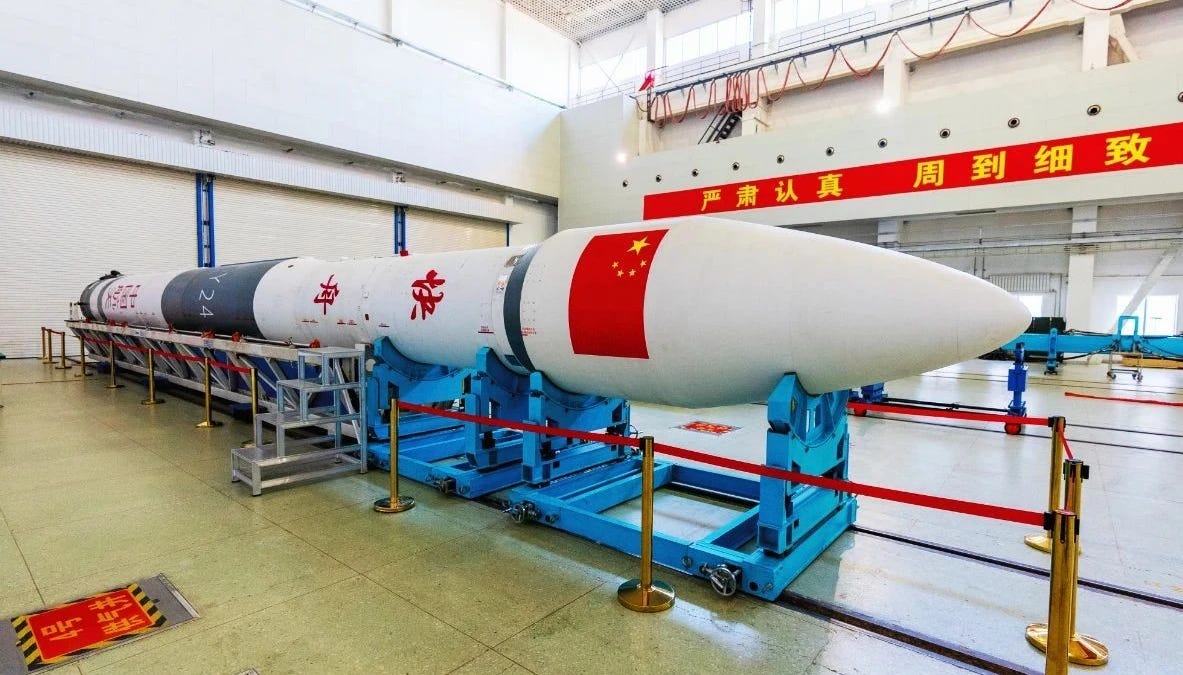
Missile technology represents another area of significant advancement. China has developed an extensive array of ballistic and cruise missiles capable of striking targets across the region and beyond. Hypersonic weapons, in particular, have received considerable attention due to their speed and difficulty to defend against using conventional systems.
The integration of these capabilities into a cohesive military strategy creates new challenges for potential adversaries. China’s approach emphasizes anti-access and area denial capabilities designed to complicate operations in its near seas while developing power projection abilities for more distant operations.
International observers note that China’s military buildup occurs alongside assertive diplomacy and economic initiatives. The combination of hard power and soft power tools creates a comprehensive approach to advancing national objectives. This multifaceted strategy requires careful analysis and coordinated responses from other major powers.
The human element of China’s military modernization should not be overlooked. Significant investments in training, education, and recruitment aim to create a more professional and technologically sophisticated force. Joint exercises and operational experience gained through various missions contribute to improved readiness and effectiveness.
As the Pentagon continues to monitor these developments, American strategists face difficult choices about resource allocation and force design. The need to deter potential aggression while avoiding unnecessary escalation creates a delicate balancing act that will define U.S. defense policy in the coming decades.
For global stability, the trajectory of China’s military expansion raises important questions about great power competition and the future of international order. While some view these developments as legitimate expressions of national sovereignty and security needs, others see them as destabilizing factors that increase the risk of conflict.
The coming years will test the ability of major powers to manage competition without allowing it to spiral into confrontation. China’s industrial and military capabilities will play a central role in shaping this dynamic, making continued careful analysis and strategic planning essential for all involved nations.
This comprehensive military buildup represents one of the most significant geopolitical developments of the 21st century. Its full implications are still unfolding, but the direction is clear: China is determined to build a military force commensurate with its economic power and global ambitions.
The world is watching closely as this transformation continues. How other nations respond will help determine whether this competition leads to greater stability through balanced power or increased tension through arms races and mistrust. The stakes for international peace and prosperity could hardly be higher.






