In a tense session of the House Judiciary Committee this week, Representative Jasmine Crockett of Texas used her allotted time not to ask questions immediately, but to read from records tied to the long-scrutinized files of financier Jeffrey Epstein, directing the remarks toward Attorney General Pam Bondi in a moment that quickly drew attention online and among political observers.

The exchange unfolded during a hearing that had already stretched for hours. Lawmakers had pressed Bondi on issues including transparency within the Department of Justice, enforcement priorities, and the status of investigations connected to Epstein’s trafficking network. Until that point, the atmosphere had remained largely procedural, reflecting the routine cadence of congressional oversight.
But the tone shifted when Crockett took the microphone.
Rather than opening with a traditional question, the Texas Democrat began with a brief exercise involving another lawmaker. Turning to a colleague seated nearby, she asked three questions that she framed as moral judgments: whether harming children was wrong, whether killing innocent people was wrong, and whether enriching oneself while serving as president was wrong. Each question received an immediate answer: “wrong.”

The sequence, though simple, set the stage for the remarks that followed. Crockett then pivoted to documents she said were drawn from materials associated with the Epstein investigation. Reading portions aloud, she referenced claims contained within investigator notes and other records describing alleged encounters and associations involving Epstein and several prominent figures.
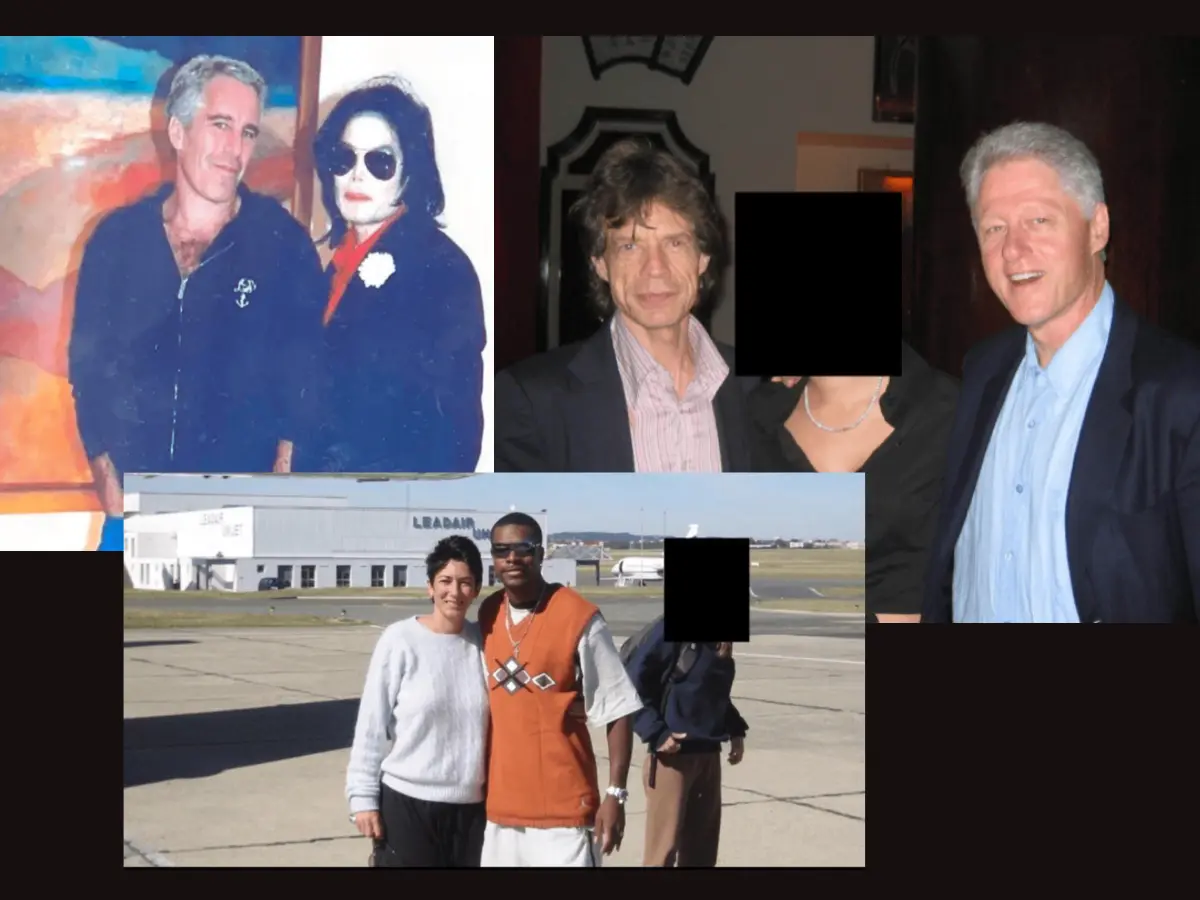
Among those mentioned was former President Donald Trump, whose name Crockett said appeared multiple times within the broader body of Epstein-related materials. She cited references in which Epstein’s associate Ghislaine Maxwell allegedly introduced individuals during social gatherings and described notes from investigators that referenced encounters involving Epstein and Trump at the Florida property Mar-a-Lago.
Crockett emphasized during the hearing that she was not asserting that the former president had committed a crime. Instead, she argued that the proximity described in the documents raised questions that warranted scrutiny within any functioning justice system.
“This is grounded in the public record,” Crockett said, according to the hearing transcript, framing her comments as a matter of oversight rather than accusation.
Throughout the exchange, attention in the hearing room shifted between the lawmakers and the witnesses seated behind the table. Several individuals described as survivors of abuse connected to Epstein’s trafficking network were present, and Crockett addressed them directly during her remarks, praising what she called their “moral clarity and courage.”

The hearing grew noticeably quieter as she continued reading from the materials.
After outlining the references she said appeared in the files, Crockett broadened her critique beyond Epstein’s network. She argued that the Justice Department had not fulfilled promises to restore fairness and equal enforcement under the law. Without raising her voice, she cited several examples she described as illustrating a pattern of enforcement that she said appeared uneven.
Among the examples were federal actions involving journalists and student protesters, cases that she said had drawn legal challenges or had been questioned by courts. At the same time, she argued, investigations connected to Epstein’s circle appeared to have stalled.
Each example, Crockett suggested, pointed toward what she described as a broader imbalance in how federal enforcement power was being used.
When her time expired, attention turned to Bondi’s response. Observers in the room anticipated a direct rebuttal to the references Crockett had placed on the record, particularly the claims involving Epstein-related files.
Instead, Bondi pivoted to criticisms of Democratic leadership and referenced several unrelated political controversies. According to the transcript, she did not address the specific passages Crockett had read aloud during the hearing.
Supporters of the attorney general later argued that Crockett’s presentation relied on interpretations of documents rather than verified findings. In their view, the exchange represented a political confrontation rather than a substantive legal challenge.
Still, what remained documented in the official record was the sequence itself: a series of references read aloud during a federal oversight hearing and a response that did not directly engage with them.
Crockett concluded her remarks by raising a separate issue involving a proposed financial arrangement connected to the sitting president, which she estimated could be worth roughly $230 million. She framed the matter as a constitutional question, noting that the Constitution places limits on payments to a president beyond the official salary established by law.
Oversight hearings rarely resolve such disputes on their own. More often, they mark the beginning of further inquiries, drawing attention to records, testimony and unanswered questions that may shape future investigations.
What unfolded during the Judiciary Committee session was not a courtroom proceeding, but a moment of political theater rooted in documentation and interpretation. In congressional hearings, the record — whether in the form of testimony, documents or silence — often becomes the lasting artifact.
As Crockett concluded her remarks, the hearing moved on to the next round of questioning. Yet the exchange continued to circulate widely beyond the chamber, illustrating how moments from congressional oversight can quickly extend far beyond Capitol Hill.






