WASHINGTON — A sudden shift in the posture of several longtime allies of the United States is raising new questions about the durability of Washington’s global coalition as tensions escalate in the Middle East. In recent days, officials across Europe and the Gulf region have signaled reluctance to participate in offensive military operations tied to the expanding conflict involving Iran, a development that has sparked debate in diplomatic circles about whether the United States is facing an emerging fracture among partners who have traditionally coordinated closely with American strategy.
Statements from leaders in countries including Saudi Arabia, Qatar and the United Arab Emirates have suggested that while regional governments remain concerned about Iran’s role in destabilizing the region, they are not prepared to join direct offensive actions connected to the current crisis. Instead, several governments have indicated that their priority remains protecting their own territories and avoiding a broader regional war.
The shift is notable because these countries have historically maintained security partnerships with the United States and have often coordinated closely with Washington on regional security matters.
European allies are signaling a similar caution.
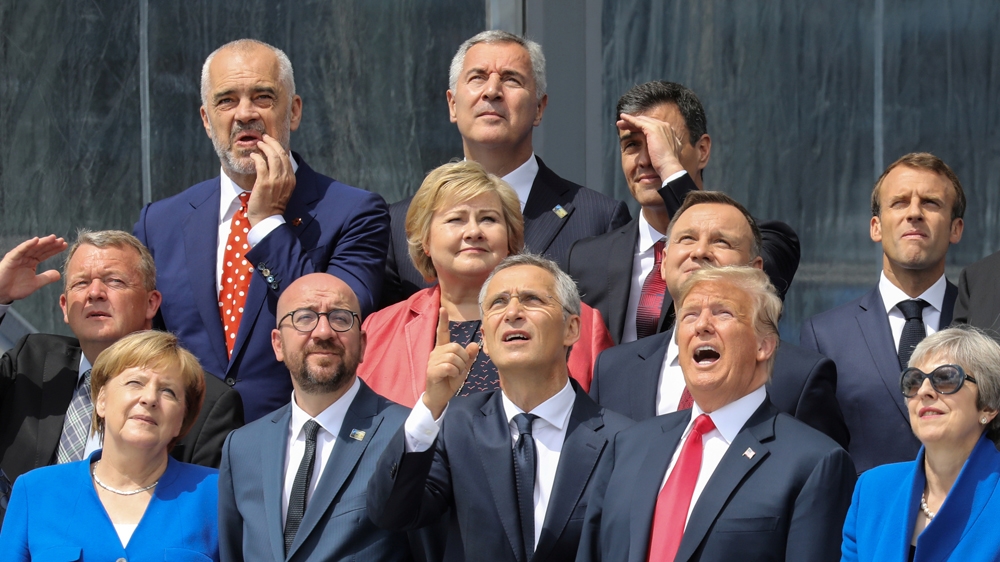
Officials in Spain, France and the United Kingdom have indicated that while they continue to support defensive cooperation within the NATO alliance and other security frameworks, they are wary of being drawn into an offensive campaign that could escalate into a wider confrontation in the Middle East.
The emerging hesitancy among allies has become a focal point of discussion in Washington, where lawmakers and foreign policy analysts are debating whether the current crisis represents a temporary diplomatic pause or a deeper reassessment of the United States’ role in shaping military strategy abroad.
Some American officials argue that the reluctance of allied governments reflects the political realities facing leaders across Europe and the Middle East, where public opinion often remains cautious about military interventions.
Others say the developments could signal a more fundamental shift in the geopolitical balance surrounding the conflict.
“The question many governments are asking right now is whether the current escalation risks drawing the entire region into a conflict that would be extremely difficult to contain,” said one former diplomat who has advised multiple administrations on Middle East policy.
The evolving dynamic has also intensified criticism from some political figures in Washington who believe allied governments should take a more active role in confronting Iran.
Senator Lindsey Graham of South Carolina has been among the most vocal proponents of a stronger international response, arguing that regional governments share a responsibility to confront threats that could destabilize the Middle East.
During recent television appearances, Graham suggested that allies who benefit from security partnerships with the United States should be prepared to demonstrate that commitment during moments of geopolitical crisis.
His remarks have drawn attention across diplomatic channels, particularly in Gulf capitals where officials have been careful to emphasize that they prefer de-escalation rather than expanded military action.
Leaders in the region have warned that a broader war could have severe consequences for global energy markets and the stability of major shipping routes in the Persian Gulf.
The Strait of Hormuz, one of the world’s most important oil transit corridors, remains a particular point of concern for policymakers and economic analysts monitoring the crisis.
Energy experts say that any prolonged disruption to oil flows through the region could trigger price spikes and broader economic instability.
Already, some financial analysts have begun warning that continued escalation could push global oil prices sharply higher, raising fears of inflationary pressures that would affect consumers far beyond the Middle East.
Against that backdrop, governments across Europe and the Gulf appear to be pursuing a cautious strategy aimed at avoiding deeper military involvement while still maintaining diplomatic coordination with Washington.
In Canada and France, officials have reportedly been working quietly to maintain communication with regional governments in hopes of preventing further escalation.
For many policymakers, the moment underscores the complex web of alliances and interests that shape modern international crises.
Unlike the Cold War era, when alliances were often defined by rigid geopolitical blocs, today’s global partnerships frequently involve overlapping economic, political and security considerations that can complicate decisions about military engagement.
As the situation continues to evolve, analysts say the key question will be whether diplomatic efforts can contain the crisis or whether mounting tensions will eventually draw additional countries into the conflict.
For now, the signals coming from several of Washington’s closest partners suggest that many governments are choosing caution — even as pressure mounts in Washington for a more unified response.
Whether that caution represents a temporary pause or the beginning of a broader shift in the global alignment around U.S. foreign policy may become clearer in the weeks ahead.






