**Canada’s Historic Defense Pivot: Unlocking €150 Billion in Europe**
Ottawa has quietly stepped onto the European defense stage in a way few predicted. This week, Canada signed its first-ever defense letter of intent with Poland, gaining access to the European Union’s massive €150 billion SAFE program.
As the only non-European nation invited into this exclusive club, Canada is positioning itself as a serious player in global security.
The agreement, signed by Defence Minister David J. McGuinty and his Polish counterpart Władysław Kosiniak-Kamysz, signals a strategic shift for the country long reliant on its southern neighbour.
This move comes at a time when transatlantic alliances face new uncertainties. Canada is building optionality in its defense partnerships.
Poland brings battle-tested technology to the table. The deal opens doors for collaboration on advanced drones including the Warmate loitering munition, FlyEye reconnaissance systems, and Gladius strike platforms.
These systems, developed by Poland’s WB Group, have proven effective in real conflict zones. For Canada, they offer new capabilities for monitoring its vast northern frontier.
The Arctic remains one of the most challenging territories to defend. With shrinking ice and growing international interest, Ottawa needs eyes in the sky like never before.
Drones that can be backpacked and launched from remote runways could transform how Canada asserts sovereignty over its North.
Beyond equipment purchases, the agreement emphasizes joint production. Talks include establishing ammunition manufacturing capacity on Canadian soil.
This builds on Canada’s recent $1.4 billion domestic ammunition expansion plan. The strategy follows a clear logic: Build. Partner. Buy.
By manufacturing 155mm artillery shells in Ontario and exploring Polish partnerships, Canada aims to reduce vulnerability in future supply crises.
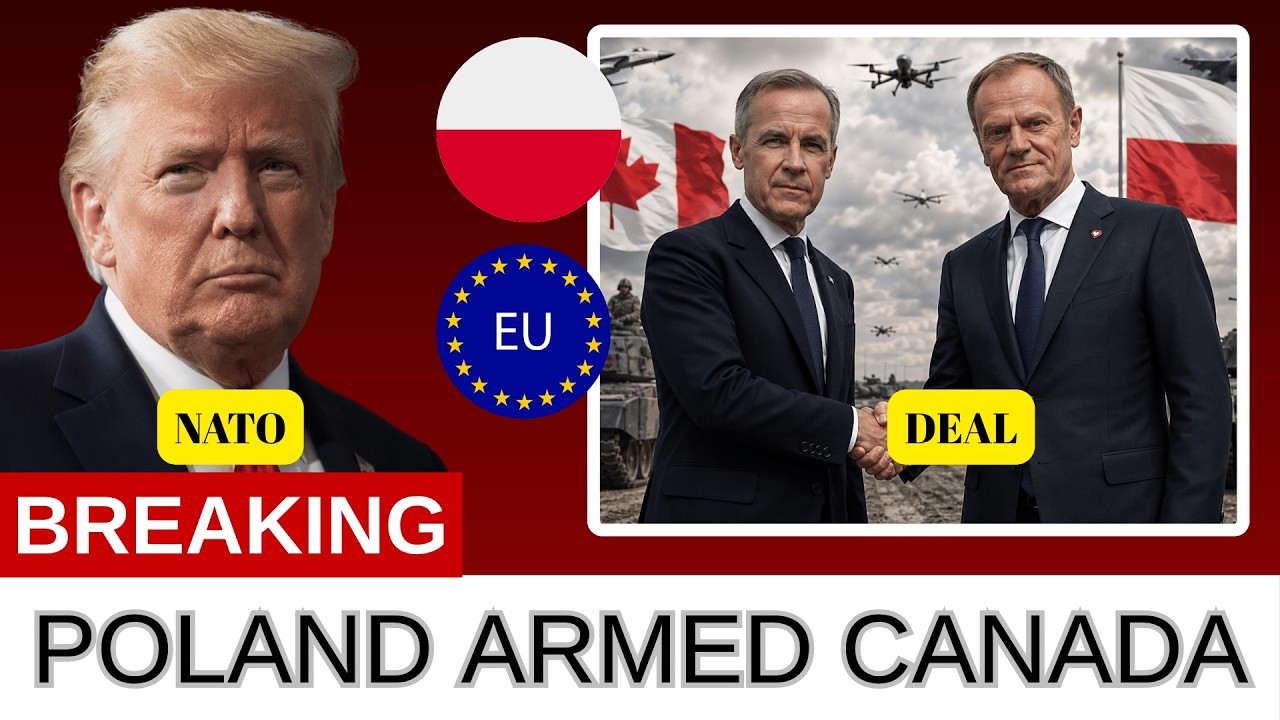
The SAFE program represents Europe’s urgent push to rearm. Canada’s unique inclusion grants access to funding and technology previously closed to outsiders, including the United States and United Kingdom.
This development raises important questions in Washington about shifting North American defense dynamics. For Ottawa, it represents strategic insurance against over-reliance on any single partner.
Minister Kosiniak-Kamysz emphasized transferring Poland’s best defense technology. The partnership carries deep symbolic weight as the first formal defense pact of its kind between the two nations.

Poland understands existential threats perhaps better than any NATO ally. Its willingness to collaborate with Canada reflects growing recognition of this country’s strategic importance.
The timing matters. As Europe faces heightened security challenges and traditional alliances evolve, Canada is diversifying its relationships.
This is not merely procurement. It marks the beginning of building a genuine Canadian defense industrial base.
The $900 million investment in a domestic drone innovation hub demonstrates serious intent. Ottawa wants to move from customer to co-developer and producer.
Experts note that combining European financing, Polish expertise, and Canadian resources creates a powerful new ecosystem.
For ordinary Canadians, these developments promise greater security in an unpredictable world. They also signal new economic opportunities in high-tech manufacturing.
The agreement arrives amid broader debates about Canada’s role in global affairs. Long viewed as a middle power, the country is now asserting itself more deliberately.
Critics may question the pace of change, but supporters see a necessary evolution. Dependence on American defense has defined policy for generations. That assumption is being re-examined.
Poland and Canada share values of democracy and collective security. Their new partnership could serve as a model for other middle powers seeking strategic depth.
Looking ahead, more joint projects under the SAFE umbrella appear likely. The focus will remain on emerging technologies that will shape future conflicts.
Canada’s northern geography and Poland’s eastern frontier experience create natural complementarity. Both nations understand the importance of credible deterrence.
This story extends beyond two countries. It reflects a world where traditional alliances are supplemented by new, purpose-driven partnerships.
As details of implementation emerge, Canadians should watch closely. The decisions made today will shape security for decades to come.
The quiet signing in Ottawa this week may one day be seen as a turning point in Canada’s defense posture.
Canada’s Strategic Awakening in a Changing World
The full implications of this deal will unfold over years. Yet its direction is already clear: Canada is determined to stand with greater independence while strengthening key alliances.
This balanced approach reflects mature statecraft in turbulent times.






