Kevin O’Leary, the entrepreneur and television personality known for his commentary on business and economic policy, has drawn attention to what he terms a critical “tell” in the ongoing U.S.-Canada trade relationship: the more forcefully the Trump administration presses Canada on tariffs, market access, and energy commitments, the clearer it becomes that the United States continues to depend heavily on its northern neighbor for essential inputs and supply-chain stability. In recent media appearances and social-media commentary, O’Leary has argued that this apparent contradiction reveals more about Washington’s position than Ottawa’s, reframing the public escalation as a sign of underlying urgency rather than unassailable strength.

The observation arrives at a time when bilateral economic tensions have reached a visible peak. The United States has maintained and in some cases expanded tariffs on Canadian steel, aluminum, and select manufactured goods, citing national-security considerations and trade imbalances. In parallel, administration officials have repeatedly called for Canada to increase energy-export reliability, guarantee minimum volumes of crude oil and natural gas, and align more closely with U.S. industrial-policy objectives, particularly in critical minerals and battery supply chains. Canadian officials have responded with reciprocal tariffs on certain U.S. products and public statements emphasizing the mutual benefits of existing integration while pursuing selective diversification.
O’Leary’s analysis centers on three interlocking realities that he believes constrain U.S. negotiating flexibility. First, energy flows remain foundational: Canada supplies approximately 60 percent of U.S. crude-oil imports and a substantial share of natural gas consumed in the Midwest and Northeast. Infrastructure—pipelines, rail terminals, and refining capacity—is configured for seamless cross-border movement, making rapid substitution with other sources logistically complex and economically expensive in the short to medium term. Second, integrated manufacturing supply chains, especially in automotive and aerospace sectors, rely on just-in-time movement of components across the border; any prolonged disruption would impose immediate costs on U.S. producers and consumers. Third, Canada’s position as a leading global supplier of critical minerals—nickel, cobalt, lithium, and rare-earth elements—positions it as a key partner in the energy-transition supply chains that both countries seek to develop domestically.
According to O’Leary, these dependencies create a structural asymmetry that public rhetoric tends to obscure. While tariff threats and demands for concessions generate domestic political support in the United States, they also risk destabilizing arrangements that American industries have built over decades. He describes the current posture as a high-wire act: the administration must project strength to domestic audiences and negotiating partners while avoiding measures that would trigger significant economic self-harm. In this view, the volume and frequency of public pressure on Canada serve as an indicator of the stakes involved rather than evidence of unchallenged leverage.
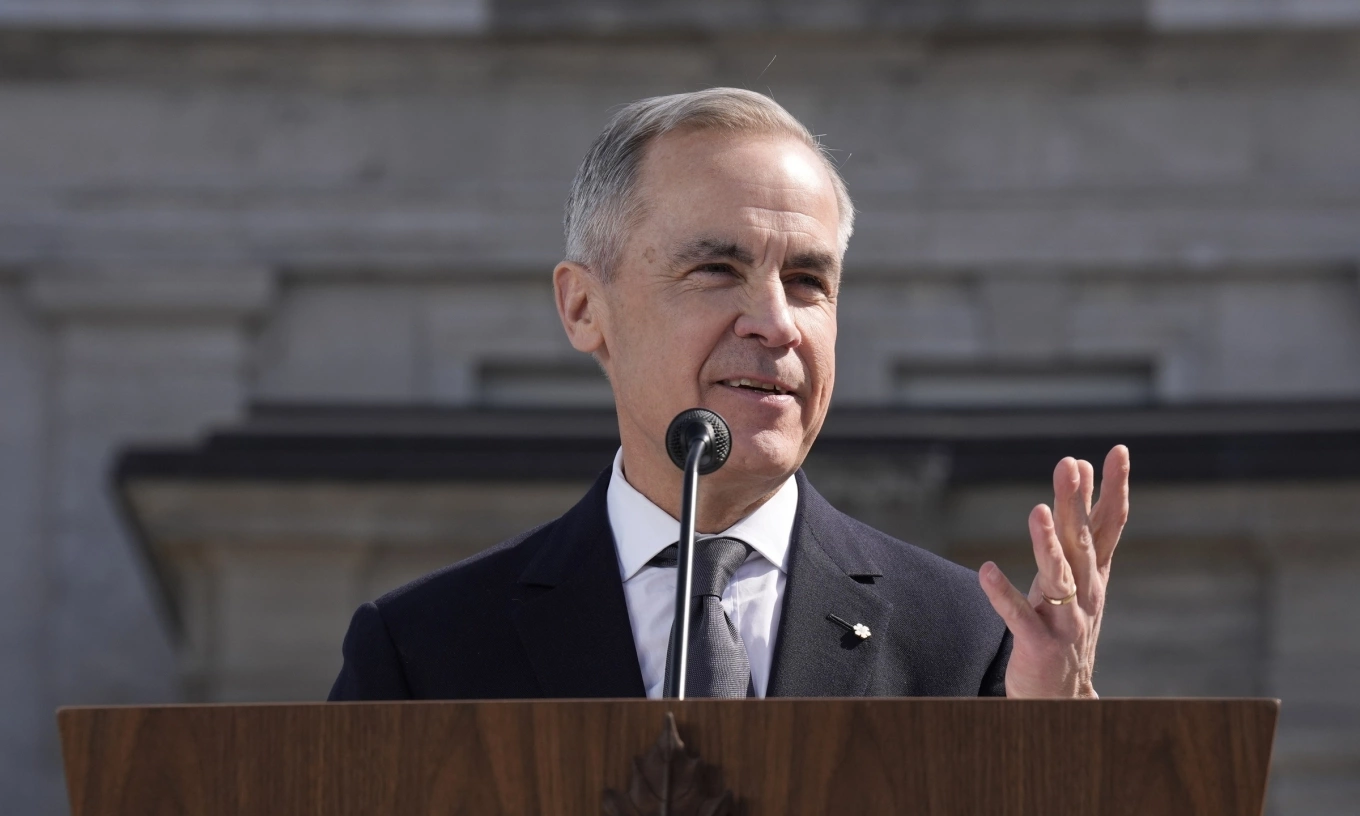
Canadian responses have reflected an awareness of this dynamic. Senior economic adviser Mark Carney and other officials have consistently framed Canada’s position as one of confidence in the value it brings to the bilateral relationship. Ottawa has highlighted the reliability of its energy exports, the absence of strategic export controls on critical minerals to the United States, and the shared interest in maintaining integrated supply chains that support jobs and growth on both sides of the border. At the same time, Canada has accelerated efforts to expand export infrastructure—particularly liquefied natural gas facilities on the West Coast—and to secure long-term offtake agreements with European and Asian buyers, moves that enhance negotiating resilience without severing North American ties.
Market participants have monitored the exchange closely. Energy traders note that any perception of supply uncertainty tends to widen differentials between Western Canadian Select and West Texas Intermediate crude, though actual physical flows have remained stable. Equity sectors with heavy cross-border exposure—automotive assemblers, pipeline operators, and mining companies—have experienced periodic volatility tied to headline risk rather than fundamental shifts in trade volumes. Currency markets have shown the Canadian dollar trading in a relatively narrow range, suggesting investors view the current friction as part of a familiar negotiation cycle rather than a prelude to structural rupture.
The broader context includes several structural factors that reinforce mutual dependence. The United States-Mexico-Canada Agreement (USMCA), which replaced NAFTA in 2020, locks in preferential tariff treatment and rules of origin that incentivize continental production. Defense and security cooperation through NORAD and Five Eyes continues uninterrupted, providing a stabilizing backdrop to economic disagreements. At the same time, global energy markets remain tight following recent geopolitical developments in the Middle East, elevating the strategic importance of reliable, geographically proximate suppliers such as Canada.
Political dynamics on both sides add complexity. In Washington, the administration faces pressure from domestic constituencies—particularly in manufacturing and energy-producing states—to demonstrate progress on trade rebalancing and supply-chain security. In Ottawa, the government must balance the imperative of preserving U.S. market access with the need to project sovereignty and pursue diversification in response to perceived policy unpredictability south of the border. The resulting public exchanges, while sharp, occur within a framework of dense institutional and economic interdependence that has historically favored negotiated outcomes over permanent breaks.
Analysts point to previous episodes of U.S.-Canada trade friction—softwood lumber disputes, dairy-market access negotiations, and earlier steel-and-aluminum tariffs—as precedents. In each case, public posturing eventually gave way to technical-level compromise, often facilitated by the shared interest in avoiding broader economic damage. The current cycle appears to follow a similar pattern, albeit with added urgency driven by energy-transition imperatives and critical-minerals competition.
O’Leary’s commentary has resonated in business and investment circles for its focus on incentives rather than rhetoric. By identifying the “tell”—the gap between public posture and underlying dependence—he offers a lens through which to interpret the administration’s approach as tactical rather than existential. Whether that interpretation influences negotiating behavior remains to be seen, but it underscores a central reality: the U.S.-Canada economic relationship is among the most integrated and mutually beneficial in the world, and efforts to rebalance terms operate within narrow boundaries defined by that interdependence.
As talks continue at both political and technical levels, attention will remain on upcoming bilateral meetings, potential USMCA review triggers, and any further public statements from senior figures. The degree to which the current friction yields concrete adjustments—tariff relief, enhanced energy commitments, or coordinated critical-minerals strategies—will determine whether the episode marks a temporary escalation or contributes to a longer-term recalibration of North American economic relations.
For now, O’Leary’s observation serves as a reminder that in high-stakes bilateral negotiations, the loudest signals are sometimes the most revealing of constraint rather than control. The challenge for both capitals lies in translating that recognition into outcomes that preserve the partnership’s core strengths while addressing legitimate concerns on either side.






