Luxon confirms 2026 election date as parties begin preparing campaign strategies
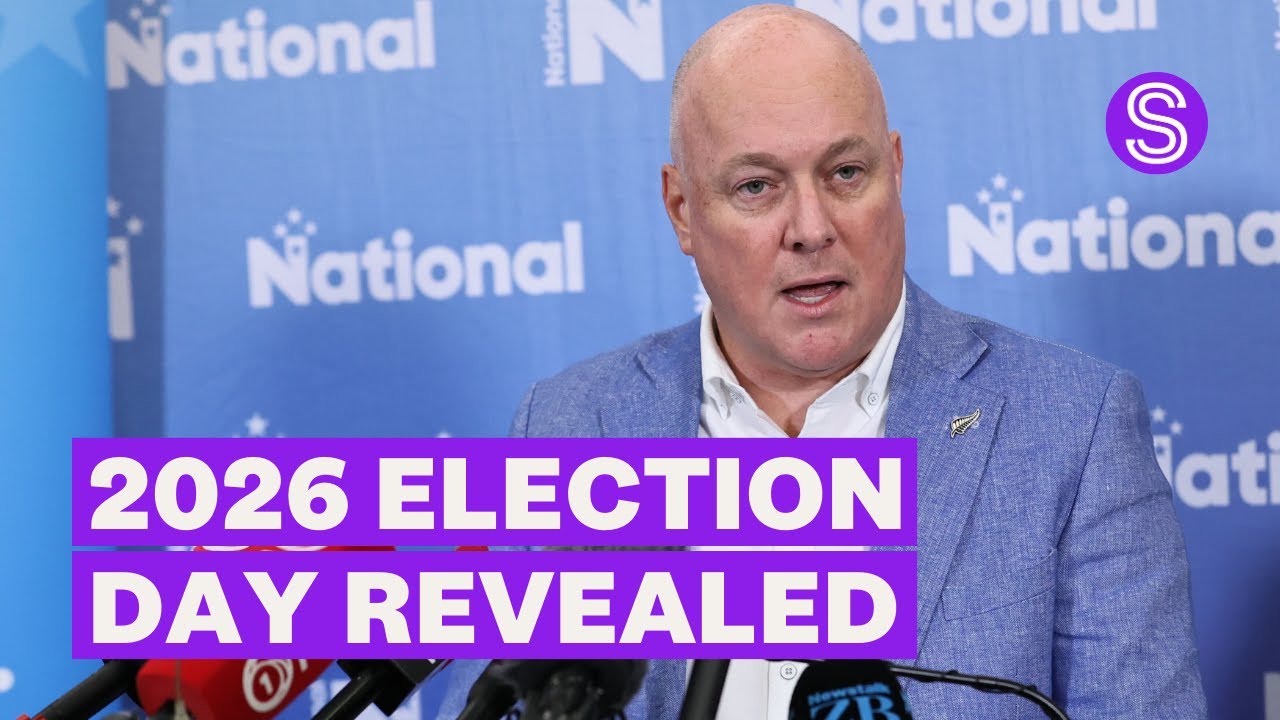
Prime Minister Christopher Luxon has announced the date for New Zealand’s 2026 general election, formally beginning a new phase of political preparation for parties across Parliament. The announcement provides political parties, electoral authorities, businesses, advocacy organisations, and voters with a clearer timeline ahead of what is expected to be a closely watched national campaign. Election timing decisions are traditionally significant because they influence parliamentary scheduling, policy announcements, campaign planning, and broader political strategy in the months leading up to polling day.
The Prime Minister said the Government intends to continue focusing on policy delivery and economic management while parties prepare for the election period. Political observers noted that confirming the date early allows institutions and political organisations to organise resources and campaign activity with greater certainty.


The announcement comes at a time when political attention has increasingly shifted toward future electoral positioning. Parties across the political spectrum have already intensified public messaging, policy development, and fundraising efforts. Analysts say the formal confirmation of an election date often accelerates strategic planning and sharpens political debate. Campaign priorities are expected to focus heavily on economic management, public services, housing, infrastructure, healthcare, and cost-of-living pressures, all of which remain prominent concerns among voters.
Government ministers have described the announcement as an important step in maintaining transparency and certainty within New Zealand’s democratic process. Coalition representatives argue that providing a clear timeline supports stable governance while allowing voters to prepare for the national campaign ahead. Ministers also maintain that the Government remains focused on implementation of existing policies rather than shifting prematurely into campaign mode. However, opposition parties have suggested that election considerations are already shaping many government decisions and public announcements.
Opposition leaders responded quickly following the announcement, arguing that the coming election will provide voters with a significant choice regarding New Zealand’s economic and social direction. Labour MPs stated that issues such as affordability, healthcare access, housing supply, and public services would remain central campaign themes. Representatives from the Green Party and Te Pāti Māori also indicated that climate policy, inequality, and constitutional issues are likely to feature prominently during political debate over the coming year.
Political analysts note that election date announcements can influence both parliamentary behaviour and public expectations. Once the timing becomes official, parties often increase efforts to define contrasts between competing visions for the country. Analysts expect political messaging to become more direct and strategically focused as campaign preparation intensifies. They also suggest that public scrutiny of policy delivery may increase as voters begin evaluating the performance of the current Government against promises made during the previous election.
The Electoral Commission is expected to begin preparing for heightened operational activity associated with the campaign period. Election administration involves extensive logistical planning, including voter enrolment, staffing, public information campaigns, and polling arrangements. Officials generally encourage early public engagement to ensure voters are aware of registration requirements and election procedures. Analysts note that voter turnout and participation often become important political discussions as campaigns develop.
Business organisations and industry groups have also responded to the election timeline announcement. Many sectors seek policy certainty and closely monitor political developments that could affect regulation, taxation, investment, infrastructure planning, and workforce policy. Industry representatives argue that election periods can create uncertainty regarding future policy direction, particularly when major reforms or spending priorities are under debate. As a result, businesses are expected to pay close attention to campaign platforms released by political parties.
Political commentators suggest the election campaign is likely to focus heavily on economic management and living standards. Cost-of-living pressures remain among the most significant concerns identified in public polling and community feedback. The Government argues that its policies are designed to support growth, investment, and fiscal discipline. Opposition parties, however, continue questioning whether enough progress has been made on affordability and service delivery. These competing narratives are expected to shape much of the campaign environment.
Housing policy is also expected to remain under scrutiny throughout the election period. Governments of varying political alignments have faced pressure to address affordability, supply constraints, and infrastructure challenges connected to housing development. Political parties are likely to present differing approaches regarding regulation, public investment, and planning reform. Analysts say housing remains politically significant because it affects both younger voters and established homeowners across multiple regions.
Healthcare and education are similarly expected to feature prominently during campaign discussions. Public expectations regarding service quality, staffing, accessibility, and long-term funding remain high. Opposition parties have argued that additional investment and structural reform may be necessary in several sectors. Government ministers, meanwhile, maintain that ongoing reforms are intended to improve outcomes while ensuring sustainable public finances. Voters are expected to examine competing claims regarding performance and priorities closely.
The campaign environment may also be influenced by broader international economic conditions. New Zealand’s economy remains connected to global trade, investment, and financial markets. Analysts note that international developments can affect domestic political debate, particularly regarding inflation, employment, export performance, and economic confidence. Political parties are therefore likely to reference both domestic and global factors when presenting policy arguments during the campaign period.
Questions remain regarding which issues will ultimately dominate voter attention once campaigning intensifies. While economic concerns currently appear central, election campaigns can shift rapidly in response to political events, policy announcements, or unexpected developments. Analysts caution against assuming that early campaign themes will necessarily remain dominant throughout the election period. Public priorities may evolve as parties release manifestos and engage directly with communities across the country.
Coalition dynamics are also expected to attract continued attention. New Zealand’s proportional representation system means post-election negotiations often play an important role in determining government formation. Political observers suggest that smaller parties may therefore receive increased scrutiny as voters consider possible coalition arrangements. Questions about governing partnerships and policy compatibility are likely to form part of broader campaign discussion.
The Government has indicated that it intends to continue advancing legislative priorities before the election period formally begins. Ministers argue that maintaining focus on governance remains important despite the increasing political attention surrounding the campaign. Opposition parties, however, contend that many policy decisions announced during this period may also carry electoral considerations. This tension between governance and campaigning is a common feature of political systems approaching elections.
Public reaction to the election announcement has been mixed but generally measured. Some voters welcome the certainty provided by a confirmed date, while others remain more focused on immediate economic and social concerns. Community organisations and advocacy groups are expected to use the period leading up to the election to highlight issues important to their members and encourage political engagement. Public debate is therefore likely to broaden significantly as campaigning develops.
Analysts believe the coming election may become an important test of public confidence in both government performance and opposition alternatives. Elections often serve not only as judgments on incumbent administrations but also as assessments of competing visions for the country’s future. Political parties are expected to spend the coming months refining messages and targeting key voter groups. Communication strategy, policy detail, and leadership perceptions are all likely to influence campaign outcomes.
Media organisations have already begun increasing political coverage in response to the announcement. Journalists are expected to scrutinise policy proposals, campaign financing, candidate selections, and public statements from political leaders. Election reporting traditionally plays a major role in informing voters and shaping political narratives. Analysts note that media performance itself often becomes part of public discussion during highly contested campaigns.
The announcement also signals the beginning of intensified fundraising and organisational activity among political parties. Campaigns require substantial logistical preparation, volunteer coordination, advertising, and voter outreach. Parties are likely to increase efforts to build public support through events, policy launches, and media engagement. The scale and effectiveness of campaign operations can significantly influence political momentum during election periods.
Ultimately, the confirmation of the 2026 election date marks the transition into a more openly competitive political environment. While Parliament and government operations will continue, attention is increasingly likely to focus on campaign positioning and electoral strategy. Voters can expect sustained political debate across economic, social, and environmental issues as parties seek to define their priorities and persuade the public.






