Luxon dismisses BNZ buyback proposal while Government announces new education funding
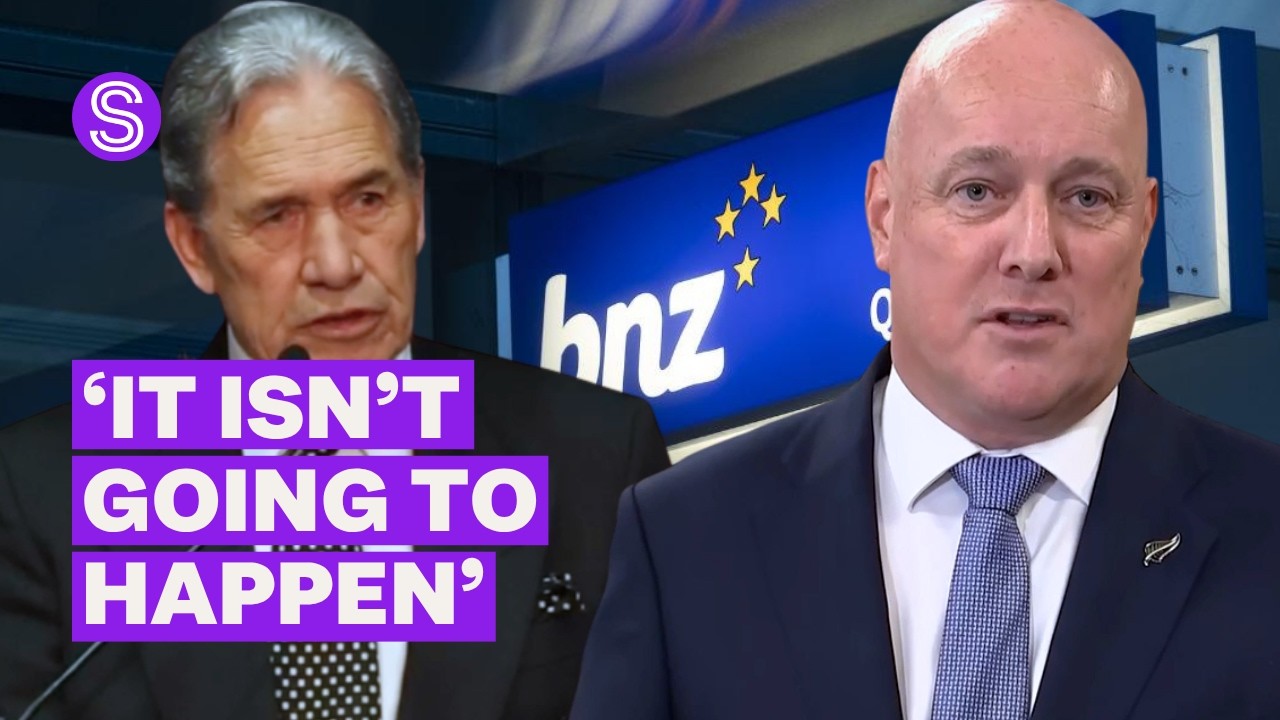
Prime Minister Christopher Luxon has responded to a proposal from New Zealand First regarding a possible buyback of the Bank of New Zealand while simultaneously announcing a new education funding package worth $131 million. The developments have generated political discussion because they involve both economic nationalism and public investment priorities, two issues expected to remain prominent as the Government continues advancing its policy agenda ahead of the next election cycle.
During media appearances, Luxon appeared to downplay the likelihood of a BNZ buyback proposal progressing in its current form, suggesting the Government’s immediate focus remains on broader economic management and practical policy delivery. At the same time, ministers highlighted the education funding package as evidence of continued investment in key public services despite ongoing fiscal pressures.


The BNZ proposal has attracted attention because discussions involving national ownership of major financial institutions have historically generated strong political reactions in New Zealand. Supporters of greater domestic ownership sometimes argue that national control over strategic assets can strengthen economic sovereignty and improve long-term financial resilience. Critics, however, often question the financial cost and practical value of large-scale government acquisitions in highly competitive banking sectors.
Government ministers indicated the coalition has no immediate plans to pursue a BNZ buyback. Luxon suggested that while coalition partners are entitled to present ideas and proposals, the Government remains focused on priorities it believes will deliver direct benefits for households, businesses, and public services. Analysts note that coalition governments frequently involve differing policy perspectives among partners, particularly on issues relating to economic strategy and state ownership.
New Zealand First representatives have continued arguing that stronger domestic ownership of major institutions deserves serious consideration. Party figures have previously advocated for policies they believe would strengthen national control over critical sectors of the economy. Their position reflects broader political debates regarding foreign ownership, economic independence, and the role of the state in strategic industries. However, no detailed proposal outlining implementation costs or financing arrangements has yet been formally presented.
Political commentators say Luxon’s response appears designed to prevent coalition tensions from dominating public discussion while maintaining focus on government priorities. Coalition management remains an important aspect of New Zealand’s proportional political system, where parties governing together may not always share identical policy positions. Analysts suggest that public disagreements can sometimes be managed through careful messaging that acknowledges differing views without escalating political conflict.
The Government’s education announcement received significant attention alongside the BNZ discussion. Ministers stated that the $131 million package is intended to support educational initiatives and improve outcomes across targeted areas. While some implementation details remain under consideration, officials argued the funding demonstrates the coalition’s commitment to investing in future workforce development and student achievement.
Education sector representatives responded cautiously while seeking further detail regarding how the funding would be distributed. School leaders, teachers’ organisations, and policy experts indicated that additional investment is generally welcomed, particularly in areas experiencing resource pressures. However, some stakeholders argued that the long-term effectiveness of funding packages depends heavily on implementation, staffing, and operational support. As a result, many groups are expected to monitor how the programme develops.
Opposition parties questioned whether the education package will fully address ongoing challenges within the sector. Labour MPs argued that schools and educators continue facing significant pressures relating to staffing, infrastructure, and student support. Opposition representatives acknowledged the importance of additional funding but suggested that broader structural issues remain unresolved. They also questioned whether the announced amount would be sufficient to meet growing demand across different parts of the education system.
Economic commentators noted the contrast between the BNZ debate and the education announcement. One discussion centred on national ownership and strategic economic control, while the other focused on public investment and service delivery. Analysts suggest the combination reflects the wide range of competing priorities currently shaping New Zealand politics. Governments must often balance immediate service expectations with longer-term economic and fiscal considerations.
Public reaction has been mixed. Some voters expressed support for stronger investment in education, arguing that schools and students require sustained government attention. Others showed interest in the BNZ proposal, particularly those concerned about foreign ownership and financial sector influence. However, many commentators observed that cost-of-living concerns and public service performance remain more immediate priorities for large sections of the public.
Business groups generally showed greater interest in the Government’s response to the BNZ proposal than in the political symbolism surrounding it. Financial sector representatives noted that banking policy changes can have implications for investment confidence, market competition, and international perceptions of regulatory stability. Most business organisations appeared supportive of maintaining a predictable investment environment while continuing discussion about economic resilience and financial regulation.
Political analysts argued that the Government is attempting to maintain a careful balance between coalition cooperation and policy discipline. Coalition partners often seek opportunities to promote distinct priorities and appeal to their own voter bases. At the same time, the Prime Minister must project overall stability and coherence in government decision-making. Luxon’s handling of the BNZ discussion reflected that broader balancing act, according to commentators monitoring coalition dynamics.
Questions remain regarding how the education funding package will be allocated and measured. Ministers have indicated that further information will be released regarding programme delivery and expected outcomes. Education experts argue that transparency around implementation and performance indicators will be important for assessing whether the investment achieves meaningful improvements. Funding announcements frequently attract scrutiny not only for their size but also for how effectively resources are used over time.
The BNZ proposal has also spurred broader debate about economic nationalism in New Zealand politics. Discussions involving ownership of infrastructure, banks, utilities, and strategic industries periodically re-emerge during times of economic uncertainty or political transition. Supporters of domestic ownership often argue that key assets should remain under national control, while critics contend that global investment can support growth and competitiveness. These debates remain politically sensitive and ideologically divisive.
Coalition politics is likely to remain under scrutiny as different governing parties continue presenting ideas that appeal to distinct voter groups. Analysts note that public disagreements do not necessarily indicate instability, particularly in proportional systems where parties maintain separate identities while cooperating in government. Nevertheless, such differences can attract significant media attention and shape public perceptions of leadership and cohesion.
Several education stakeholders welcomed the additional funding while emphasising that long-term planning remains essential. Representatives from schools and educational organisations said sustained investment and policy consistency are important for improving outcomes over time. Some also highlighted the importance of addressing teacher shortages, infrastructure maintenance, and student wellbeing alongside direct financial support. These concerns are expected to remain central to future policy discussions.
Media coverage of the developments focused heavily on the political contrast between coalition priorities. Journalists examined whether the BNZ discussion represented a serious policy direction or primarily a political signal from New Zealand First. Coverage also analysed the Government’s effort to keep public attention on the education announcement and broader service delivery themes rather than coalition disagreements. Such framing reflects the increasing importance of political communication strategy.
The Government continues to argue that its broader focus remains economic growth, fiscal discipline, and practical investment in public services. Ministers maintain that targeted funding initiatives can improve outcomes while preserving financial stability. Opposition parties, however, continue questioning whether current policies adequately address pressures experienced by households and frontline services. These competing narratives are expected to remain central to parliamentary debate.
Ultimately, the developments surrounding the BNZ proposal and education funding announcement illustrate the complexity of governing within a coalition arrangement. The Government must balance differing political perspectives while responding to economic pressures and public expectations. As policy discussions continue, attention is likely to remain focused on how ministers manage coalition relationships, allocate public funding, and communicate priorities to voters.






