Luxon criticises opposition parties during final major parliamentary speech of 2025
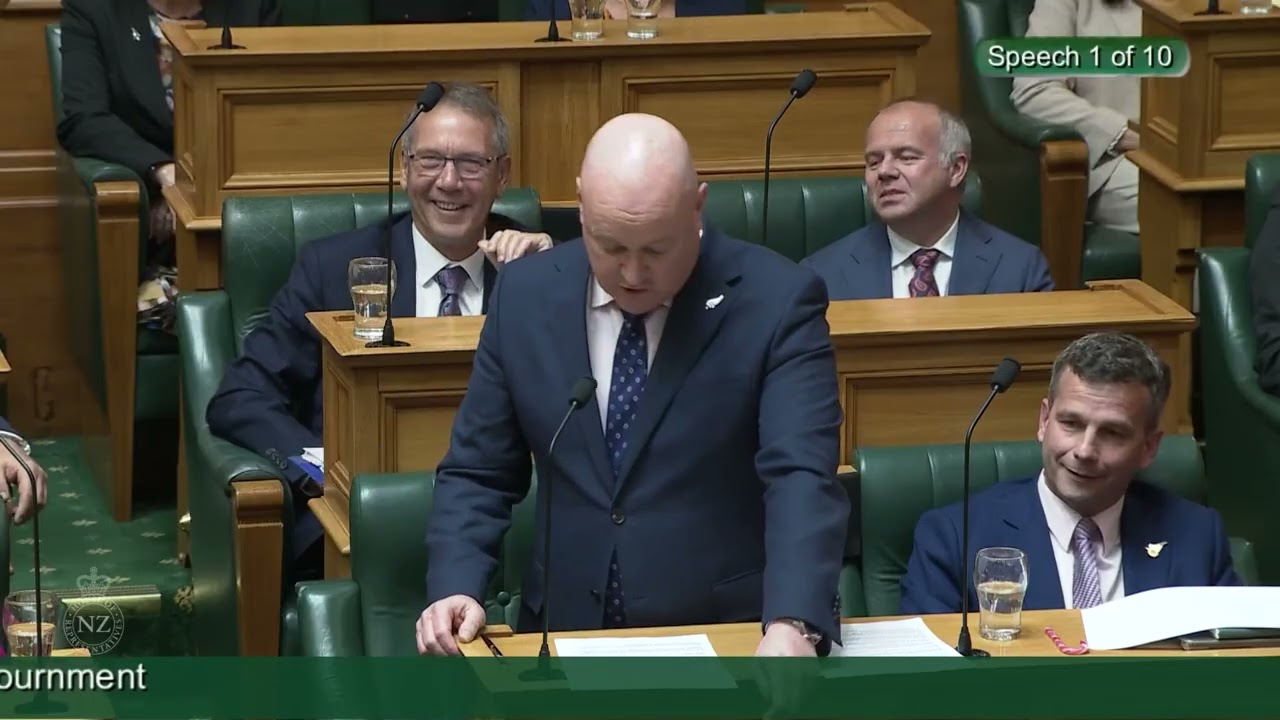
Prime Minister Christopher Luxon used one of his final major parliamentary speeches of 2025 to deliver sharp criticism of opposition parties, arguing that the Government remains focused on economic management, public services, and long-term stability while political opponents continue promoting policies the coalition considers ineffective or unrealistic. The address attracted significant attention across Parliament and political circles because it offered insight into how the governing coalition intends to frame political debate heading into the following year.
During the speech, Luxon criticised the approaches taken by the Labour Party, the Green Party, and Te Pāti Māori on issues including economic policy, taxation, public spending, and social priorities. Government MPs described the speech as a defence of coalition policy direction, while opposition representatives argued that the Prime Minister was attempting to shift attention away from ongoing challenges facing the Government.


The address came at a politically significant time as parties increasingly prepare for the next election cycle. Parliamentary speeches delivered near the end of a political year often serve as opportunities for leaders to summarise achievements, reinforce key messages, and contrast their positions with those of political rivals. Analysts noted that Luxon’s comments reflected themes the Government has consistently emphasised since entering office, particularly economic discipline, productivity, and accountability.
Government MPs described the speech as a reaffirmation of coalition priorities. Ministers argued that the Government had spent the year focused on delivery across key sectors including infrastructure, healthcare, education, and economic policy. Supporters claimed that Luxon’s remarks were intended to highlight differences between the coalition’s approach and the positions taken by opposition parties. According to coalition representatives, voters deserve clear distinctions between competing policy directions before the next election campaign intensifies.
Labour MPs rejected several of the Prime Minister’s criticisms, arguing that the Government continues to face questions over affordability, service delivery, and social outcomes. Opposition representatives accused ministers of oversimplifying complex policy issues and failing to acknowledge pressures experienced by many households. They maintained that alternative approaches remain necessary to address inequality, housing affordability, and public sector performance. Labour figures also argued that political rhetoric should not replace substantive policy discussion.
Representatives from the Green Party responded by defending their policy positions on climate, public investment, and social equity. Green MPs argued that long-term environmental and social challenges require stronger government action rather than narrower fiscal priorities. They contended that economic growth alone would not resolve structural issues affecting communities across New Zealand. The party also criticised aspects of the Government’s environmental and infrastructure strategies, suggesting that some policies remain under scrutiny from climate and sustainability perspectives.
Te Pāti Māori representatives similarly challenged comments made during the speech, arguing that issues affecting Māori communities require greater attention and partnership. Party members stated that debates over economic policy should also consider social outcomes, representation, and equity. Their response reflected wider political discussions regarding constitutional issues, public services, and the relationship between central government and Māori communities. These debates continue to generate strong political and public interest across the country.
Political analysts noted that speeches of this nature often serve both parliamentary and electoral purposes. While formally part of parliamentary debate, such addresses can also help parties frame narratives for supporters and undecided voters. Analysts suggested that Luxon’s speech was designed to reinforce perceptions of stability and economic competence while drawing contrasts with opposition policy proposals. However, they also noted that strong political rhetoric can sometimes deepen partisan divisions rather than broaden public appeal.
Economic policy featured prominently throughout the Prime Minister’s remarks. Luxon argued that fiscal discipline and economic growth remain central to improving living standards and supporting public services. Government ministers have consistently maintained that controlling expenditure and encouraging investment are necessary for long-term prosperity. Opposition parties, however, argue that stronger public investment may be needed in areas such as healthcare, housing, and social support. These differing perspectives remain at the centre of political debate.
Public reaction to the speech was mixed. Supporters of the coalition welcomed Luxon’s criticism of opposition parties and viewed the address as evidence of confidence heading into the new political year. Critics argued that the speech focused too heavily on political confrontation and not enough on practical solutions to ongoing challenges. Public commentary reflected broader divisions in political opinion, with many voters continuing to prioritise issues such as living costs, wages, healthcare access, and infrastructure performance.
The speech has also spurred discussion regarding the tone of political debate in New Zealand. Some commentators believe stronger partisan exchanges are becoming more common as political competition intensifies. Others argue that robust debate remains an essential feature of parliamentary democracy. Analysts note that political leaders often seek to energise supporters through sharper contrasts while also attempting to maintain broader public credibility. Balancing those objectives can be politically challenging.
Opposition leaders have continued to argue that the Government remains vulnerable on several major issues despite its emphasis on economic management. Questions relating to public services, affordability, housing supply, and infrastructure delivery continue to receive significant attention. Opposition parties contend that these issues may become increasingly important as voters assess government performance over time. Coalition MPs, meanwhile, maintain that reforms and investment plans require time to produce measurable outcomes.
Business groups and industry organisations generally focused less on the political rhetoric itself and more on the policy direction referenced during the speech. Representatives from various sectors continue to seek certainty regarding regulation, taxation, infrastructure planning, and workforce policy. While some business leaders welcomed the Government’s emphasis on economic growth, others noted that political stability and policy consistency remain important considerations for investment decisions.
Parliamentary observers noted that the speech reflected broader trends already visible across the political landscape. As election positioning gradually intensifies, parties are placing greater emphasis on defining clear contrasts. Analysts expect this pattern to continue throughout the coming year as parties refine messages and seek to strengthen support among key voter groups. Political communication strategies are therefore likely to become increasingly prominent.
The Government’s supporters argue that Luxon’s direct criticism of opposition parties demonstrates confidence and clarity of purpose. They believe voters prefer leaders who clearly explain differences in policy philosophy and governing priorities. Critics, however, suggest that voters may place greater importance on practical outcomes than on political confrontation. Future public opinion may therefore depend more on economic and social conditions than on parliamentary rhetoric itself.
Questions remain about how effectively the coalition can maintain public support while continuing to implement policy changes across multiple sectors. Governments often face increasing scrutiny as political cycles progress and expectations evolve. Analysts note that sustained political success typically depends on both communication and delivery. Consequently, speeches alone are unlikely to determine long-term political outcomes without corresponding results in areas important to voters.
Media coverage of the address has focused on the broader political implications as much as the speech content itself. Journalists have examined how the remarks fit into wider coalition strategy and how opposition parties intend to respond. Such analysis reflects the increasing importance of narrative framing within modern political communication. Public understanding of political events is often shaped not only by speeches themselves but also by subsequent interpretation and commentary.
The parliamentary year concluded amid continuing debate over economic priorities, social policy, environmental strategy, and public spending. These issues are expected to remain central to New Zealand politics heading into 2026. Political parties across the spectrum are already preparing for intensified public engagement and future electoral competition. Luxon’s speech therefore forms part of a much broader political process likely to continue throughout the coming year.
Ultimately, the address highlighted the increasingly defined contrasts emerging between the governing coalition and opposition parties. While supporters viewed the speech as a strong defence of government direction, critics argued that important policy questions remain unresolved. As political debate continues, public attention is likely to remain focused on whether parties can translate rhetoric into credible and effective policy outcomes.






