Mark Carney has completed his first year as Prime Minister of Canada, a period marked by a notable consolidation of domestic support and an enhanced international profile. Entering office following Justin Trudeau’s resignation in early 2025, Carney assumed leadership at a time when global economic and strategic dynamics were under significant strain. His approach, characterised by pragmatic diplomacy and economic expertise, has contributed to a perception of Canada as a stable and credible actor on the world stage.

The international context in which Carney has operated has been defined by persistent uncertainty. Trade policies originating from the United States, including tariff considerations and supply chain realignments, have affected numerous partners, including Canada. Bilateral economic ties remain deeply integrated, with annual cross-border trade exceeding $600 billion and supporting employment in key sectors on both sides. Against this backdrop, Carney has prioritised continuity in alliance management, focusing on substantive cooperation rather than public confrontation.
Carney’s professional background as a former central banker and global financial policymaker has informed his diplomatic style. In multilateral settings, including G7 and G20 meetings, Canadian positions have been presented with an emphasis on evidence-based analysis and long-term stability. This has led to increased consultations with partners facing similar pressures, such as Nordic countries with shared Arctic interests. Meetings in Norway and other venues have seen Canada positioned as a contributor of informed perspectives on regional security, resource development, and climate adaptation.
Domestically, public opinion surveys indicate sustained and growing approval for Carney’s leadership. Recent polling from Nanos Research, based on a sample of 1,000 Canadian adults, shows the Liberal Party holding a 16-percentage-point lead over the Conservatives, with nearly 48 percent support compared to 31 percent for the opposition. On preferred prime minister, Carney garners 57 percent preference, significantly outpacing Conservative leader Pierre Poilievre’s 22 percent. These figures represent the highest Liberal support recorded since early 2025, reversing earlier trends that had favoured the Conservatives.
Several factors appear to underpin this trend. Carney’s handling of external economic pressures has been viewed as competent, particularly in maintaining dialogue with Washington while defending Canadian interests in sectors such as automotive manufacturing, energy exports, and agriculture. His administration has pursued targeted measures to support supply chain resilience and investment attraction, aligning with broader North American economic integration goals under the United States-Mexico-Canada Agreement.
The contrast with previous leadership styles has also played a role. After a decade of Trudeau’s tenure, marked by progressive domestic policies and active international advocacy, public sentiment had shown signs of fatigue. Carney’s more technocratic and restrained approach has been perceived by many as a refreshing shift toward policy substance over symbolic gestures. This relativeness has contributed to his personal approval ratings exceeding those of his party.
Internationally, Canada’s role has evolved from one of reliable participant to one of valued interlocutor. Partners navigating their own economic uncertainties have sought engagement with Ottawa, recognising the value of a perspective grounded in financial stability and pragmatic multilateralism. This shift is evident in increased bilateral consultations and invitations for Canada to co-chair or contribute to working groups on issues ranging from critical minerals supply chains to Arctic governance.
The administration’s focus on economic security has included measures to diversify trade relationships and strengthen domestic manufacturing capacity. Investments in clean energy infrastructure and northern development projects have been framed as dual-purpose initiatives, supporting both environmental objectives and strategic autonomy. These efforts align with global trends toward resilient supply networks and reduced dependence on single sources for essential materials.
Critics have noted that domestic challenges persist, including housing affordability, regional economic disparities, and fiscal pressures from global inflation. Opposition voices argue that Carney’s international focus has not sufficiently addressed these internal priorities. However, polling suggests that perceptions of competent external management have bolstered overall confidence in his leadership.
The Arctic has emerged as a key area of emphasis. Building on commitments to year-round military presence and infrastructure development, the government has advanced plans for all-season transportation corridors, deep-water ports, and hydroelectric expansion. These initiatives aim to enhance sovereignty, enable resource development, and improve connectivity for northern communities, many of which are Indigenous-led or co-managed.
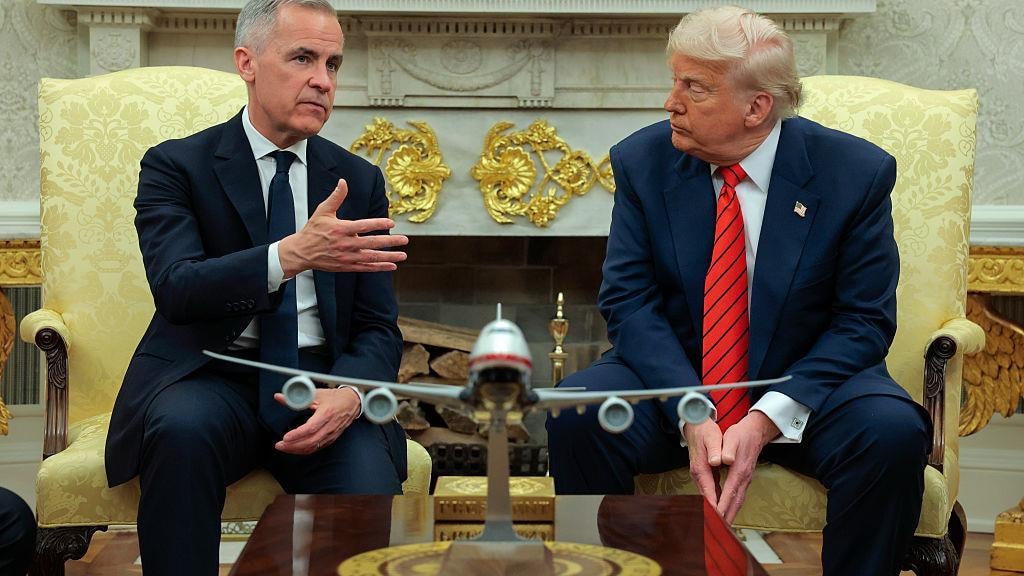
In bilateral relations with the United States, Carney has maintained a channel of steady communication, even amid occasional public differences. Meetings have focused on practical outcomes, such as border efficiency, energy cooperation, and joint defence enhancements under NORAD. This approach has helped contain disruptions while preserving the underlying partnership.
Looking ahead, the sustainability of Carney’s approach will depend on translating international goodwill into tangible domestic gains. Upcoming policy reviews, including USMCA assessments and federal budget priorities, will test the administration’s ability to balance global positioning with internal expectations. The Liberal Party’s strengthened polling position provides political capital to pursue these objectives, though opposition parties continue to highlight areas where they argue progress has been insufficient.

Carney’s first year has demonstrated that in an era of geopolitical volatility, a leadership style rooted in consistency and expertise can yield measurable advantages. Canada’s enhanced standing reflects not only the prime minister’s personal credibility but also the country’s institutional strengths and geographic position. As global uncertainties persist, this positioning may offer opportunities for Canada to contribute more actively to shaping multilateral responses.
The trajectory suggests a Canada that is increasingly viewed as a partner of choice for nations seeking reliable collaboration. Whether this momentum translates into lasting structural gains will depend on effective execution across both domestic and international fronts. For now, the record of Carney’s initial period in office stands as a notable chapter in contemporary Canadian leadership, one shaped significantly by the external environment in which it unfolded.






